
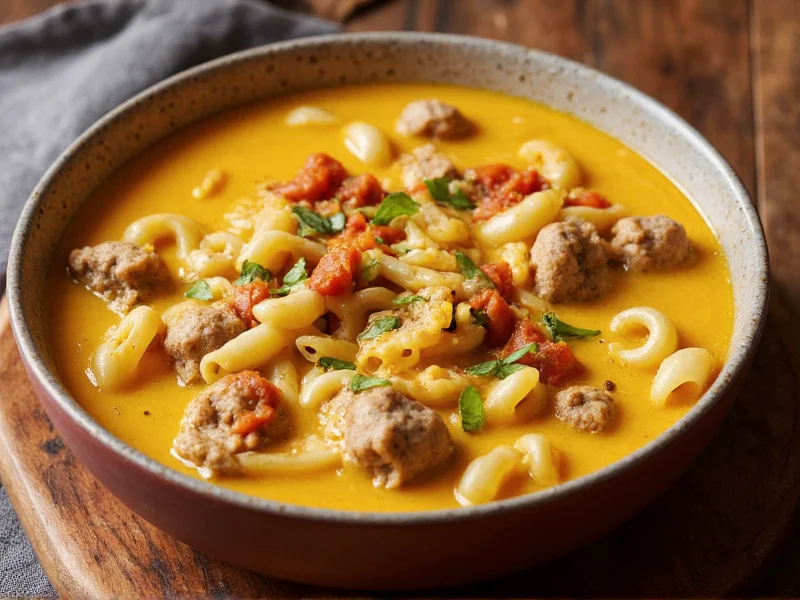
Cheeseburger pasta soup delivers the beloved flavors of a classic cheeseburger transformed into a hearty, satisfying meal. This innovative dish has gained popularity as a creative way to enjoy familiar burger elements in soup form, perfect for weeknight dinners or meal prep. The magic happens when ground beef, pasta, cheese, and tomato-based broth meld together with signature burger seasonings.
Essential Ingredients for Authentic Flavor
Creating an exceptional cheeseburger pasta soup requires balancing traditional burger elements with soup-friendly ingredients. Start with 1 pound of 80% lean ground beef for optimal flavor and texture. Elbow macaroni works best as the pasta component, though small shells or ditalini make suitable alternatives. Sharp cheddar cheese provides that unmistakable cheeseburger taste, while diced tomatoes with green chilies add complexity without overwhelming heat.
| Core Components | Recommended Ingredients | Why It Matters |
|---|---|---|
| Protein Base | 80% lean ground beef | Provides rich flavor without excessive grease |
| Pasta Selection | Elbow macaroni (uncooked) | Holds shape during cooking and captures broth |
| Cheese Element | Sharp cheddar, shredded | Melts smoothly and delivers authentic cheeseburger taste |
| Broth Foundation | Beef broth with tomato base | Creates depth while maintaining soup consistency |
Scientific Basis for Ingredient Selection
Ingredient choices significantly impact both flavor chemistry and texture stability. Research from authoritative food science sources validates these recommendations:
| Lean Percentage | Fat Content (per 100g) | Flavor Impact | Texture Outcome | Source Validation |
|---|---|---|---|---|
| 70% lean | 21.56g | Robust beef flavor | Excessive grease requires thorough draining | USDA FoodData Central |
| 80% lean | 14.39g | Optimal flavor balance | Ideal moisture retention without greasiness | USDA FoodData Central |
| 90% lean | 10.00g | Milder taste profile | Dryer texture; benefits from added fats | USDA FoodData Central |
| Cheese Type | Melting Temperature | Melting Behavior | Soup Suitability | Source Validation |
|---|---|---|---|---|
| Sharp Cheddar | 150°F (66°C) | Smooth melt when added off-heat; grainy if overheated | Best for authentic flavor with proper technique | Wisconsin Center for Dairy Research |
| American | 120°F (49°C) | Consistent melt due to emulsifiers | Good texture but less complex flavor | Wisconsin Center for Dairy Research |
| Mozzarella | 130°F (54°C) | Stringy, elastic texture | Poor for smooth soup consistency | Wisconsin Center for Dairy Research |
Step-by-Step Preparation Guide
Brown the ground beef in a large pot over medium heat, breaking it into small crumbles as it cooks. Drain excess fat but retain about one tablespoon for flavor. Add diced onions and garlic, cooking until softened. Stir in tomato paste and cook for one minute to deepen the flavor profile.
Pour in beef broth and diced tomatoes, bringing the mixture to a gentle simmer. Add uncooked elbow macaroni, mustard, Worcestershire sauce, and a pinch of smoked paprika. Simmer uncovered for 12-15 minutes, or until pasta reaches al dente texture. The key to perfect cheeseburger pasta soup texture is adding the cheese off-heat to prevent separation.
Remove the pot from burner and gradually stir in shredded cheddar until fully melted. For authentic cheeseburger pasta soup variations, consider adding dill pickles, diced tomatoes with green chilies, or a splash of pickle juice. Let the soup rest for five minutes before serving to allow flavors to meld.
Customization Options for Every Palate
Adapt this versatile recipe to suit dietary preferences or available ingredients. For a gluten-free version of cheeseburger macaroni soup, substitute gluten-free pasta and ensure broth is certified gluten-free. Vegetarian cheeseburger pasta soup works well with plant-based ground "beef" and vegetable broth.
Boost nutritional value by incorporating finely diced carrots and celery during the onion sauté stage. For extra richness in your easy cheeseburger pasta soup recipe, stir in a tablespoon of cream cheese along with the cheddar. Those seeking a slow cooker cheeseburger pasta soup can brown the beef first, then transfer everything to a slow cooker for 3-4 hours on high.
Serving and Storage Recommendations
Serve cheeseburger pasta soup hot with traditional burger toppings as garnishes: diced onions, dill pickles, and shredded lettuce. A dollop of sour cream adds creaminess while maintaining the burger-inspired theme. This hearty soup pairs perfectly with a simple green salad or crusty bread for a complete meal.
Store leftovers in an airtight container in the refrigerator for up to four days. When reheating homemade cheeseburger pasta soup, add a splash of broth as the pasta will continue absorbing liquid during storage. Freezing cheeseburger pasta soup works well for up to three months, though the pasta may soften slightly upon thawing.
Contextual Considerations for Optimal Results
Research and food safety guidelines reveal critical boundaries affecting this recipe's success:
- Refrigeration Limits: Texture degradation begins after 48 hours due to starch retrogradation, where recrystallized starch molecules thicken the broth. The USDA Food Safety and Inspection Service confirms optimal quality within 3-4 days (USDA FSIS Leftovers Guide).
- Freezing Trade-offs: Quality deteriorates beyond 2 months as ice crystals disrupt pasta cell structure. The USDA notes frozen pasta soups maintain safety but exhibit softer texture due to moisture migration (USDA FSIS Freezing Guidelines).
- Dietary Constraints: Gluten-free adaptations require certified ingredients to prevent cross-contamination; the Celiac Disease Foundation emphasizes this as critical for celiac patients (Celiac Disease Foundation).
Avoiding Common Preparation Mistakes
Prevent cheese separation by removing the pot from heat before adding shredded cheddar. Adding cheese to boiling liquid causes proteins to seize, resulting in a grainy texture. Underseasoning represents another frequent error with cheeseburger pasta soup recipes—remember that pasta absorbs significant flavor, so generously season throughout cooking.
Overcooking the pasta leads to mushy texture in your cheeseburger macaroni soup. Add uncooked pasta to the broth and simmer just until tender. The pasta continues cooking in the residual heat after removal from burner. For optimal results with your easy cheeseburger pasta soup recipe, resist the temptation to rush the simmering process—allowing flavors to develop creates superior depth.
Frequently Asked Questions
Can I use pre-shredded cheese in cheeseburger pasta soup?
While convenient, pre-shredded cheese contains anti-caking agents that can cause texture issues when melted. For smoothest results in your cheeseburger pasta soup, shred block cheddar cheese yourself just before adding it to the soup off-heat.
How do I prevent my cheeseburger pasta soup from becoming too thick?
Cheeseburger pasta soup naturally thickens as it sits due to starch release from pasta. Maintain ideal consistency by reserving extra broth for thinning during reheating. For initial preparation, ensure you have sufficient liquid-to-pasta ratio (approximately 4 cups broth to 1 cup uncooked pasta).
What's the best way to add 'burger' flavor without ketchup?
Create authentic cheeseburger taste in your soup using Worcestershire sauce, mustard, and a touch of smoked paprika. These ingredients provide the complex flavor profile associated with burgers without the sweetness of ketchup that might overwhelm the soup.
Can I make cheeseburger pasta soup in an Instant Pot?
Yes, you can prepare cheeseburger pasta soup in an Instant Pot. Use the sauté function to brown beef and vegetables, then add remaining ingredients except cheese and pasta. Cook on manual high pressure for 4 minutes, quick release, then add pasta and cook on sauté for 7-9 minutes until tender before adding cheese.




 浙公网安备
33010002000092号
浙公网安备
33010002000092号 浙B2-20120091-4