
When selecting kitchen seasoning containers, ceramic stands out as the optimal material for preserving salt and pepper quality. Unlike metal containers that corrode from salt exposure or plastic options that absorb odors, ceramic provides a neutral, non-reactive surface that maintains seasoning integrity. The natural porosity control in quality ceramic prevents moisture absorption while allowing minimal breathability—critical for preventing clumping in salt and maintaining pepper's aromatic compounds.
Why Ceramic Excels for Seasoning Storage
Ceramic's molecular structure creates an ideal environment for seasoning preservation. During the high-temperature firing process, ceramic becomes vitrified—developing a glass-like surface that resists moisture penetration while maintaining structural integrity. This scientific property makes ceramic salt and pepper containers particularly effective for humid environments where traditional containers fail.
Professional chefs consistently prefer ceramic seasoning containers for their ability to maintain consistent flow. The smooth interior surfaces prevent seasoning particles from adhering to container walls, ensuring reliable dispensing over time. Unlike metal containers that develop microscopic pits from salt corrosion, ceramic maintains its smooth surface indefinitely when properly cared for.
Historical Evolution of Ceramic Seasoning Containers
Ceramic's use for seasoning storage spans millennia, evolving through distinct technological phases:
- 1500 BCE: Earthenware salt containers were used in ancient Egypt, as evidenced by artifacts in The Metropolitan Museum of Art's collection (Met Museum, Accession 544018).
- 17th Century: Elaborate salt cellars became status symbols in European dining, with the Victoria and Albert Museum documenting ornate ceramic designs for salt storage (V&A Museum, Object O14037).
- 1850s: The first patent for a dedicated pepper shaker design emerged in the United States, marking the transition from shared salt cellars to specialized dual-container systems (US Patent Office, Patent US191700A).
- Modern Era: Advances in ceramic vitrification techniques have optimized moisture resistance, making contemporary stoneware containers the gold standard for home kitchens.
Types of Ceramic Materials for Seasoning Containers
Not all ceramic containers offer equal performance. Understanding the differences between ceramic types helps identify quality pieces:
| Ceramic Type | Temperature Resistance | Moisture Protection | Ideal For |
|---|---|---|---|
| Stoneware | High (up to 2200°F) | Excellent (fully vitrified) | Daily kitchen use, humid climates |
| Porcelain | Moderate (up to 1800°F) | Superior (densest structure) | Display pieces, decorative use |
| Earthenware | Low (up to 1200°F) | Fair (requires glaze) | Decorative purposes only |
Stoneware represents the optimal choice for functional ceramic salt and pepper containers due to its durability and superior moisture resistance. The higher firing temperature creates a completely non-porous surface that prevents salt migration into the material—a common issue with lower-fired ceramics.
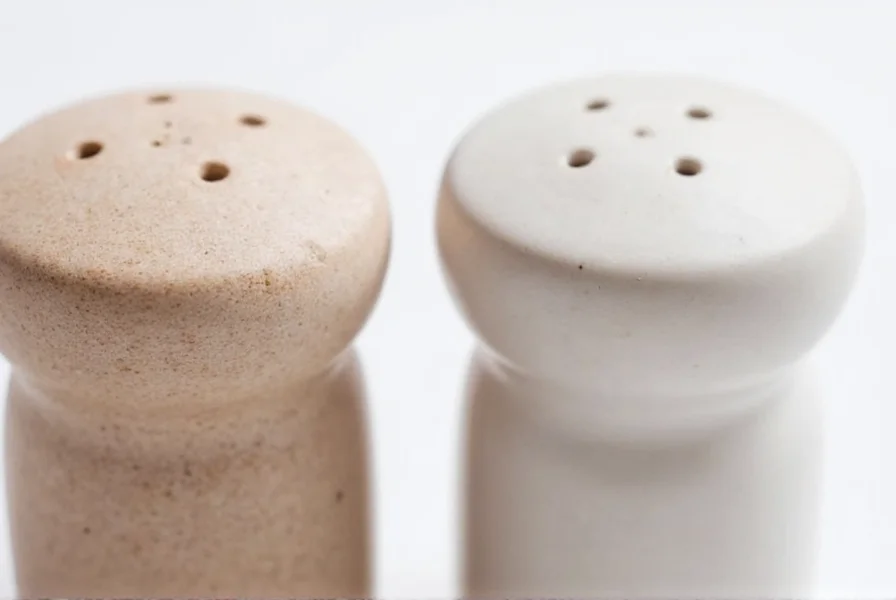
Selecting Quality Ceramic Seasoning Sets
When evaluating ceramic salt and pepper containers, examine these critical features:
- Glaze quality - Look for uniform, crack-free glazing without pinholes that could trap moisture
- Spout design - Opt for containers with precision-engineered dispensing holes that prevent clogging
- Base stability - Wider bases prevent tipping during regular use
- Interior smoothness - Run your finger inside to check for rough spots that could cause seasoning buildup
- Weight distribution - Heavier bases indicate better craftsmanship and stability
Handmade ceramic salt and pepper containers often feature superior craftsmanship compared to mass-produced alternatives. Artisan pieces typically receive multiple quality checks during production, resulting in better-fitting lids and more consistent hole patterns for optimal seasoning flow. When shopping for handmade ceramic seasoning containers, examine the maker's signature or mark—reputable artisans always identify their work.
Proper Care for Long-Lasting Performance
Maintaining ceramic salt and pepper containers requires specific practices to preserve functionality:
- Clean containers monthly with warm water (never soap, which leaves residue)
- Dry thoroughly for 24 hours before refilling to prevent moisture buildup
- Store in a cool, dry location away from direct sunlight
- Replace rubber gaskets annually to maintain moisture protection
- Use rice grains in salt containers during humid months to absorb excess moisture
Many users mistakenly wash ceramic seasoning containers in dishwashers, causing gradual deterioration of the glaze. Hand washing with a soft brush preserves the container's integrity. For stubborn residue, soak in warm water for 15 minutes before gently scrubbing. Never use abrasive cleaners that could scratch the interior surface.
Addressing Common Ceramic Container Issues
Even well-made ceramic salt and pepper containers may encounter these common problems:
Moisture absorption: In high-humidity environments, salt can become damp. Solution: Add a few grains of uncooked rice to absorb excess moisture while maintaining seasoning quality.
Clogged dispensing holes: Seasoning buildup can restrict flow. Prevention: Choose containers with multiple small holes rather than single large openings. For existing clogs, use a toothpick to gently clear holes without damaging the ceramic.
Lid fit issues: Temperature changes can affect fit. Remedy: Store containers at consistent room temperature and avoid sudden temperature shifts that cause expansion/contraction.
Contextual Limitations of Ceramic Seasoning Containers
Ceramic seasoning containers excel in most home environments, but specific conditions require special considerations:
- High humidity: In areas with relative humidity above 65%, the USDA Food Safety and Inspection Service recommends supplementing ceramic containers with uncooked rice grains to absorb excess moisture and prevent salt clumping (USDA FoodKeeper App, 2023).
- Light exposure: UV radiation degrades volatile compounds in peppers. UMass Extension advises storing all spice containers in dark locations to preserve flavor integrity, as light exposure can reduce aromatic compounds by up to 30% within 6 months (UMass Extension, 2020).
Ceramic vs. Alternative Materials
While ceramic offers distinct advantages, understanding how it compares to other materials helps make informed decisions:
- Glass containers - Transparent but fragile; doesn't protect against light exposure which degrades seasoning quality
- Metal containers - Prone to salt corrosion; may impart metallic taste to seasonings
- Plastic containers - Absorbs odors and flavors; degrades with repeated washing
- Bamboo containers - Natural aesthetic but absorbs moisture, causing seasoning clumping
Ceramic's balanced properties make it the superior choice for both functionality and longevity. The material's thermal stability prevents temperature fluctuations from affecting seasoning quality—a critical factor often overlooked when selecting salt and pepper containers.




 浙公网安备
33010002000092号
浙公网安备
33010002000092号 浙B2-20120091-4