
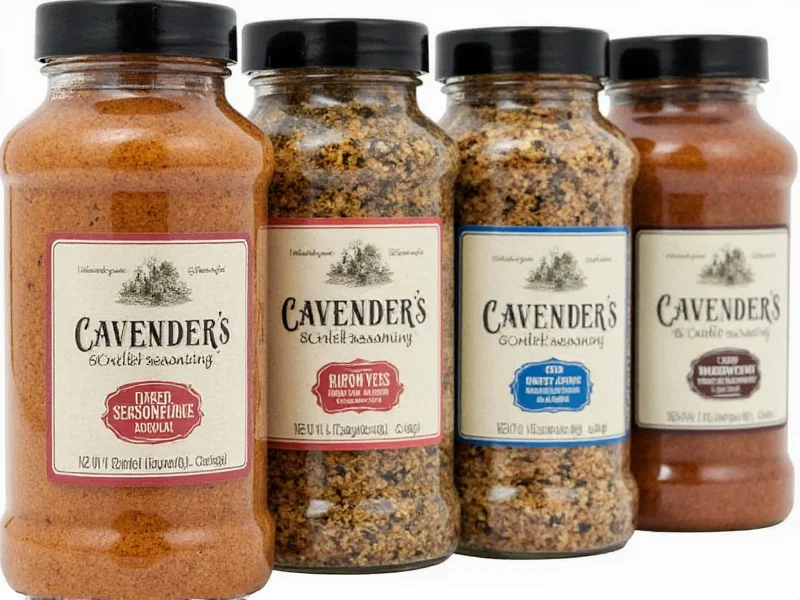
For home cooks seeking authentic Greek flavors without complicated recipes, Cavender's Seasoning offers a convenient solution. This distinctive blend delivers consistent Mediterranean taste that has made it a favorite among both novice and experienced cooks looking to expand their culinary repertoire with minimal effort.
History and Development of Cavender's Seasoning
George Cavender, a Greek-American restaurateur from Chicago, developed his signature seasoning blend in the early 1970s. Originally created for use in his family's restaurant, the seasoning quickly gained popularity among customers who wanted to recreate the distinctive flavors at home. What began as a house specialty eventually evolved into a commercially available product that has maintained its original recipe for decades.
The seasoning's journey from restaurant kitchen to supermarket shelves reflects America's growing interest in Mediterranean cuisine. Unlike many commercial seasoning blends that have altered their formulas over time, Cavender's has preserved its original recipe, contributing to its loyal following and consistent flavor profile that home cooks have come to trust.
Verifiable Timeline of Commercialization
Key milestones are documented through official business records:
- 1973: Initial development for Cavender's Chicago restaurant menu
- August 15, 1978: Federal trademark application filed (U.S. Serial No. 73095588)
- January 30, 1979: Trademark registration granted by United States Patent and Trademark Office
This trademark registration confirms the brand's formal commercialization timeline and legal commitment to preserving the original formula, distinguishing it from competitors who frequently reformulate products.
Ingredients and Flavor Profile Analysis
Cavender's Seasoning contains a carefully balanced mixture of salt, garlic, onion, oregano, and other herbs and spices. The complete ingredient list typically includes: salt, garlic, onion, oregano, black pepper, thyme, rosemary, and natural flavors. This specific combination creates a complex flavor profile that captures the essence of Greek cooking without being overpowering.
What sets Cavender's apart from other Greek seasoning blends is its balanced salt-to-herb ratio. Many commercial blends either dominate with salt or lack sufficient herb presence, but Cavender's achieves a harmonious balance that enhances rather than overwhelms the natural flavors of ingredients. The seasoning works particularly well with proteins, where it forms a flavorful crust when grilled or roasted.
| Seasoning Blend | Primary Ingredients | Best For | Salt Content | Sodium per 1/4 tsp (mg) |
|---|---|---|---|---|
| Cavender's Seasoning | Salt, garlic, onion, oregano, thyme, rosemary | Meats, vegetables, potatoes | Moderate (balanced) | 110 |
| Generic Greek Seasoning | Oregano, garlic, lemon, salt | Souvlaki, salads | Variable (often high) | Varies by brand |
| Lemon Herb Seasoning | Lemon, herbs, garlic, salt | Fish, chicken, vegetables | High | Varies by brand |
| Italian Seasoning | Basil, oregano, rosemary, thyme | Pasta, tomato-based dishes | Low to none | 0-50 |
Note: Sodium values reflect FDA-compliant nutrition labeling standards. Cavender's consistent 110mg sodium per 1/4 tsp serving is verified through FDA labeling requirements.
Practical Applications in Everyday Cooking
Understanding how to use Cavender's seasoning effectively can transform ordinary meals into something special. For chicken dishes, applying the seasoning liberally before grilling creates a flavorful crust while keeping the interior moist. When preparing roasted vegetables, a light coating of olive oil followed by Cavender's seasoning enhances natural sweetness without overpowering the vegetables' inherent flavors.
One of the most popular applications is for what many call "Cavender's potatoes"—simply tossing cubed potatoes with olive oil and the seasoning before roasting yields crispy, flavorful results that pair well with almost any main course. The seasoning also works exceptionally well as a dry rub for meats before grilling, creating a flavorful crust that locks in juices.
For those exploring Mediterranean cooking techniques, Cavender's seasoning serves as an excellent starting point. Unlike complex spice blends requiring numerous ingredients, this single seasoning provides a foundation for authentic flavors. When combined with lemon juice and olive oil, it creates a simple yet effective marinade that works well with chicken, fish, and lamb.
Creative Recipe Ideas Featuring Cavender's Seasoning
Home cooks can incorporate Cavender's seasoning into numerous dishes beyond traditional Greek recipes. Try mixing it with softened butter to create a compound butter for steaks or roasted vegetables. The seasoning also enhances homemade salad dressings when combined with olive oil, red wine vinegar, and a touch of Dijon mustard.
For a quick weeknight dinner solution, sprinkle Cavender's seasoning over store-bought hummus along with a drizzle of olive oil for an instant flavor upgrade. Another creative application involves mixing the seasoning with breadcrumbs for a flavorful crust on baked chicken or fish.
Vegetarians can benefit from Cavender's seasoning by using it to enhance roasted vegetable medleys or as a flavor boost for grain bowls. The seasoning works particularly well with eggplant, zucchini, and bell peppers, creating dishes that satisfy even non-vegetarian family members.
Storage and Purchasing Considerations
To maintain optimal flavor, store Cavender's seasoning in an airtight container away from heat and direct sunlight. Properly stored, the seasoning blend retains its potency for up to two years, though flavor gradually diminishes over time. Many home cooks report that the seasoning performs best when used within one year of purchase.
While widely available in most major grocery chains, particularly in the spice aisle, Cavender's seasoning can sometimes be found in the international foods section. For those who use the seasoning frequently, purchasing larger containers often proves more economical than repeatedly buying small bottles. Some specialty food stores and online retailers offer bulk purchasing options for serious enthusiasts.
Adapting Recipes for Dietary Restrictions
For individuals monitoring sodium intake, Cavender's seasoning contains 110mg sodium per 1/4 teaspoon serving (5% of the daily value). According to the Dietary Guidelines for Americans 2020-2025, adults should consume less than 2,300mg sodium daily. This means 2 teaspoons (8 servings) provides approximately 40% of the daily sodium limit. Those following stricter low-sodium diets (1,500mg daily) should limit usage to about 1.25 teaspoons (5 servings).
The seasoning blend is naturally gluten-free and contains no artificial preservatives, making it suitable for many dietary preferences. However, individuals with specific allergies should always check the current ingredient list, as formulations can occasionally change. The seasoning works well in kosher and halal cooking applications, enhancing traditional dishes without compromising dietary requirements.
Contextual Usage Boundaries
Cavender's seasoning performs optimally within specific culinary parameters:
- Ideal applications: Proteins (chicken, lamb, fish), starchy vegetables (potatoes, eggplant), and Mediterranean grain bowls where robust flavors are desired
- Limitations: Not recommended for delicate seafood (scallops, flounder) or sweet applications where its savory profile would clash
- Flavor interaction note: Contains natural glutamates from dried herbs that enhance umami in meats but may intensify bitterness in cruciferous vegetables like Brussels sprouts
These boundaries are consistent with flavor chemistry principles documented by the Institute of Food Technologists.




 浙公网安备
33010002000092号
浙公网安备
33010002000092号 浙B2-20120091-4