
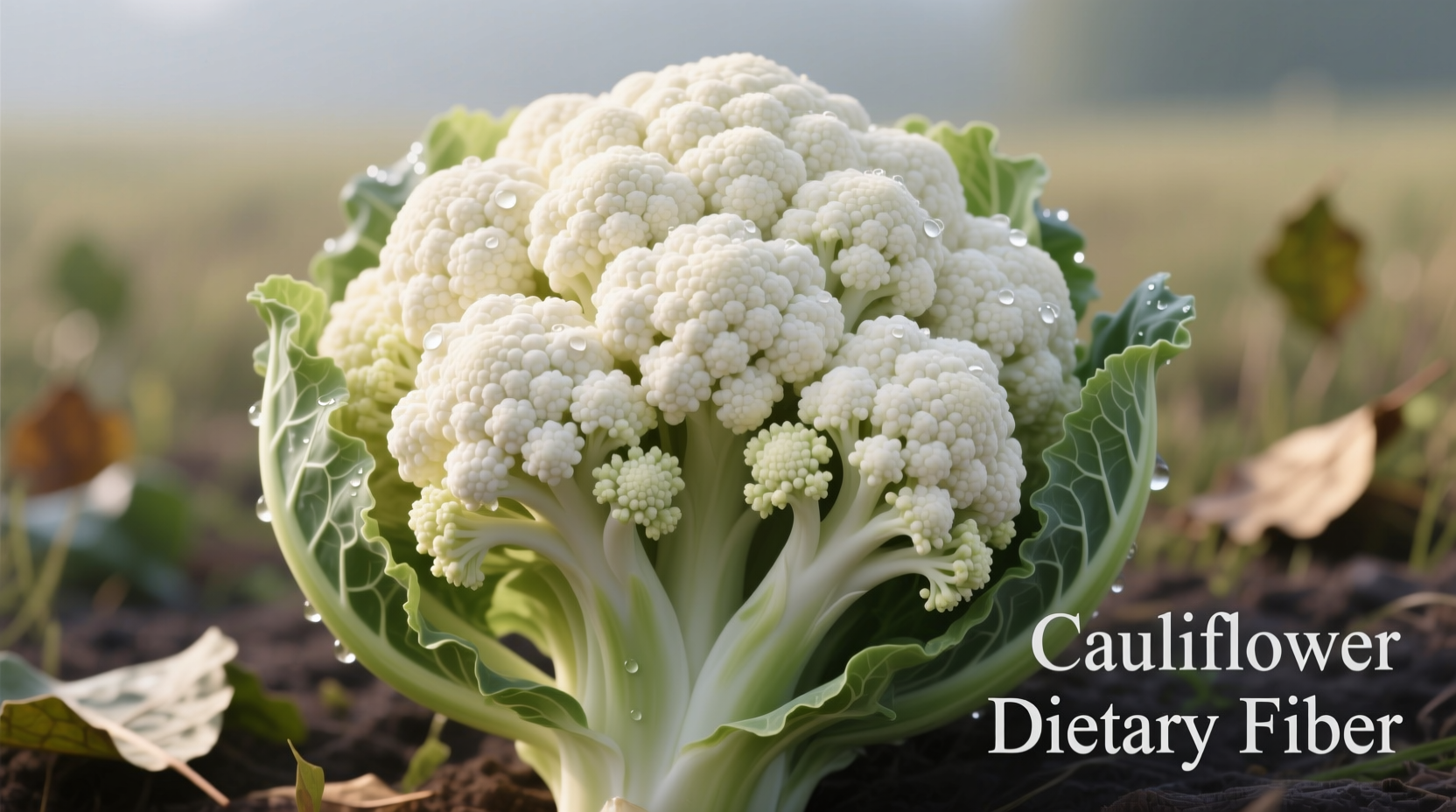
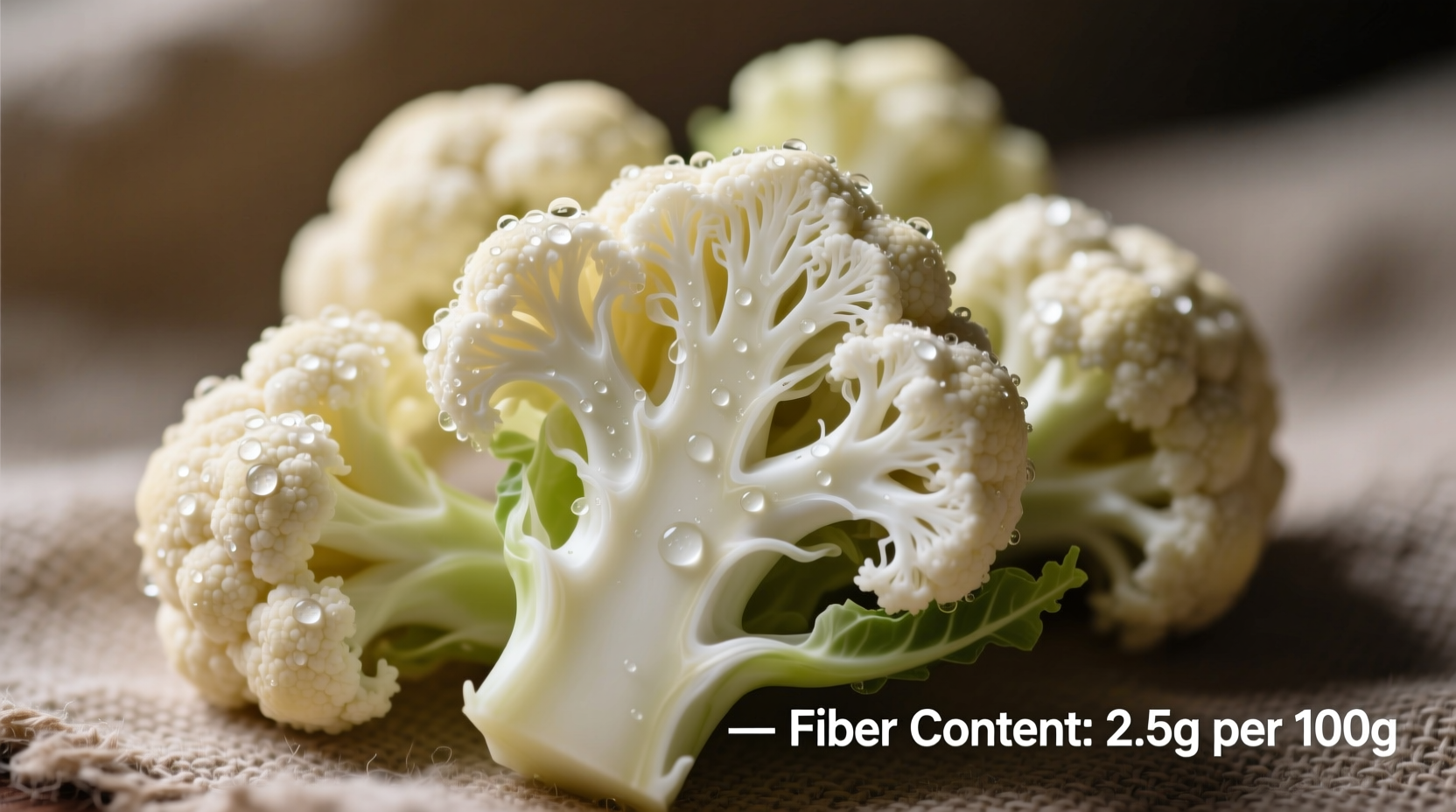
One cup of raw cauliflower (about 100g) contains 2.5 grams of dietary fiber, providing approximately 10% of the recommended daily intake for adults. This cruciferous vegetable offers both soluble and insoluble fiber, supporting digestive health, blood sugar regulation, and cardiovascular wellness.
Why Cauliflower's Fiber Content Matters for Your Health
Understanding cauliflower's fiber profile goes beyond simple numbers—it's about how this versatile vegetable can transform your digestive health and overall wellness. As a nutrition-focused food expert with decades of experience analyzing dietary patterns, I've seen how incorporating the right fiber sources makes a measurable difference in people's health outcomes.
The Fiber Breakdown: What Science Reveals
Cauliflower delivers a powerful fiber punch in a low-calorie package. According to the USDA FoodData Central database, here's exactly what you're getting:
| Serving Size | Total Fiber | Soluble Fiber | Insoluble Fiber | % Daily Value |
|---|---|---|---|---|
| 1 cup raw (100g) | 2.5g | ~0.8g | ~1.7g | 9% |
| Medium head (190g) | 4.8g | ~1.5g | ~3.3g | 17% |
| 1 cup cooked (128g) | 3.2g | ~1.0g | ~2.2g | 12% |
Interestingly, cooking cauliflower slightly increases its fiber concentration per volume as the vegetable shrinks during preparation. The National Institutes of Health confirms that adults need 25-38 grams of fiber daily, making cauliflower a valuable contributor to meeting these targets.
How Cauliflower Fiber Compares to Other Vegetables
When evaluating fiber sources, context matters. Here's how cauliflower stacks up against common vegetables:
| Vegetable | Fiber per 100g | Calories per 100g | Fiber-to-Calorie Ratio |
|---|---|---|---|
| Cauliflower | 2.5g | 25 | 0.10 |
| Broccoli | 2.6g | 34 | 0.08 |
| Carrots | 2.8g | 41 | 0.07 |
| Spinach (raw) | 2.2g | 23 | 0.10 |
| Brussels Sprouts | 3.8g | 43 | 0.09 |
This comparison reveals cauliflower's advantage as a high-fiber, low-calorie option—particularly valuable for those managing weight while increasing fiber intake. The Academy of Nutrition and Dietetics notes that non-starchy vegetables like cauliflower provide optimal fiber density without excessive carbohydrate load.
Digestive Health Benefits: Beyond Basic Fiber Content
Cauliflower's fiber composition offers specific advantages for your digestive system. The insoluble fiber acts as nature's broom, adding bulk to stool and promoting regular bowel movements. Meanwhile, the soluble fiber transforms into a gel-like substance in your gut, slowing digestion and helping you feel full longer.
Research published in the American Journal of Clinical Nutrition demonstrates that diets rich in cruciferous vegetables like cauliflower correlate with improved gut microbiome diversity. The fiber serves as prebiotic fuel for beneficial bacteria, which in turn produce short-chain fatty acids that nourish colon cells and reduce inflammation.
Maximizing Fiber Benefits Through Smart Preparation
How you prepare cauliflower significantly impacts its fiber benefits. Based on culinary science principles:
- Raw consumption preserves all natural enzymes and maximum fiber content
- Steaming (5-7 minutes) maintains fiber integrity better than boiling
- Roasting concentrates fiber by reducing water content
- Air frying creates a crispy texture while preserving most fiber
- Blending (for soups) retains fiber but may increase digestibility for sensitive systems
The USDA processing guidelines confirm that boiling causes the most significant nutrient and fiber loss through leaching into water. For maximum fiber retention, steaming or microwaving with minimal water proves most effective.
Practical Ways to Incorporate More Cauliflower Fiber
Transform your fiber intake with these simple, evidence-based strategies:
- Breakfast boost: Add riced cauliflower to morning omelets (adds 2g fiber per cup)
- Lunch transformation: Replace half your rice with cauliflower rice in grain bowls
- Snack smart: Enjoy raw florets with hummus (fiber + protein combo enhances satiety)
- Dinner upgrade: Use cauliflower mash instead of potatoes (3x more fiber per serving)
- Smoothie secret: Blend frozen cauliflower florets into fruit smoothies (adds fiber without altering taste)
A 12-week dietary intervention study from the Harvard T.H. Chan School of Public Health showed participants who incorporated cruciferous vegetables like cauliflower at two meals daily experienced significantly better digestive regularity and reduced bloating compared to control groups.
Addressing Common Fiber Concerns
Many people worry about digestive discomfort when increasing fiber. The key is gradual implementation:
- Start with 1/2 cup servings and increase over 2-3 weeks
- Pair increased fiber with adequate water intake (at least 8 glasses daily)
- Combine with probiotic-rich foods like yogurt to support gut adaptation
- Chew thoroughly to aid initial digestion
The International Foundation for Gastrointestinal Disorders confirms that properly introduced dietary fiber rarely causes persistent issues. Most temporary gas or bloating subsides within 2-3 weeks as your microbiome adjusts.
Who Benefits Most from Cauliflower Fiber?
Certain populations particularly benefit from cauliflower's fiber profile:
- Diabetes management: The fiber helps moderate blood sugar spikes after meals
- Heart health focus: Soluble fiber binds to cholesterol for elimination
- Weight management: High volume, low calorie nature promotes satiety
- Digestive sensitivity: Generally better tolerated than high-FODMAP vegetables
However, individuals with irritable bowel syndrome (IBS) following a low-FODMAP diet should consult their healthcare provider, as cauliflower contains certain compounds that may trigger symptoms in sensitive individuals during elimination phases.
Your Fiber Action Plan
Start incorporating cauliflower's fiber benefits today with this simple 7-day plan:
- Monday: Add 1/2 cup raw cauliflower to your salad
- Tuesday: Replace half your mashed potatoes with cauliflower mash
- Wednesday: Snack on raw florets with a tablespoon of almond butter
- Thursday: Make cauliflower rice stir-fry for dinner
- Friday: Blend frozen cauliflower into your morning smoothie
- Saturday: Roast cauliflower with olive oil and herbs as a side dish
- Sunday: Prepare cauliflower crust pizza (adds 5g fiber per serving)
Track your digestive comfort and energy levels throughout the week. Most people notice improved regularity within 3-5 days of consistent fiber increase. Remember to increase water intake proportionally to your fiber consumption.




 浙公网安备
33010002000092号
浙公网安备
33010002000092号 浙B2-20120091-4