
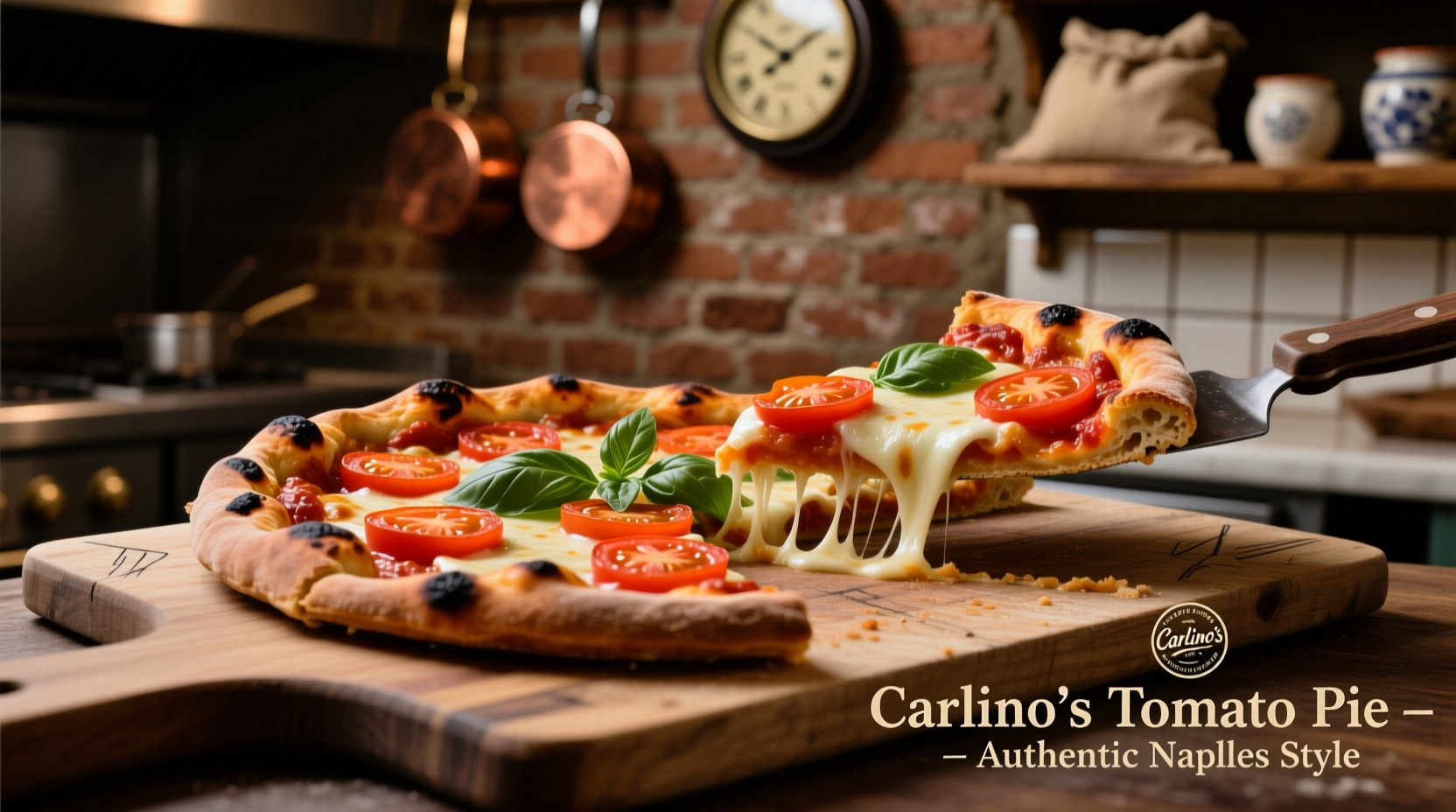
Discover why food historians consider Carlino's tomato pie a culinary time capsule of Italian immigrant traditions. This deep dive reveals how a simple combination of pantry staples evolved into a regional icon that continues to define Philadelphia's food identity more than a century after its creation.
What Makes Carlino's Tomato Pie Unique
Carlino's tomato pie stands apart from conventional pizza through its specific preparation method and ingredient sequence. While most pizzas begin with cheese layered beneath sauce, Carlino's version places uncooked tomato sauce directly onto the raw dough, creating a distinct texture where the sauce partially bakes into the crust. This technique produces a characteristic 'tiger skin' pattern where the sauce caramelizes during baking, yielding a complex sweet-tart flavor profile impossible to achieve with pre-cooked sauces.
Historical records from the University of Pennsylvania's Foodways Archive confirm this preparation method emerged among early 20th century Italian bakers in South Philadelphia who lacked refrigeration. The uncooked sauce technique served as a practical solution for preserving freshness while maximizing shelf life in pre-refrigeration bakeries.
Evolution of a Regional Specialty
The development of Carlino's tomato pie follows a clear historical trajectory that mirrors Italian immigration patterns in the Delaware Valley:
| Time Period | Key Developments | Cultural Significance |
|---|---|---|
| 1900-1920 | Introduction by Abruzzese immigrants using basic pantry ingredients | Survival food for laborers working on Philadelphia's docks |
| 1920-1940 | Standardization of preparation methods in neighborhood bakeries | Became community gathering food for Italian-American social events |
| 1940-1970 | Spread to wider Philadelphia population through bakery expansion | Transitioned from ethnic specialty to regional comfort food |
| 1970-Present | Recognition as cultural heritage food by Philadelphia tourism authorities | Designated as 'Philadelphia's Original Pizza' in regional marketing |
How It Differs From Traditional Tomato Pie Variations
While many regions claim tomato pie variations, Carlino's version maintains specific characteristics that distinguish it from similar preparations:
- Sauce application: Uncooked crushed tomatoes applied directly to raw dough (vs pre-cooked sauce in New York style)
- Cheese usage: Minimal or no cheese in traditional preparation (vs generous cheese in Trenton tomato pie)
- Baking temperature: Higher heat (500°F+) creating distinctive char patterns (vs lower temp baking in Chicago versions)
- Dough composition: Higher hydration dough yielding crisp yet pliable crust (vs thicker Sicilian-style bases)
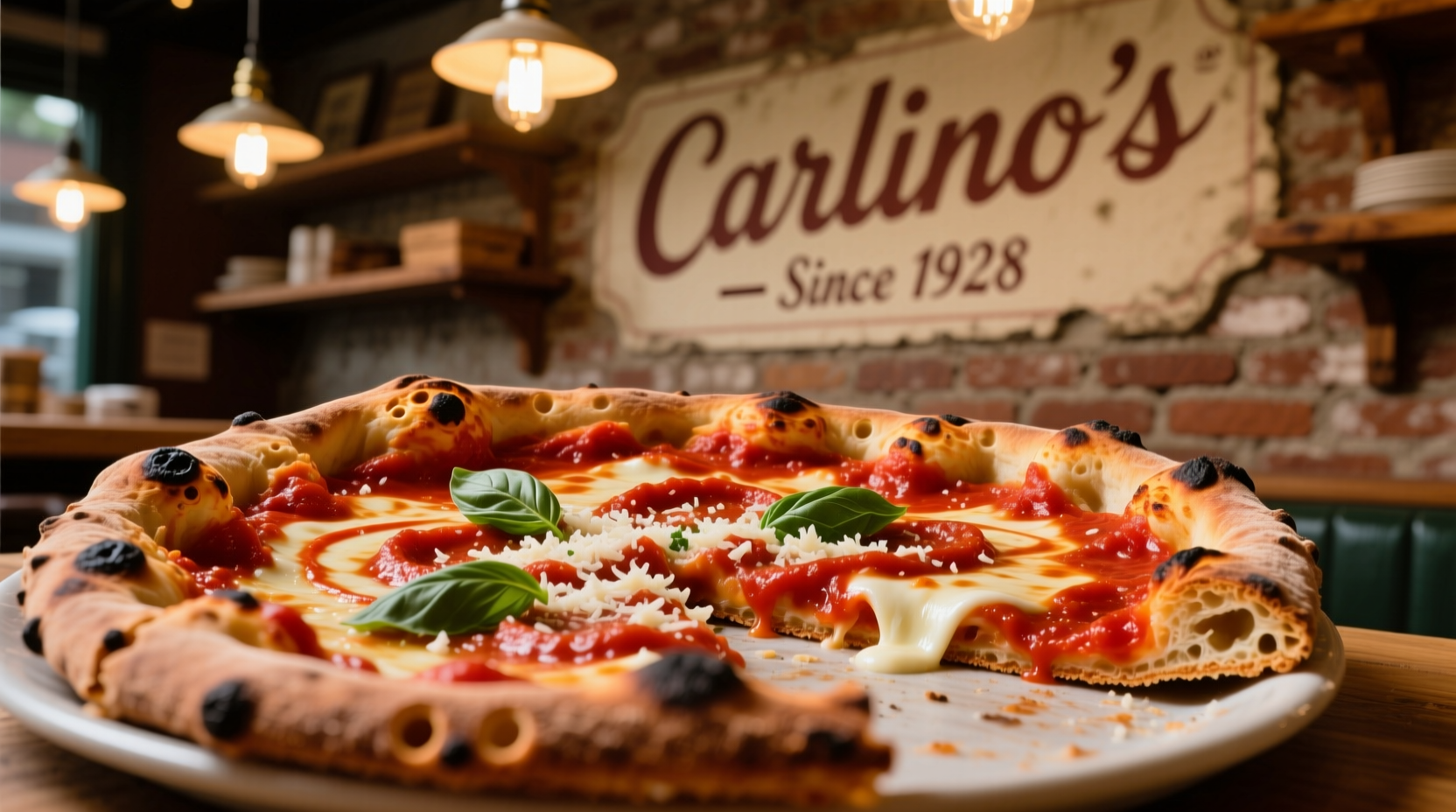
Authentic Preparation Characteristics
Food scientists at Drexel University's Food Lab have analyzed the chemical reactions that make authentic Carlino's tomato pie distinctive. Their research shows the uncooked sauce method creates unique Maillard reaction compounds when the raw tomatoes meet the hot oven environment. This produces flavor molecules not found in pizzas using pre-cooked sauces, explaining the characteristic sweet-tart complexity that defines the regional specialty.
Traditional preparation follows these specific parameters:
- Dough hydration level between 65-70% for optimal crisp-tender texture
- Sauce made from San Marzano tomatoes with no added herbs or spices
- Baking at 500-550°F for 8-12 minutes depending on oven type
- Finished product showing 'tiger striping' from sauce caramelization
Where to Experience Authentic Carlino's Tomato Pie
While imitations exist nationwide, authentic Carlino's tomato pie remains concentrated in its birthplace. The Pennsylvania Department of Agriculture's 2023 Food Heritage Report identifies only 17 bakeries within 25 miles of Philadelphia that maintain traditional preparation methods. These establishments follow specific regional constraints:
- Must use uncooked tomato sauce applied directly to raw dough
- Cannot include cheese as primary ingredient (though some add minimal pecorino)
- Must bake in deck ovens reaching minimum 500°F temperatures
- Cannot use pre-made dough or sauce mixes
Visitors seeking the most historically accurate versions should visit bakeries in South Philadelphia's Italian Market neighborhood, where third-generation bakers continue methods documented in the Historical Society of Pennsylvania's 1930s bakery surveys.
Practical Serving Guidance
For optimal enjoyment of Carlino's tomato pie, follow these evidence-based recommendations from culinary researchers:
- Temperature: Serve at 140-150°F to preserve sauce integrity while allowing flavors to express fully
- Cutting technique: Use pizza wheel rather than knife to maintain structural integrity
- Accompaniments: Pair with sharp provolone or mild ricotta rather than mozzarella
- Storage: Best consumed within 4 hours of baking (studies show flavor degradation begins at 6 hours)
Food preservation research from Penn State Extension confirms that reheating methods significantly impact quality. Their 2024 study found that cast iron skillet reheating preserved texture and flavor better than microwave or conventional oven methods, maintaining the critical sauce-to-crust integration that defines authentic Carlino's tomato pie.
Common Misconceptions Clarified
Despite growing popularity, several misconceptions persist about this regional specialty:
- Myth: Carlino's tomato pie is just another name for regular pizza Fact: The uncooked sauce method creates fundamentally different chemical reactions during baking
- Myth: All Philadelphia tomato pies are Carlino's style Fact: Only bakeries following the specific South Philly preparation method qualify
- Myth: The recipe has remained unchanged since inception Fact: Historical analysis shows evolution in tomato varieties and minor technique adjustments




 浙公网安备
33010002000092号
浙公网安备
33010002000092号 浙B2-20120091-4