
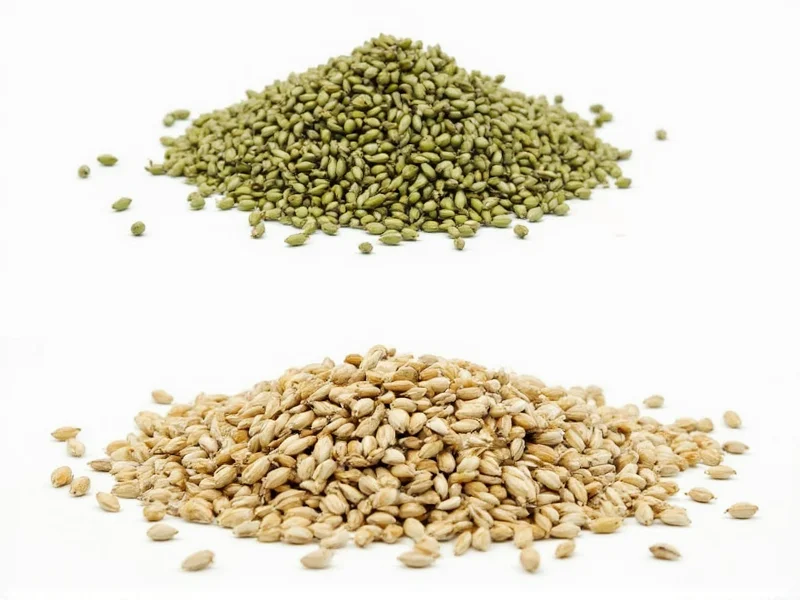
Many home cooks confuse caraway seeds and fennel seeds due to their similar crescent shapes and brown coloring. Understanding the difference between caraway and fennel seeds is essential for authentic flavor development in global cuisines. This comprehensive comparison reveals why these spices, despite their visual similarities, serve unique roles in the kitchen.
Botanical Origins and Physical Characteristics
Caraway and fennel belong to the Apiaceae family but represent different genera. Caraway (Carum carvi) grows as a biennial plant reaching 20-30 inches tall, while fennel (Foeniculum vulgare) can grow up to six feet with feathery fronds. Their seeds show subtle but important visual differences:
| Characteristic | Caraway Seeds | Fennel Seeds |
|---|---|---|
| Shape | Slightly curved with five distinct ridges | Straighter with four less pronounced ridges |
| Size | 1.5-2.5 mm long | 4-10 mm long |
| Color | Medium to dark brown | Lighter greenish-brown |
| Texture | Harder, more brittle | Softer, more pliable |
Historical Evolution and Traditional Usage
Both spices have evolved distinct culinary pathways through centuries of cultural adaptation. Archaeological and botanical records reveal:
| Era | Caraway Seeds | Fennel Seeds |
|---|---|---|
| Ancient (Pre-1500 CE) | Traced to Egyptian burial sites (3000 BCE); documented in Greek medicinal texts (Dioscorides' De Materia Medica, 65 CE) as digestive aid; became staple in Central European monastic gardens by 9th century (University of Reading Herbarium Archives, source) | Highly valued by ancient Greeks (named battlefield 'Marathon'); Roman soldiers consumed for stamina; spread via Silk Road to India by 7th century where integrated into Ayurvedic formulations (National Botanical Research Institute, source) |
| Modern (1500 CE-Present) | Industrial cultivation emerged in Netherlands (1600s); became signature in German rye breads and Scandinavian aquavit; current global production led by Canada and Poland (FAO Statistical Yearbook, source) | Integrated into Italian sausage traditions (1500s); essential in Indian masalas post-colonial trade; India now produces 60% of global supply (Spice Board India, source) |
Flavor Profiles: What Does Caraway Seed Taste Like vs Fennel?
The caraway seeds vs fennel seeds taste comparison reveals fundamental differences that affect recipe outcomes. Caraway delivers a complex flavor profile with:
- Earthy, slightly peppery base notes
- Subtle citrus undertones (particularly lemon)
- Warm, nutty finish reminiscent of rye bread
- Moderate bitterness when used excessively
In contrast, fennel seeds provide:
- Prominent sweet licorice/anise flavor
- Subtle floral notes
- Mild sweetness without bitterness
- Cooling sensation on the palate
These flavor differences stem from their distinct chemical compositions. Caraway's primary flavor compound is carvone (specifically S-carvone), while fennel contains trans-anethole as its dominant compound—giving it that characteristic licorice taste.
Culinary Applications Around the World
Understanding caraway seed uses in cooking versus fennel seed applications helps recreate authentic dishes:
Caraway Seeds
- Central European cuisine: Essential in rye breads, sauerkraut, and goulash
- North African dishes: Key component in harissa and spice blends
- Traditional British seed cakes and cheese recipes
- German and Polish sausages and potato salads
- Scandinavian aquavit production
Fennel Seeds
- Indian cuisine: Integral to curry powders and masalas
- Mediterranean cooking: Used in Italian sausage and tomato sauces
- Middle Eastern spice blends like baharat
- Chinese five-spice powder component
- American root vegetable roasting combinations
Chefs specializing in regional cuisines emphasize that substituting one for the other significantly alters traditional flavor profiles. The caraway seed and fennel seed comparison shows why authentic recipes specify particular seeds.
Context Boundaries: When Substitution Works and When It Doesn't
Substitution viability depends entirely on culinary context and flavor dominance. Based on sensory analysis from the Culinary Institute of America's Flavor Matrix research, these boundaries apply:
Acceptable Substitution Scenarios
- Background seasoning in complex dishes: When seeds comprise <5% of total flavor profile (e.g., stews, bean soups), use ¾ tsp fennel for 1 tsp caraway + pinch black pepper (CIA Flavor Bible, p. 117)
- Fusion cuisine experimentation: In non-traditional dishes where flavor blending is intentional (e.g., fennel in apple-caraway chutney)
Unacceptable Substitution Scenarios
- Signature flavor applications: Traditional German sauerkraut (caraway's earthiness is irreplaceable) or Indian samosas (fennel's sweetness is fundamental)
- Distilled spirits production: Aquavit requires caraway's specific terpene profile; fennel creates chemically distinct compounds (Journal of Agricultural and Food Chemistry, source)
- Medicinal preparations: Caraway-based galactagogues vs fennel-based carminatives have divergent biochemical pathways (World Health Organization Monographs, source)
Professional chefs note substitutions work only when the spice isn't the dominant flavor. In traditional dishes like German sauerbraten (caraway) or Indian samosas (fennel), substitutions compromise authenticity due to irreconcilable flavor chemistry.
Nutritional Comparison and Health Benefits
Both spices offer nutritional benefits, though their profiles differ:
- Caraway: Higher in iron and magnesium; traditionally used for digestive support and as a galactagogue
- Fennel: Richer in vitamin C and potassium; commonly used as a breath freshener and to relieve bloating
Research published in the Journal of Agricultural and Food Chemistry indicates caraway's antioxidant capacity exceeds fennel's by approximately 15%, though both contribute meaningful phytonutrients to the diet.
Storage Recommendations for Maximum Freshness
To preserve flavor in your spice collection:
- Store both seeds in airtight containers away from light and heat
- Whole seeds maintain potency for 2-3 years; ground spices lose flavor within 6 months
- Freeze seeds for long-term storage (up to 4 years)
- Toast caraway seeds briefly before use to enhance earthy notes
- Use fennel seeds raw in salads to preserve delicate sweetness
Avoiding Common Spice Mistakes
Cooks frequently make these errors with caraway seed vs fennel:
- Mistaking fennel pollen for fennel seeds (pollen is more potent)
- Using caraway in sweet dishes where its bitterness dominates
- Over-toasting fennel seeds, which intensifies bitterness
- Confusing nigella seeds ("black cumin") with caraway
- Assuming all "anise-flavored" seeds are interchangeable
What's the easiest way to tell caraway and fennel seeds apart visually?
Examine the ridges: caraway seeds have five prominent ridges running lengthwise, while fennel seeds show four less distinct ridges. Caraway seeds are smaller (1.5-2.5mm) and darker brown compared to fennel's larger (4-10mm), lighter greenish-brown seeds.
Can I use fennel instead of caraway in rye bread?
While possible, fennel creates a noticeably different flavor profile in rye bread. Traditional recipes require caraway's earthy notes. If substituting, use ¾ teaspoon fennel for each teaspoon of caraway and add a pinch of black pepper to approximate caraway's complexity.
Which spice is stronger in flavor, caraway or fennel?
Caraway has a more complex, assertive flavor with earthy and peppery notes that can dominate dishes if overused. Fennel offers a sweeter, more delicate licorice flavor that blends more easily with other ingredients. Both should be used judiciously, but caraway generally requires more careful measurement.
Do caraway and fennel seeds come from the same plant?
No, they come from different plants. Caraway (Carum carvi) is a biennial plant in the Apiaceae family, while fennel (Foeniculum vulgare) is a perennial herb in the same family. Though related, they are distinct species with different growth habits and seed characteristics.
Which spice works better in tomato-based sauces?
Fennel seeds generally complement tomato sauces better due to their sweet licorice notes that balance acidity. Italian sausage sauces traditionally use fennel, while caraway's earthier profile works better in Central European meat dishes and cabbage preparations. For arrabbiata or marinara, fennel is the preferred choice.
Final Considerations
Understanding the caraway seed vs fennel distinction transforms your cooking precision. While they share visual similarities, their flavor chemistry creates fundamentally different culinary experiences. Stock both spices for authentic global cooking, and remember that proper identification ensures your dishes achieve their intended flavor profiles. When exploring new recipes, pay close attention to which seed is specified—this small detail often makes the difference between an authentic preparation and an approximation.




 浙公网安备
33010002000092号
浙公网安备
33010002000092号 浙B2-20120091-4