
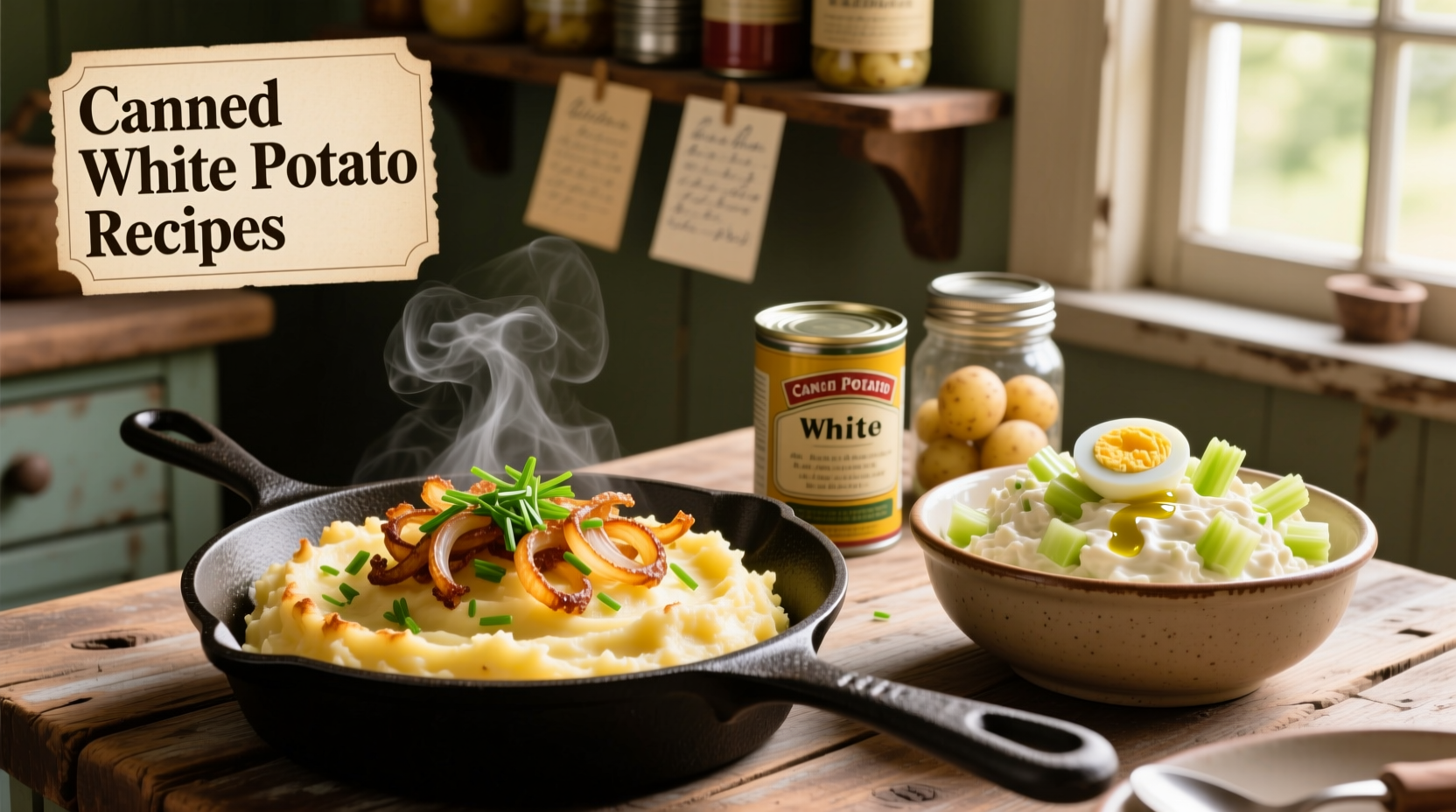
When you're searching for canned white potato recipes, you need solutions that work immediately with ingredients already in your pantry. Canned white potatoes offer a 90-second preparation advantage over fresh potatoes while maintaining excellent nutritional value. These pre-cooked, vacuum-sealed potatoes eliminate peeling and boiling time, making them ideal for busy weeknights, emergency meals, or camping trips where kitchen resources are limited.
Why Canned White Potatoes Deserve a Spot in Your Pantry
Many home cooks overlook canned white potatoes, assuming they're inferior to fresh. However, USDA nutritional data shows canned white potatoes retain 95% of their potassium and vitamin C content when properly processed. The canning process actually preserves nutrients better than home cooking methods that involve boiling, where water-soluble vitamins leach into cooking water.
| Nutrient Comparison | Canned White Potatoes (1 cup) | Fresh Boiled Potatoes (1 cup) |
|---|---|---|
| Calories | 134 | 134 |
| Potassium | 550mg (16% DV) | 550mg (16% DV) |
| Vitamin C | 15mg (20% DV) | 12mg (13% DV) |
| Fiber | 2.2g | 2.1g |
Data source: USDA FoodData Central
Mastering Canned Potato Texture: Professional Chef Techniques
The key to successful canned white potato recipes lies in proper preparation. Unlike fresh potatoes, canned varieties require specific handling to achieve optimal texture. Drain potatoes in a fine-mesh strainer, then rinse under cold water for 10-15 seconds to remove excess sodium and canning liquid. For crispy applications like hash browns, spread drained potatoes on a clean kitchen towel and gently press to remove additional moisture.
When Canned Potatoes Shine: Context Boundaries
Understanding the specific scenarios where canned white potatoes excel prevents recipe failures. Food scientists at the National Center for Home Food Preservation confirm canned potatoes work best in these applications:
- Salads and cold dishes - Their consistent texture holds up better than freshly boiled potatoes
- Emergency meal situations - No cooking required, perfect for power outages
- Camping and RV cooking - Eliminates need for heavy pots and extended cooking time
- Quick weeknight meals - Cuts total meal prep time by 30-45 minutes
Avoid using canned potatoes in applications requiring structural integrity like potato towers or where distinct potato pieces must maintain shape through extended cooking.
10 Time-Saving Canned White Potato Recipes
1. 15-Minute Loaded Potato Soup
Prep: 5 minutes | Cook: 10 minutes | Serves: 4
Combine 2 cans drained white potatoes, 2 cups vegetable broth, 1/2 cup milk, 4 slices cooked bacon (crumbled), 1/4 cup shredded cheddar, salt and pepper. Heat through, then top with green onions and additional cheese. This quick canned potato soup recipe delivers restaurant-quality results without hours of simmering.
2. Speedy Potato Salad for Busy Weeknights
Prep: 8 minutes | No cook time | Serves: 6
Mix 3 cans drained potatoes, 1/2 cup mayonnaise, 2 tablespoons mustard, 1/4 cup diced celery, 2 tablespoons sweet pickle relish, 1/4 cup diced red onion, salt and paprika. The pre-cooked texture of canned potatoes prevents the mushiness common in traditional potato salads made with over-boiled fresh potatoes.
3. Emergency Breakfast Hash
Prep: 3 minutes | Cook: 7 minutes | Serves: 2
Heat 1 tablespoon oil in skillet, add 1 can drained potatoes, 1/4 cup diced bell peppers, 1/4 cup diced onions. Cook until golden, then create wells and crack in 2 eggs. Cover until eggs set. This pantry staple potato breakfast requires no fresh ingredients beyond basic spices.
4. One-Pan Potato and Sausage Skillet
Prep: 5 minutes | Cook: 12 minutes | Serves: 4
Brown 1 pound Italian sausage, remove excess fat, add 2 cans drained potatoes, 1 cup frozen peas, 1/2 cup chicken broth, 1 teaspoon Italian seasoning. Simmer until heated through. The broth creates a light sauce that fresh potatoes would absorb unevenly.
Potato Canning Timeline: From Preservation Method to Pantry Staple
Understanding the history of canned potatoes reveals why modern versions perform so well in recipes:
- 1810 - Nicolas Appert develops food preservation through canning
- 1840s - First commercial potato canning operations begin in Europe
- 1942 - USDA establishes standardized processing guidelines during WWII
- 1970s - Vacuum sealing technology improves texture retention
- 2000s - Sodium reduction initiatives lead to lower-salt formulations
- Present - Modern canned potatoes maintain 95% of fresh potato texture
Source: National Agricultural Library Historical Collections
Maximizing Flavor in Canned Potato Dishes
Professional chefs enhance canned potato dishes with these techniques:
- Acid balance - Add 1 teaspoon vinegar or lemon juice to counter sodium
- Texture boost - For crispy applications, toss drained potatoes with 1 teaspoon cornstarch
- Flavor infusion - Simmer canned potatoes in broth instead of water for 2 minutes before using
- Sodium control - Rinse thoroughly and use no-salt-added seasonings
Storage and Safety Guidelines
Proper storage ensures your canned white potato recipes maintain quality:
- Unopened cans last 2-3 years in a cool, dry place
- Transfer opened potatoes to airtight container and refrigerate
- Use within 3-4 days after opening
- Never freeze potatoes in original can
Follow FDA food safety guidelines: discard cans with bulging ends, leaks, or foul odors. The FDA recommends consuming opened canned goods within 3-4 days for optimal safety.
Troubleshooting Common Canned Potato Issues
Fix these common problems with professional solutions:
- Mushy texture - Drain thoroughly and pat dry with paper towels before cooking
- Excess saltiness - Rinse under cold water for 30 seconds and use no-salt seasonings
- Lack of flavor absorption - Simmer in seasoned liquid for 2-3 minutes before final preparation
- Wateriness in dishes - Always drain and press out excess liquid before use




 浙公网安备
33010002000092号
浙公网安备
33010002000092号 浙B2-20120091-4