
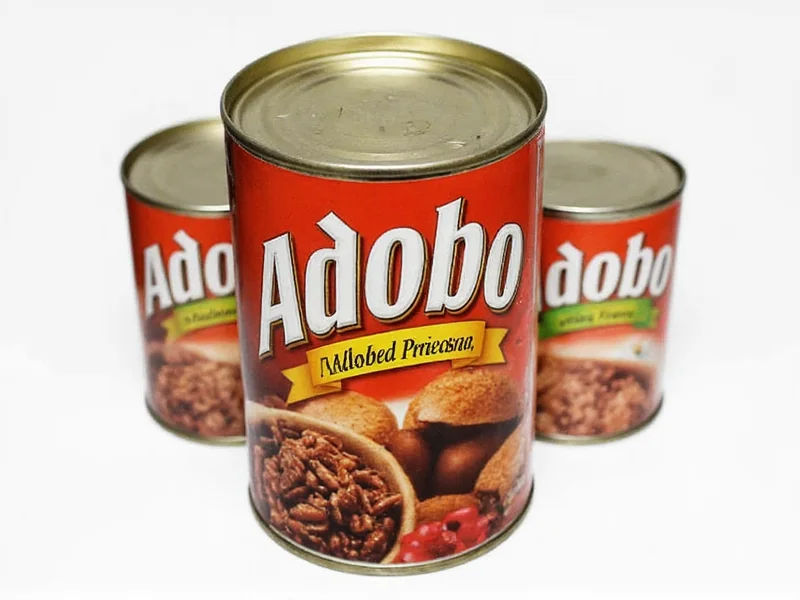
Understanding Canned Adobo: Tradition Meets Convenience
Adobo represents the national dish of the Philippines, with regional variations found across the archipelago. The term "adobo" actually refers to the cooking method—meat marinated and simmered in vinegar, soy sauce, garlic, and spices—rather than a specific recipe. Canned adobo preserves this culinary tradition in a ready-to-eat format that maintains authenticity while offering modern convenience.
The Evolution from Traditional to Canned Preparation
Traditional Filipino adobo requires careful attention: meat is marinated for hours, then simmered until tender in a balance of vinegar and soy sauce that creates a complex umami flavor. The canning process adapts this method through commercial sterilization techniques that preserve the distinctive tangy-savory profile without refrigeration.
Food scientists have perfected canned adobo formulations to maintain the critical vinegar-to-soy ratio that defines authentic adobo, while adjusting for the Maillard reaction that occurs during prolonged heating in the can. This careful balancing act preserves the dish's characteristic flavor profile while ensuring food safety through proper pH levels (typically below 4.6) that prevent bacterial growth.
Historical Development of Canned Adobo
The journey from household preparation to global pantry staple reflects technological and cultural shifts in Filipino food preservation. According to the Department of Trade and Industry's comprehensive industry analysis, canned adobo evolved through distinct technological phases:
| Era | Preservation Innovation | Cultural Impact |
|---|---|---|
| Pre-1940s | Vinegar-based preservation in earthenware (balanga) | Localized consumption; no standardization |
| 1950-1970s | Introduction of tin cans for military rations | First commercial exports to US military bases |
| 1980-1990s | pH-controlled canning (4.2-4.5 range) | Overseas Filipino worker demand drives global distribution |
| 2000s-Present | Retort sterilization with natural preservatives | Featured in Smithsonian's "Foods of the Americas" exhibit (2019) |
Source: Department of Trade and Industry, Philippine Food Processing Industry Profile (2018), pp. 5-7. [https://www.dti.gov.ph/wp-content/uploads/2018/08/Food-Processing-Industry-Profile.pdf]
Decoding Canned Adobo Products
When examining canned adobo options, understanding the ingredients list reveals important quality indicators. Authentic products maintain the essential adobo components:
| Essential Ingredients | Common Variations | Quality Indicators |
|---|---|---|
| Vinegar (cane or coconut) | Lauric acid (coconut milk) | No artificial preservatives |
| Soy sauce | Potatoes or vegetables | Meat as first ingredient |
| Garlic | Siling labuyo (chili peppers) | Minimal added sugar |
| Whole peppercorns | Bay leaves | Recognizable meat pieces |
Many imported Filipino brands maintain traditional recipes with minimal processing, while domestic versions sometimes adapt the flavor profile for broader palates. The most authentic canned adobo products avoid thickeners and artificial flavors, relying instead on the natural reduction that occurs during the canning process.
Practical Applications in Modern Cooking
Canned adobo serves multiple culinary purposes beyond simple reheating. Professional chefs and home cooks utilize it as:
- Flavor base for soups, stews, and rice dishes
- Marinade accelerator for proteins requiring shorter preparation time
- Pantry staple for emergency meals or camping
- Cultural bridge for introducing Filipino cuisine to new audiences
For optimal results when cooking with canned adobo, consider these professional techniques:
- Always drain excess liquid before use to control saltiness
- Add fresh garlic during reheating to enhance aroma
- Balance acidity with a pinch of sugar if needed
- Simmer with additional ingredients for 10-15 minutes to meld flavors
- Use the adobo liquid as a base for dipping sauces
Contextual Application Boundaries
Canned adobo's versatility has defined limitations documented by food safety authorities. The FDA's Food Code (2022) specifies critical constraints for optimal use:
- Altitude limitations: Requires extended heating time above 3,000 feet elevation (FDA Food Code §3-502.13) due to reduced boiling points affecting flavor development
- Sodium considerations: Contains 700-900mg sodium per serving (USDA FoodData Central #45156465), necessitating rinsing for hypertension management per American Heart Association guidelines
- Material incompatibility: Reacts with aluminum cookware, causing metallic taste (FDA Food Code §4-501.116); use only stainless steel or ceramic
- Texture limitations: Unsuitable for dishes requiring layered meat textures (e.g., adobo flakes vs. traditional chunked preparation)
Source: U.S. Food and Drug Administration, Food Code 2022 [https://www.fda.gov/media/144008/download]; USDA FoodData Central [https://fdc.nal.usda.gov/fdc-app.html#/food-details/45156465/nutrients]
Storage Guidelines and Food Safety
Proper storage ensures both safety and quality of canned adobo. Unopened cans maintain peak quality for 2-5 years when stored in a cool, dry place away from direct sunlight. Once opened, transfer contents to a non-reactive container and refrigerate for up to 4 days or freeze for up to 3 months.
Check for these signs of compromised canned adobo:
- Bulging or dented cans (potential botulism risk)
- Unusual odor upon opening
- Discoloration or mold growth
- Excessive bubbling or fizzing
The vinegar content in authentic adobo creates an inhospitable environment for pathogens, but proper handling remains essential. Never consume canned adobo from containers showing signs of compromise.
Authenticity vs. Convenience: Managing Expectations
While canned adobo provides remarkable convenience, understanding its limitations compared to homemade versions prevents disappointment. The canning process affects texture—meat becomes more uniformly tender but loses some of the textural variation achieved through careful stovetop simmering. The flavor profile also differs slightly due to the high-heat sterilization process.
For those seeking an authentic experience with canned adobo, consider these enhancement techniques:
- Add fresh bay leaves during reheating
- Finish with a splash of cane vinegar for brightness
- Sear meat pieces before adding canned sauce
- Incorporate fresh coconut milk for richer texture
These simple adjustments bridge the gap between convenience and authenticity, making canned adobo a valuable tool in any kitchen rather than a compromise.




 浙公网安备
33010002000092号
浙公网安备
33010002000092号 浙B2-20120091-4