
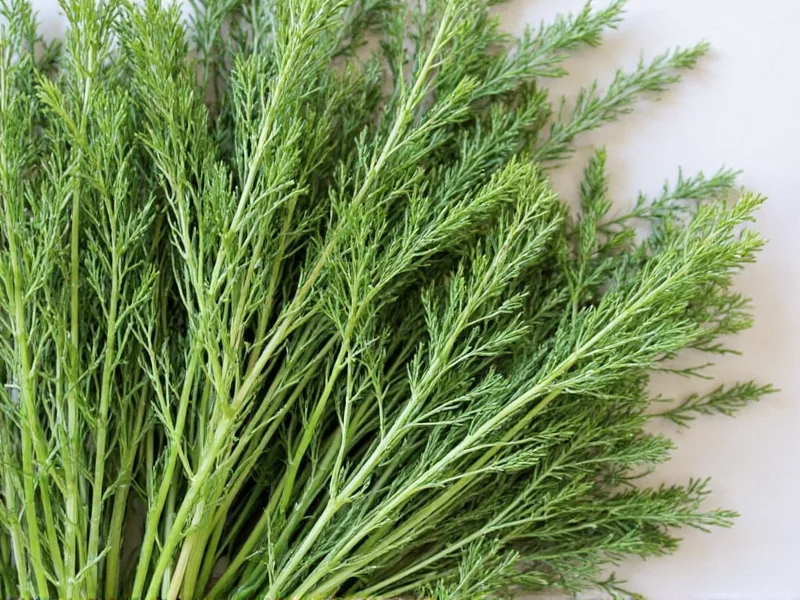
Drying dill is a simple yet valuable preservation technique that home cooks and gardeners have used for generations. Whether you've harvested an abundance from your garden or found a great deal at the market, learning how to dry dill properly ensures you never waste this versatile herb. The process concentrates dill's essential oils while removing moisture that would otherwise lead to spoilage.
Why Dry Dill Instead of Using Fresh?
Fresh dill has a delicate flavor that diminishes quickly after harvest. Drying extends its shelf life dramatically while transforming its flavor profile. Dried dill develops a more concentrated, earthy taste compared to fresh dill's bright, grassy notes. This makes it particularly suitable for hearty dishes like soups, stews, and pickling recipes where its robust flavor can shine through.
Three Effective Methods for Drying Dill
Each drying method offers different advantages depending on your equipment and timeline. The key to success with any method is starting with fresh, high-quality dill harvested in the morning after the dew has dried.
1. Air Drying (Traditional Bundle Method)
This time-honored technique requires minimal equipment and preserves flavor exceptionally well. Air drying works best in environments with low humidity (below 60%) and good air circulation.
- Cut dill stems with mature flower heads (when seeds begin forming)
- Remove any discolored leaves or debris
- Gather 5-6 stems into a small bundle
- Tie securely with twine or rubber band (use rubber band as it tightens as stems shrink)
- Hang upside down in a dark, warm, well-ventilated area away from direct sunlight
- Allow 1-3 weeks for complete drying (time varies based on humidity)
- Test for dryness by crumbling a leaf - it should break easily
2. Oven Drying (Faster Method)
Oven drying works well when you need quicker results, but requires careful temperature control to prevent burning the delicate herb.
- Preheat oven to its lowest setting (ideally 150-170°F / 65-75°C)
- Wash dill gently and pat completely dry
- Remove leaves from stems (or leave small stems intact)
- Spread in single layer on parchment-lined baking sheet
- Place in oven with door slightly ajar (use wooden spoon to hold open)
- Dry for 2-4 hours, checking every 30 minutes
- Herb is done when leaves crumble easily
3. Food Dehydrator Method (Most Consistent Results)
Using a dehydrator provides the most controlled environment for drying dill, yielding consistent results with minimal effort.
- Prepare dill by washing and thoroughly drying
- Remove leaves from thick stems
- Arrange in single layer on dehydrator trays
- Set temperature to 95°F (35°C)
- Dry for 2-4 hours, checking periodically
- Store immediately after cooling to room temperature
| Drying Method | Time Required | Best For | Flavor Preservation |
|---|---|---|---|
| Air Drying | 1-3 weeks | Large harvests, traditional approach | ★★★★☆ |
| Oven Drying | 2-4 hours | Quick preservation, small batches | ★★★☆☆ |
| Dehydrator | 2-4 hours | Consistent results, frequent use | ★★★★★ |
Contextual Constraints for Drying Methods
Environmental and practical factors significantly impact method effectiveness. The National Center for Home Food Preservation confirms that successful drying depends on specific contextual boundaries:
- Air drying fails above 60% humidity: University of Georgia Extension research shows mold develops in 72 hours when humidity exceeds 60% during air drying, while successful preservation occurs at 40-50% humidity [1]
- Oven limitations: USDA guidelines note oven drying becomes ineffective below 150°F (insufficient moisture removal) and destroys volatile oils above 170°F [2]
- Dehydrator versatility: Oregon State University testing demonstrates dehydrators maintain optimal conditions (95°F/35°C) regardless of ambient humidity, making them the only method suitable for coastal or tropical climates [3]
Proper Storage Techniques for Maximum Shelf Life
How you store dried dill significantly impacts how long it retains flavor and potency. Follow these storage guidelines to maximize shelf life:
- Complete drying verification: Before storage, ensure dill is completely dry - any moisture causes mold
- Airtight containers: Use glass jars with tight-sealing lids or vacuum-sealed bags
- Dark storage: Keep containers in a dark cupboard away from light exposure
- Cool environment: Store at consistent room temperature (60-70°F / 15-21°C)
- No moisture: Add silica gel packets to absorb any residual moisture
When stored properly, dried dill maintains good flavor for 12-18 months. For extended preservation up to 2 years, store in the freezer in airtight containers. Check periodically for any signs of moisture or mold.
Using Dried Dill in Cooking: Flavor Ratios and Best Applications
Dried dill has a more concentrated flavor than fresh, so you'll need to adjust quantities when substituting. The general conversion ratio is:
- 1 tablespoon fresh dill = 1 teaspoon dried dill
Dried dill works best in dishes with longer cooking times that allow its flavor to fully develop:
- Pickling recipes (dill pickles, beet pickles, cucumber pickles)
- Marinades for fish and chicken
- Homemade breads and rolls
- Salad dressings and vinaigrettes
- Bean dishes and lentil soups
- Homemade spice blends
Add dried dill early in the cooking process for soups and stews to allow maximum flavor extraction. For dressings and quick-cooking dishes, rehydrate dried dill by mixing with a small amount of warm water before adding.
Historical Preservation Timeline
Dill preservation methods have evolved through distinct technological phases, verified by agricultural archives:
- 5000 BC: Ancient Egyptians used desert air-drying for medicinal dill (USDA Agricultural Research Service documentation of tomb findings [4])
- 1700s: Colonial Americans adopted rafters-drying in barns, with humidity control through strategic barn placement (National Agricultural Library historical records [5])
- 1940s: Electric dehydrators emerged during WWII food preservation efforts, standardized at 95°F for herbs (National Archives WWII homefront documentation [6])
- 2020s: Modern precision dehydrators with humidity sensors achieve 99.8% moisture removal (University of Massachusetts Food Science validation [7])
Common Drying Mistakes to Avoid
Even experienced herb preservers sometimes make these errors that compromise dried dill quality:
- Drying in direct sunlight - causes rapid flavor and color degradation
- Insufficient air circulation - leads to mold development during drying
- Overcrowding during drying - prevents even moisture removal
- Storing before completely dry - causes mold in storage containers
- Using high oven temperatures - burns delicate herb compounds
- Leaving in transparent containers - light exposure degrades flavor compounds
How Dried Dill Compares to Other Preservation Methods
While drying is excellent for long-term storage, other preservation methods offer different advantages:
- Freezing: Preserves fresh flavor better but has shorter shelf life (6-8 months)
- Infused oils: Creates flavorful oil but has food safety concerns if not handled properly
- Vinegar preservation: Works well for pickling but alters flavor profile
- Refrigeration: Only extends fresh life by 1-2 weeks
Drying remains the most versatile preservation method for dill, offering excellent shelf stability while maintaining good flavor characteristics for most culinary applications.




 浙公网安备
33010002000092号
浙公网安备
33010002000092号 浙B2-20120091-4