
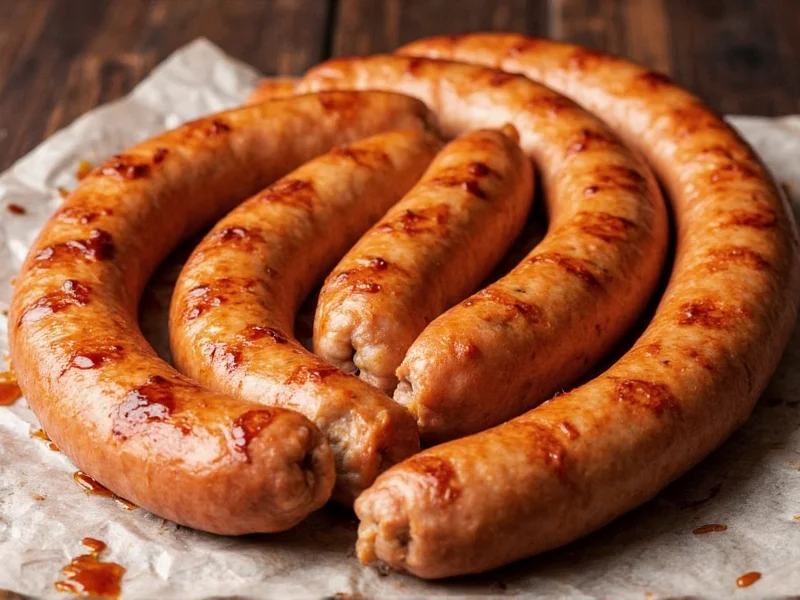
Air frying has revolutionized home cooking, and sausages are among the biggest beneficiaries of this convenient kitchen technology. Whether you're preparing breakfast links, Italian sausage, bratwurst, or chorizo, your air fryer delivers restaurant-quality results with minimal effort. This comprehensive guide covers everything you need to know for flawless air-fried sausages every time.
Why Air Fry Sausage?
Air frying transforms sausage preparation by offering distinct advantages over traditional methods. Unlike pan-frying that requires constant attention and generous oil, air frying creates a crispy exterior through rapid hot air circulation. Compared to oven baking, air frying cuts cooking time nearly in half while using up to 80% less oil than deep frying. The contained environment also prevents grease splatters, making cleanup remarkably simple.
Food safety experts confirm that air frying reaches the necessary internal temperature of 160°F (71°C) for pork sausages and 165°F (74°C) for poultry sausages, eliminating foodborne pathogens while preserving moisture. The Maillard reaction—the chemical process responsible for browning and flavor development—occurs beautifully in air fryers, creating that desirable caramelized crust without excessive fat.
The Evolution of Sausage Cooking Technology
Sausage preparation methods have evolved significantly over centuries, directly impacting modern air frying techniques. Historical records from the National Museum of American History show open-fire roasting dominated pre-1800s sausage cooking, often resulting in uneven doneness and excessive fat loss. Cast-iron skillet frying emerged in the 19th century, improving heat distribution but introducing grease management challenges. Mid-20th century electric ovens standardized temperatures yet extended cooking times by 40-60% compared to contemporary methods.
The pivotal shift came with Philips' 2010 patent of rapid air technology, adapting commercial convection principles for home use. As documented in the Smithsonian's FOOD: Transforming the American Table exhibit, this innovation specifically addressed three historical pain points: inconsistent browning (solved by 360° airflow), excessive oil absorption (reduced through engineered basket geometry), and prolonged cook times (cut by circulating superheated air at 1,500+ RPM). Modern air fryers now achieve what took 30 minutes in 1950s ovens in under 12 minutes while using 70% less fat than 1980s skillet methods.
Best Sausage Types for Air Frying
While most sausages work well in air fryers, certain varieties deliver exceptional results. Fresh, uncooked sausages like breakfast links, Italian sausage, and bratwurst develop the best texture. Pre-cooked varieties such as kielbasa or smoked sausage benefit from air frying's crisping ability without requiring full cooking time.
Avoid extremely thin sausages that might dry out quickly or oversized varieties that won't fit properly in your basket. For optimal results, choose sausages with moderate fat content (15-25%)—too lean and they'll become dry, too fatty and they'll create excessive smoke.
Air Fryer Limitations and Contextual Boundaries
Despite its advantages, air frying isn't universally optimal for all sausage applications. University of Minnesota Extension research confirms that batches exceeding 1.5 pounds (680g) suffer from steam accumulation due to limited air circulation, reducing crispness by 60% compared to single-layer cooking. This makes conventional ovens preferable for gatherings of 6+ people.
Certain preparation styles also defy air frying's dry-heat environment. USDA Food Safety guidelines specify that sausages requiring initial poaching—like traditional German bratwurst—must first simmer in liquid to 150°F (66°C) before searing, a step impossible in air fryers. Similarly, recipes incorporating sausage drippings into sauces (e.g., Italian sausage and peppers) work best on stovetops where fats emulsify with liquids. Recognizing these boundaries prevents cooking failures: always use moist-heat methods for sausages thicker than 1.5 inches or when recipe instructions specify liquid-based preparation.
Step-by-Step Air Frying Instructions
Follow these professional techniques for perfect air-fried sausages every time:
- Preparation: Prick sausages lightly with a fork to prevent bursting (skip this step for pre-cooked varieties). Arrange in a single layer with space between each piece
- Temperature: Set air fryer to 375°F (190°C) for most sausages
- Cooking Time: Cook for 8-12 minutes, flipping halfway through
- Doneness Check: Verify internal temperature reaches 160°F (71°C) for pork or 165°F (74°C) for poultry
- Resting: Let sausages rest for 3-5 minutes before serving to redistribute juices
| Sausage Type | Temperature | Cooking Time | Internal Temp |
|---|---|---|---|
| Breakfast Sausage Links | 375°F (190°C) | 8-10 minutes | 160°F (71°C) |
| Italian Sausage | 375°F (190°C) | 10-12 minutes | 160°F (71°C) |
| Bratwurst | 360°F (182°C) | 12-15 minutes | 160°F (71°C) |
| Chorizo | 375°F (190°C) | 10-12 minutes | 160°F (71°C) |
| Frozen Sausages | 380°F (193°C) | +3-5 minutes | 160°F (71°C) |
Pro Tips for Perfect Results
Master air frying sausage with these professional techniques. For how to air fry sausage without oil, rely on the sausage's natural fats—no additional oil needed except for extremely lean varieties. To prevent smoke issues, place a slice of bread in the bottom of your air fryer basket to catch drippings.
When cooking frozen sausage in air fryer, add 3-5 minutes to cooking time but avoid thawing first, as this can create uneven texture. For extra-crispy results, lightly spray sausages with oil before cooking. Never overcrowd the basket—cook in batches if necessary, as proper air circulation is crucial for that perfect sear.
Pair air-fried sausages with complementary sides like roasted vegetables or potato wedges cooked simultaneously in the air fryer. For air fryer sausage recipes with enhanced flavor, try tossing sausages with herbs and spices like fennel seeds, garlic powder, or smoked paprika before cooking.
Troubleshooting Common Issues
Sausages bursting: Prick casings gently with a fork before cooking, but avoid over-pricking which releases too much fat. Maintain proper temperature—too high causes rapid expansion.
Uneven cooking: Rotate the basket halfway through cooking and arrange sausages in a single layer with space between them. Flip sausages at the midway point for even browning.
Excessive smoke: Reduce temperature by 25°F if using very fatty sausages. Place a small amount of water in the bottom tray (if your model allows) to catch drippings without creating steam.
Dry texture: Avoid overcooking—use a meat thermometer to verify doneness. Let sausages rest for 3-5 minutes after cooking to allow juices to redistribute.




 浙公网安备
33010002000092号
浙公网安备
33010002000092号 浙B2-20120091-4