
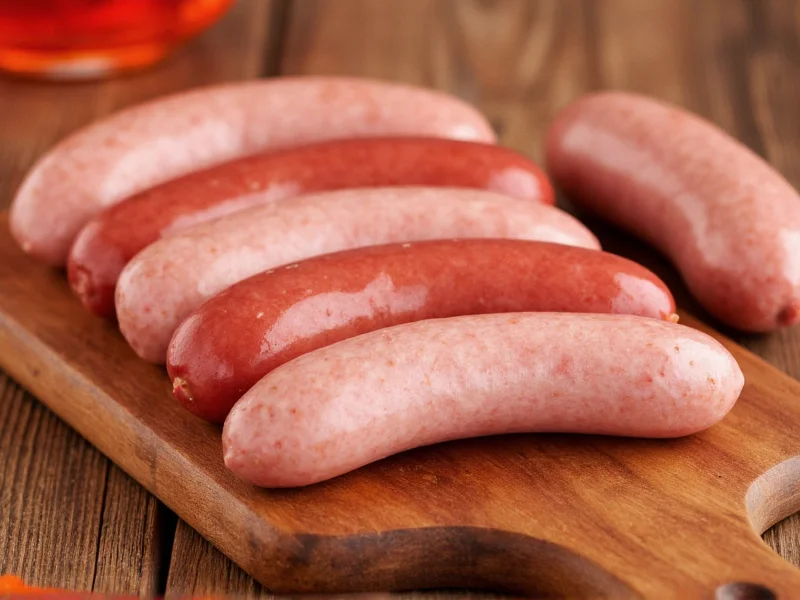
Many home cooks mistakenly believe that pink sausage indicates undercooking, potentially leading to overcooked, dry products. Understanding the science behind meat coloration prevents unnecessary food waste while maintaining safety standards. This guide explains why color alone shouldn't determine sausage doneness and provides reliable methods for ensuring food safety.
This misconception has significant real-world impact. According to the USDA's 2018 Food Safety Survey, 61% of consumers rely on color to determine doneness of ground meat products (including sausage), while only 32% use a food thermometer—leading to both overcooked meals and potential food safety risks.
Why Sausage Stays Pink After Cooking
Sausage often retains pink color due to chemical reactions involving myoglobin, the protein responsible for meat's red color. When exposed to heat, myoglobin typically turns brown—but certain conditions preserve pink hues:
- Nitrites and nitrates in cured sausages react with myoglobin to form nitrosomyoglobin, which maintains pink color even at safe temperatures
- Low cooking temperatures below 140°F (60°C) can cause myoglobin to retain oxygen-binding capacity
- Acidic ingredients like wine or vinegar affect protein structure and color retention
- Smoking process creates chemical compounds that stabilize pink pigments
| Sausage Type | Typical Color When Properly Cooked | Safe Internal Temperature |
|---|---|---|
| Fresh pork sausage | Brown to light pink | 160°F (71°C) |
| Smoked sausage | Pink throughout | 160°F (71°C) |
| Italian sausage | Light pink center | 160°F (71°C) |
| Breakfast sausage | Pale pink | 160°F (71°C) |
| Chicken sausage | White to light pink | 165°F (74°C) |
Reliable Methods to Check Sausage Doneness
Color alone provides unreliable doneness indicators. Food safety experts recommend these verification methods:
Use a Food Thermometer
The USDA Food Safety and Inspection Service confirms that sausage is safe when it reaches these internal temperatures:
- Pork, beef, lamb sausages: 160°F (71°C)
- Poultry sausages: 165°F (74°C)
Insert the thermometer into the thickest part of the sausage, avoiding contact with the cooking surface.
Texture and Juices Test
When properly cooked, sausage should:
- Feel firm but not hard when pressed
- Release clear (not pink) juices when pierced
- Have no soft or mushy spots
Contextual Boundaries: Safe Pink vs. Dangerous Scenarios
Pink coloration exists within specific contextual boundaries defined by sausage composition and preparation. Recognizing these prevents both food waste and safety risks:
- Safe Pink Conditions
- Cured sausages at ≥160°F (71°C) with nitrite-fixed pigments (e.g., kielbasa)
- Smoked sausages regardless of temperature due to smoke-phenol reactions
- Italian sausage with wine/vinegar below 140°F (60°C) where acid preserves myoglobin
- Dangerous Pink Conditions
- Uncured fresh sausage below 160°F (71°C) with raw translucency
- Pink juices indicating hemoglobin breakdown failure
- Surface slime or ammonia odors at any temperature
These boundaries align with USDA research showing that "cooked meat may be pink inside even after safe cooking" due to chemical reactions unrelated to pathogens (USDA FSIS Color Guide).
Common Misconceptions About Sausage Color
Several myths persist about sausage doneness and color:
Myth: "Pink sausage always means it's undercooked"
Fact: Cured sausages like kielbasa maintain pink color regardless of cooking temperature due to nitrite chemistry.
Myth: "If it's brown, it's safe"
Fact: Some sausages can brown prematurely through surface reactions while remaining undercooked internally.
Myth: "Clear juices guarantee safety"
Fact: While clear juices indicate proper cooking in many cases, temperature verification remains the only reliable method.
Special Considerations for Different Sausage Types
Various sausage preparations affect color retention:
- Cured sausages - Contain sodium nitrite which fixes pink color permanently
- Smoked sausages - Smoke compounds react with meat proteins to preserve pink hue
- Pre-cooked sausages - Often remain pink despite being fully cooked during manufacturing
- Homemade sausages - Without curing agents, should turn brown when properly cooked
Understanding these distinctions helps prevent both food waste from overcooking and potential foodborne illness from undercooking. Always prioritize temperature verification over visual assessment when determining if sausage is safe to eat.
Food Safety Best Practices
Follow these guidelines for safe sausage preparation:
- Store raw sausage below 40°F (4°C) and use within 1-2 days
- Never partially cook sausage then refrigerate for later completion
- Clean all surfaces that contact raw sausage with hot, soapy water
- Use separate cutting boards for raw meats and ready-to-eat foods
- Refrigerate leftovers within two hours of cooking




 浙公网安备
33010002000092号
浙公网安备
33010002000092号 浙B2-20120091-4