
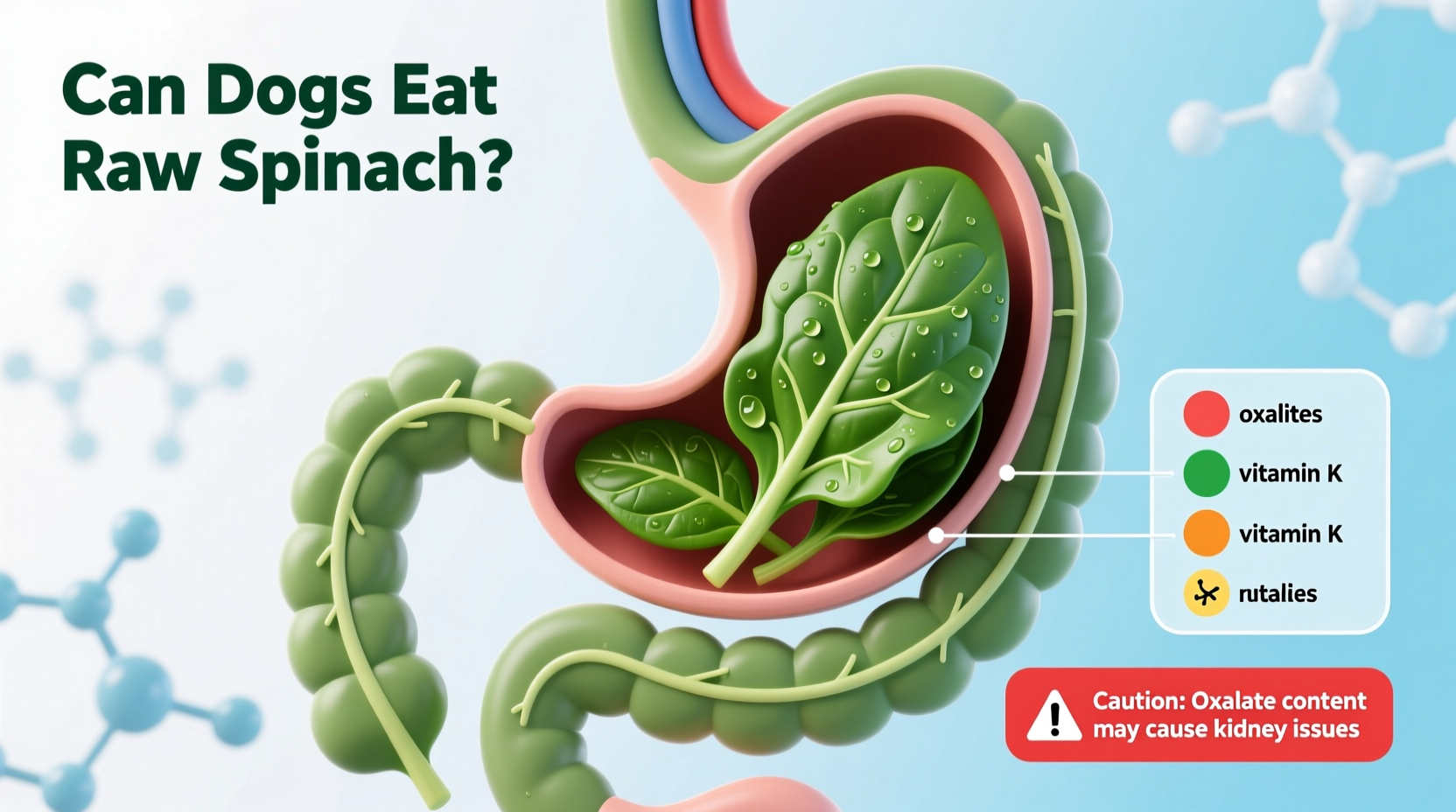
As a concerned dog owner, you've probably wondered whether that leafy green vegetable in your fridge is safe for your furry companion. While spinach contains valuable nutrients like iron, fiber, and vitamins A, B, and K, its oxalate content requires careful consideration when feeding to dogs. This comprehensive guide provides evidence-based information on safely incorporating spinach into your dog's diet while avoiding potential health risks.
Understanding Spinach's Nutritional Profile for Dogs
Spinach offers several beneficial nutrients that can support your dog's health when given in appropriate quantities. The dark green leaves contain vitamins A, C, and K, plus minerals like iron and potassium. These nutrients support vision, immune function, and blood health. However, the key question isn't whether spinach has nutritional value, but whether dogs can effectively process and benefit from these nutrients without adverse effects.
| Nutrient | Benefit for Dogs | Consideration |
|---|---|---|
| Vitamin A | Supports vision and immune function | Dogs convert beta-carotene more efficiently than humans |
| Vitamin K | Essential for blood clotting | Generally safe unless dog is on blood thinners |
| Iron | Supports healthy blood cells | Excess can cause digestive upset |
| Oxalates | No significant benefit | Can contribute to kidney/bladder stones in susceptible dogs |
Why Oxalates Matter in Canine Nutrition
The primary concern with feeding spinach to dogs is its oxalate content. Oxalates are naturally occurring compounds that can bind with calcium to form crystals. According to research from the Veterinary Information Network, dogs with pre-existing kidney conditions or certain genetic predispositions may be at higher risk when consuming high-oxalate foods regularly. The American College of Veterinary Internal Medicine notes that while occasional small servings pose minimal risk for healthy dogs, consistent consumption could potentially contribute to urinary crystal formation over time.
Safe Feeding Guidelines for Dog Owners
When incorporating spinach into your dog's diet, follow these evidence-based recommendations:
- Portion control: Limit to 1-2 small leaves for small dogs, 3-4 for medium dogs, and 5-6 for large breeds, no more than once or twice weekly
- Preparation matters: Lightly steaming spinach reduces oxalate content while preserving nutrients better than boiling
- Monitor reactions: Watch for digestive upset, changes in urination patterns, or lethargy after introducing new foods
- Consider your dog's health status: Avoid spinach completely for dogs with kidney disease, bladder stones, or calcium oxalate crystal history

When Spinach Becomes a Health Concern
Certain scenarios require complete avoidance of spinach in your dog's diet. The ASPCA Animal Poison Control Center identifies these critical context boundaries:
- Dogs with pre-existing kidney disease should avoid spinach entirely
- Puppies under six months have developing systems more sensitive to dietary changes
- Dogs with calcium oxalate bladder stones must eliminate high-oxalate foods
- Large-breed dogs predisposed to urinary issues need stricter dietary monitoring
Better Vegetable Alternatives for Dogs
If you're looking to add greens to your dog's diet, several safer options provide similar nutritional benefits without the oxalate concerns:
- Green beans: Low in calories, high in fiber, and generally well-tolerated
- Cucumber: Hydrating with minimal calories and no known toxicity
- Carrots: Rich in beta-carotene and safe for regular consumption
- Zucchini: Easily digestible with valuable nutrients and low oxalate content
Always introduce new foods gradually and consult your veterinarian before making significant dietary changes, especially for dogs with health conditions. Remember that treats and supplemental foods should never exceed 10% of your dog's daily caloric intake.




 浙公网安备
33010002000092号
浙公网安备
33010002000092号 浙B2-20120091-4