
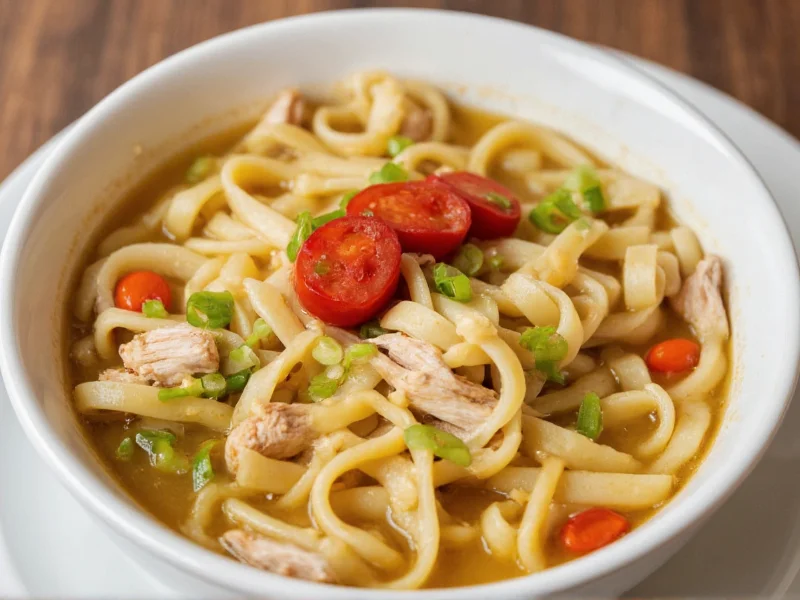
When considering whether can dogs eat chicken noodle soup, the answer depends entirely on the ingredients and preparation method. While plain chicken and certain vegetables are safe for dogs, many common soup components pose serious health risks.
Understanding Chicken Noodle Soup Ingredients for Dogs
Commercial chicken noodle soup contains several ingredients that make it unsuitable for canine consumption. Let's break down the components:
| Ingredient | Safe for Dogs? | Reason |
|---|---|---|
| Plain cooked chicken | Yes | Excellent protein source when boneless and skinless |
| Chicken broth (store-bought) | No | Excessively high sodium content (300-800mg per serving) |
| Onions and garlic | No | Causes hemolytic anemia, even in small amounts |
| Plain noodles/pasta | Yes (in moderation) | Provides carbohydrates but offers little nutritional value |
| Carrots and celery | Yes | Safe vegetables that add fiber and nutrients |
| Seasonings and herbs | Most no | Many contain toxic compounds for dogs |
The Dangers of Store-Bought Chicken Noodle Soup
Most canned or packaged chicken noodle soup for dogs contains dangerously high sodium levels. A single serving can contain 300-800mg of sodium, far exceeding the recommended daily intake for dogs.
Understanding the stark difference in sodium levels is crucial for canine safety. The following comparison shows measured values from authoritative sources:
| Product | Sodium per Serving | Serving Size | Source |
|---|---|---|---|
| Campbell's Red & White Chicken Noodle Soup | 890 mg | 1/2 cup (125g) | Campbell's Nutrition |
| Swanson Chicken Broth (Original) | 880 mg | 1 cup (245g) | Swanson Broth |
| Homemade Chicken Broth (no salt) | < 100 mg | 1 cup (240ml) | AKC Guidelines |
Excessive sodium causes:
- Dehydration and increased thirst
- Potential kidney strain
- Digestive upset including vomiting and diarrhea
- In severe cases, sodium ion poisoning
Perhaps more concerning are the onion and garlic derivatives found in nearly all commercial soups. These allium family members damage red blood cells, leading to hemolytic anemia. According to the ASPCA's 2022 Animal Poison Control Center report, onion and garlic exposures accounted for 2.8% of all plant-related toxicity cases, ranking as the 6th most common plant hazard (ASPCA, 2022). Symptoms may not appear for several days but can be life-threatening.
When Homemade Chicken Soup Benefits Dogs
Veterinarians often recommend homemade chicken soup for dogs with digestive issues. The warm broth helps with hydration while the easily digestible protein supports recovery. This is particularly helpful when:
- Your dog has an upset stomach
- During recovery from illness
- As a temporary appetite stimulant
- To encourage hydration in sick dogs
Important Context and Limitations
Therapeutic use requires strict adherence to safety boundaries:
- Health exclusions: Contraindicated for dogs with kidney disease, heart conditions, or pancreatitis (per WSAVA Global Nutrition Guidelines)
- Duration limit: Maximum 48-hour administration period to prevent nutritional imbalances
- Portion control: Must not exceed 10% of daily caloric intake (Cummings Veterinary Medical Center at Tufts University)
- Preparation requirement: Fat must be completely skimmed to avoid gastrointestinal complications
Creating Safe Chicken Noodle Soup for Your Dog
If you're wondering how to make chicken noodle soup for dogs, follow these vet-approved guidelines:
- Use boneless, skinless chicken breast or thigh
- Cook chicken in plain water (no seasoning)
- Add dog-safe vegetables like carrots and celery
- Include plain cooked pasta or rice in moderation
- Avoid ALL seasonings, especially onion and garlic powder
- Cool completely before serving
- Remove excess fat from broth
For dogs with sensitive stomachs, a simpler version with just boiled chicken and rice may be preferable. The best chicken broth for dogs is homemade with minimal ingredients and no added salt.
What to Do If Your Dog Ate Regular Chicken Noodle Soup
If your dog consumed store-bought soup, monitor for these symptoms of potential toxicity:
- Weakness or lethargy (sign of anemia)
- Pale gums
- Vomiting or diarrhea
- Increased heart rate
- Red-tinged urine
Contact your veterinarian immediately if you notice these signs, especially after consumption of soup containing onions or garlic. Even small amounts can be dangerous over time. When asking what happens if my dog ate chicken noodle soup, the severity depends on the ingredients and your dog's size.
Healthier Alternatives to Chicken Noodle Soup
Instead of traditional chicken noodle soup, consider these safer options:
- Plain chicken and rice (boiled with no seasoning)
- Low-sodium bone broth (specifically made for dogs)
- Pumpkin and chicken stew (pure pumpkin provides fiber)
- Vegetable broth with dog-safe ingredients only
Many pet stores now offer commercial dog broth products formulated specifically for canine nutritional needs without harmful additives. Always check labels for onion, garlic, and excessive sodium.
Special Considerations for Puppies and Senior Dogs
Puppies have more sensitive digestive systems, so can puppies eat chicken noodle soup requires extra caution. Introduce new foods gradually and in smaller portions. Senior dogs may have kidney issues that make even moderate sodium levels problematic.
Dogs with pre-existing conditions like heart disease, kidney problems, or hypertension require particularly low-sodium diets. For these dogs, even homemade versions need careful preparation with minimal natural sodium from ingredients.




 浙公网安备
33010002000092号
浙公网安备
33010002000092号 浙B2-20120091-4