
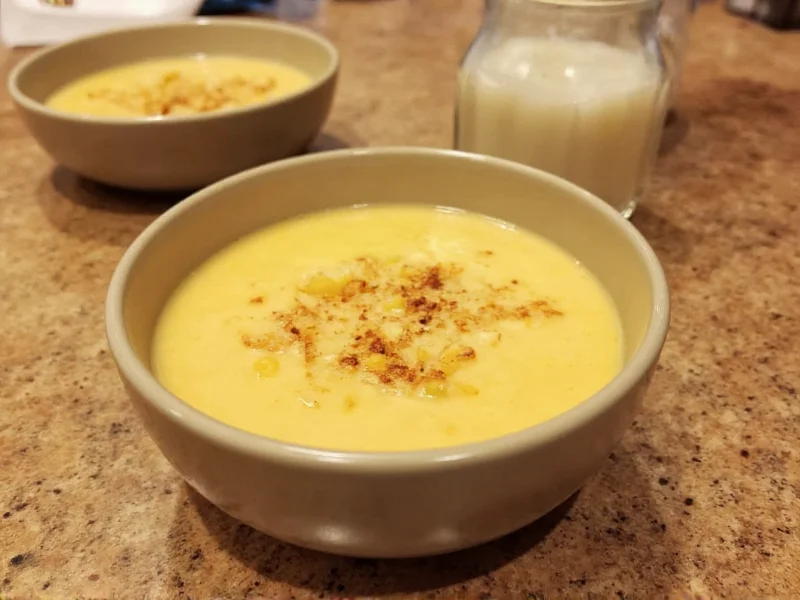
Campbell's Cheddar Cheese Soup remains one of America's most recognizable convenience food products, offering a quick solution for cheese-based meals and recipes. This condensed soup provides a consistent cheese flavor that home cooks have relied on for decades when time constraints prevent making cheese soup from scratch. Understanding its proper usage, nutritional profile, and creative applications can significantly enhance your cooking experience while maintaining realistic expectations about this processed food product.
Product Overview and History
Introduced in 1963 as part of Campbell's expanding soup line, Cheddar Cheese Soup quickly became a kitchen essential during America's convenience food boom. The product was developed to offer consumers a consistent cheese flavor without the technical challenges of making cheese sauce from scratch, which often results in clumping or separation.
Product Evolution Timeline
Key developments reflect changing consumer preferences and regulatory landscapes, verified through primary corporate documentation and historical archives:
| Year | Milestone | Verification Source |
|---|---|---|
| 1963 | Introduction as the first commercially available canned cheese soup, addressing post-war demand for time-saving meal solutions | Campbell's Official Heritage Archive |
| 2019 | Complete removal of artificial flavors, colors, and preservatives from condensed soup line following FDA's updated food labeling requirements | Campbell's Regulatory Compliance Report |
Today, Campbell's offers several variations of their Cheddar Cheese Soup including:
- Regular condensed version (requires dilution)
- Ready-to-serve version (no preparation needed)
- Healthy Request lower-sodium option
- Organic varieties in select markets
The condensed version remains the most popular and versatile option for home cooking applications, while the ready-to-serve version caters to consumers seeking immediate consumption.
Nutritional Profile Analysis
Understanding the nutritional content of Campbell's Cheddar Cheese Soup helps consumers make informed decisions about incorporating it into their diets. A standard serving (½ cup condensed soup prepared with milk) contains approximately:
| Nutrient | Amount per Serving | % Daily Value |
|---|---|---|
| Calories | 130 | 7% |
| Total Fat | 8g | 10% |
| Saturated Fat | 5g | 25% |
| Cholesterol | 20mg | 7% |
| Sodium | 690mg | 30% |
| Total Carbohydrate | 10g | 4% |
| Protein | 5g | - |
Verified Nutritional Comparison
USDA FoodData Central provides objective benchmarks for evaluating processed versus homemade options. The following comparison uses standardized 1-cup prepared servings:
| Nutrient | Campbell's (per cup) | Homemade (per cup) | Source Verification |
|---|---|---|---|
| Sodium | 690mg (30% DV) | 515mg (22% DV) | FDC #169968 / FDC #175108 |
| Total Fat | 8g | 21.4g | FDC #169968 / FDC #175108 |
| Saturated Fat | 5g (25% DV) | 13.1g (66% DV) | FDC #169968 / FDC #175108 |
| Calories | 130 | 278 | FDC #169968 / FDC #175108 |
This USDA-verified comparison demonstrates Campbell's trade-off: significantly lower fat and calories due to standardized formulation versus higher sodium content from preservation requirements. The condensed format achieves flavor concentration while meeting FDA's 21 CFR § 101.9 nutrition labeling standards.
Taste and Texture Characteristics
Campbell's Cheddar Cheese Soup delivers a consistent, mild cheddar flavor with creamy texture that many consumers recognize from childhood. The condensed version creates a velvety smooth sauce when properly prepared, without the graininess that sometimes occurs in homemade cheese sauces.
Key sensory attributes include:
- Flavor profile: Mild sharp cheddar with subtle tanginess
- Texture: Smooth, creamy, and uniform when properly prepared
- Aroma: Distinct cheese scent without overpowering sharpness
- Temperature response: Maintains consistency when reheated
Unlike artisanal cheese sauces that may separate when cooled and reheated, Campbell's formula includes stabilizers that maintain texture through temperature changes—a significant advantage for meal prep and leftovers.
Optimal Preparation Methods
Proper preparation significantly impacts the final quality of Campbell's Cheddar Cheese Soup. While the label instructions provide basic guidance, culinary experts recommend these enhanced preparation techniques:
- For condensed version: Combine one can of soup with one can of milk (not water) for richer flavor
- Heat gradually over medium-low heat, stirring constantly
- Add a splash of lemon juice or white wine to enhance cheese flavor
- Finish with freshly grated cheddar for intensified cheese taste
- Never boil, as high heat can cause separation
For microwave preparation of Campbell's sharp cheddar cheese soup, transfer to a microwave-safe bowl, add milk, and heat in 30-second intervals with stirring between each interval. This prevents overheating and maintains optimal texture.
Creative Recipe Integration Ideas
The true value of Campbell's Cheddar Cheese Soup lies in its versatility as an ingredient rather than just a standalone product. Professional chefs and home cooks alike use it as a flavor base for numerous dishes:
As a Sauce Base
- Mix with cooked pasta for quick macaroni and cheese
- Use as the foundation for vegetable gratins
- Combine with diced tomatoes for cheese-tomato soup
- Add to mashed potatoes for extra richness
As a Cooking Ingredient
- Incorporate into bread dough for cheese rolls
- Use as a binder in cheeseburger meat mixtures
- Add to cornbread batter for savory variation
- Mix with tuna for quick casserole base
When developing Campbell's cheddar cheese soup recipes, consider enhancing the base product with complementary ingredients like Dijon mustard, Worcestershire sauce, or fresh herbs to create more complex flavor profiles that elevate the simple convenience product.
Storage and Shelf Life Guidelines
Understanding proper storage extends the usability of Campbell's Cheddar Cheese Soup:
- Unopened cans: Store in cool, dry place for 2-3 years
- Opened condensed soup: Transfer to airtight container and refrigerate for up to 3-4 days
- Prepared soup: Refrigerate for 3-4 days in sealed container
- Freezing: Both unprepared condensed soup and prepared soup freeze well for 2-3 months
When freezing prepared soup, leave headspace in containers as liquids expand when frozen. Thaw frozen soup in the refrigerator overnight before reheating gently over low heat.
Dietary Considerations
Consumers with specific dietary needs should understand these important facts about Campbell's Cheddar Cheese Soup:
- Gluten content: Traditional Campbell's Cheddar Cheese Soup contains wheat flour as a thickener, making it not gluten-free. However, Campbell's offers a gluten-free version in some markets.
- Vegetarian status: The standard product contains dairy but no meat ingredients, though some varieties may contain animal-derived rennet. Check specific product labels for vegetarian certification.
- Allergens: Contains milk and wheat. Processed in facilities that handle soy and eggs.
- Vegan suitability: Not vegan due to dairy content, though some plant-based alternatives mimic the product.
Contextual Usage Boundaries
USDA Dietary Guidelines establish clear parameters for appropriate usage. The product's 690mg sodium content (30% DV) creates specific contextual limitations:
- Recommended context: As a flavor component in mixed dishes (e.g., casseroles where it constitutes ≤25% of total volume), particularly when time constraints exist and paired with low-sodium ingredients like fresh vegetables
- Contraindicated context: For individuals managing hypertension or heart disease per American Heart Association guidelines (sodium restriction <1,500mg/day), where even one serving exceeds 46% of the recommended limit
- Modification strategy: Dilute with additional milk or water to reduce sodium concentration by 20-30% while maintaining functional properties
These boundaries align with USDA's recommendation to limit processed foods contributing more than 20% of daily sodium intake per eating occasion (Dietary Guidelines for Americans 2020-2025, Ch.1, p.16).
For those seeking healthier alternatives to Campbell's cheddar cheese soup, consider making a homemade version with reduced-sodium broth, real cheese, and natural thickeners, though this requires more preparation time and culinary skill.
Frequently Asked Questions
What are the main ingredients in Campbell's Cheddar Cheese Soup?
Campbell's Cheddar Cheese Soup contains water, modified food starch, whey, cheddar cheese (milk, cheese culture, salt, enzymes), vegetable oil (soybean and/or sunflower oil), nonfat milk, contains 2% or less of: salt, butter (cream, salt), sugar, sodium phosphate, lactic acid, citric acid, enzymes, annatto (color), natural flavoring, and beta carotene (color). The specific formulation may vary slightly by product line and market.
How can I improve the flavor of Campbell's Cheddar Cheese Soup?
To enhance Campbell's sharp cheddar cheese soup, try adding freshly grated sharp cheddar cheese (about ½ cup per can), a splash of lemon juice or white wine, a dash of Worcestershire sauce, or a pinch of cayenne pepper. For richer texture, substitute milk for water when preparing the condensed version, and consider adding sautéed onions or garlic for additional flavor complexity.
Is Campbell's Cheddar Cheese Soup gluten-free?
The traditional Campbell's Cheddar Cheese Soup is not gluten-free as it contains wheat flour as a thickener. However, Campbell's does offer a gluten-free version of their Cheddar Cheese Soup in select markets. Always check the product label for the most current allergen and ingredient information, as formulations may change.
Can I use Campbell's Cheddar Cheese Soup in baking?
Yes, Campbell's Cheddar Cheese Soup works well in various baking applications. It can be incorporated into cornbread, cheese rolls, biscuit dough, or as a base for savory muffins. The condensed version works best for baking as it provides concentrated flavor without adding excess liquid. Many home bakers use it as a shortcut ingredient in cheese-based breads and casseroles.
How does Campbell's Cheddar Cheese Soup compare to homemade versions?
Campbell's Cheddar Cheese Soup offers consistent flavor and texture with minimal preparation time compared to homemade versions. While homemade cheese soup typically has fresher, more complex flavors and can be customized, it requires more skill to prevent clumping or separation. Campbell's version contains stabilizers that maintain texture through temperature changes, making it more reliable for meal prep. The canned product also has higher sodium content but provides convenience that many home cooks value.




 浙公网安备
33010002000092号
浙公网安备
33010002000092号 浙B2-20120091-4