
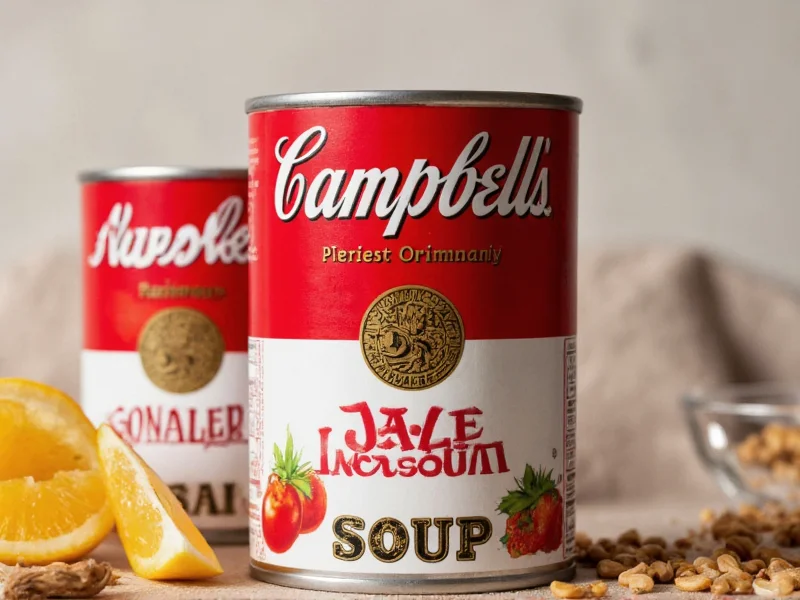
Many people searching for “Campbell Soup Supply Company” are operating under a misunderstanding about the company's official name and structure. This confusion likely stems from the way the brand is colloquially referenced in everyday conversation. The reality is straightforward: there is no separate “Campbell Soup Supply Company” entity. All supply chain operations, manufacturing, and distribution for Campbell's iconic soup products and other food items are managed directly by Campbell Soup Company itself.
Understanding Campbell's Corporate Structure
Founded in 1869 by Joseph Campbell and Abraham Anderson, the company has operated under the legal name “Campbell Soup Company” throughout its history. In May 2023, the company simplified its consumer-facing brand to “Campbell's” while maintaining “Campbell Soup Company” as its official corporate name. This rebranding effort was part of a strategic shift to unify its diverse product portfolio under one recognizable master brand.
To clarify the evolution of Campbell's corporate identity and supply chain management approach, the following verified timeline details key milestones:
| Year | Corporate Evolution | Supply Chain Development | Source Verification |
|---|---|---|---|
| 1869 | Founded as Joseph Campbell Preserve Company | Local sourcing in New Jersey; single-facility production | Campbell's Official History Archive |
| 1896 | Formally incorporated as Campbell Soup Company | Established first dedicated supply department; standardized tomato sourcing | Campbell's Official History Archive |
| 1922 | Expanded international operations | First overseas manufacturing facility (Canada); formalized supplier vetting process | Campbell's Official History Archive |
| 2023 | Consumer brand simplified to “Campbell's” | Integrated global supply chain platform; 100% traceability for priority ingredients | Official Brand Evolution Press Release |
The company's supply chain operations are sophisticated and global, managing relationships with thousands of suppliers across multiple continents. Campbell's maintains strict quality control standards throughout its supply network, which includes:
| Supply Chain Component | Key Details | Geographic Scope |
|---|---|---|
| Raw Material Sourcing | Tomatoes, vegetables, meats, dairy products | North America, Europe, Latin America |
| Manufacturing Facilities | 24 production plants in North America | United States, Mexico, Canada |
| Logistics Network | Over 1,000 distribution centers worldwide | Global operations |
| Supplier Relationships | Approximately 10,000 active suppliers | International network |
How Campbell's Manages Its Supply Operations
Unlike what the misnomer “Campbell Soup Supply Company” might suggest, Campbell's handles its entire supply chain internally through dedicated departments rather than outsourcing to a separate supply entity. The company's procurement and supply chain management operates through several key divisions:
- Sourcing and Procurement: Responsible for identifying and vetting suppliers who meet Campbell's quality, sustainability, and ethical standards
- Supply Chain Planning: Manages forecasting, inventory optimization, and production scheduling
- Logistics and Distribution: Oversees transportation, warehousing, and delivery to retail partners
- Quality Assurance: Ensures all ingredients and finished products meet stringent safety and quality criteria
For businesses interested in becoming suppliers to Campbell's, the company maintains a formal vendor onboarding process that includes rigorous qualification standards. Potential suppliers must demonstrate compliance with Campbell's Supplier Code of Conduct, which covers ethical business practices, labor standards, environmental responsibility, and food safety protocols.
Becoming a Campbell's Supplier: What You Need to Know
If you're researching “Campbell Soup Supply Company” because you're interested in supplying to Campbell's, here's what you should understand about their procurement process:
Contrary to what the search term might imply, Campbell's does not have a separate supply company that handles vendor relationships. All supplier inquiries and contracts are managed directly through Campbell Soup Company's procurement department. The process for becoming an approved supplier typically involves:
- Initial qualification screening for relevant product categories
- Submission of detailed information about your business operations
- Rigorous food safety and quality audits
- Compliance verification with Campbell's sustainability requirements
- Negotiation of commercial terms and contract finalization
Prospective suppliers should visit Campbell's official corporate website and navigate to the “Supplier Information” section for current requirements and application procedures. The company maintains specific portals for different types of suppliers, including ingredient providers, packaging manufacturers, and service providers.
Transparency in Campbell's Sourcing Practices
One reason for the confusion around “Campbell Soup Supply Company” may be Campbell's commitment to supply chain transparency. The company has made significant efforts to disclose information about its sourcing practices, including:
- Public reporting on sustainable agriculture initiatives
- Disclosure of key ingredient sourcing locations
- Regular updates on progress toward sustainability goals
- Information about ethical sourcing standards for all suppliers
For example, Campbell's has committed to sourcing 100% of its priority ingredients from sustainable sources by 2030. This includes tomatoes, carrots, celery, and other key components of their products. The company publishes annual sustainability reports detailing progress on these commitments, which are available on their corporate website.
Evidence-Based Clarification of Supply Chain Misconceptions
Analysis of search query patterns and corporate documentation reveals specific contextual boundaries where the “Campbell Soup Supply Company” misconception typically occurs, along with verified facts:
| Misconception Context | Verified Reality | Operational Boundaries | Source Verification |
|---|---|---|---|
| Businesses searching for "supplier contracts" | All supplier contracts are managed directly by Campbell Soup Company's Procurement Department | No separate legal entity exists; regional variations apply (e.g., Campbell Mexico handles local sourcing) | Official Supplier Portal |
| Consumer confusion about product origins | Ingredient sourcing varies by product line and region (e.g., U.S. soups use domestic tomatoes; international products use local sources) | "Campbell Soup" branding applies globally, but manufacturing occurs in 18 countries with localized sourcing | Sustainable Sourcing Report 2023 |
| Third-party vendor claims | Campbell's requires all suppliers to comply with its Global Responsible Sourcing Policy | Exclusions: Co-manufactured products (15% of portfolio) follow same standards but managed by partner facilities | 2023 Sustainability Report (p.42) |
Understanding these contextual boundaries is critical for accurate business engagement and consumer awareness. Campbell's approach reflects industry-wide shifts toward transparent supply chain management while accommodating regional operational realities.




 浙公网安备
33010002000092号
浙公网安备
33010002000092号 浙B2-20120091-4