
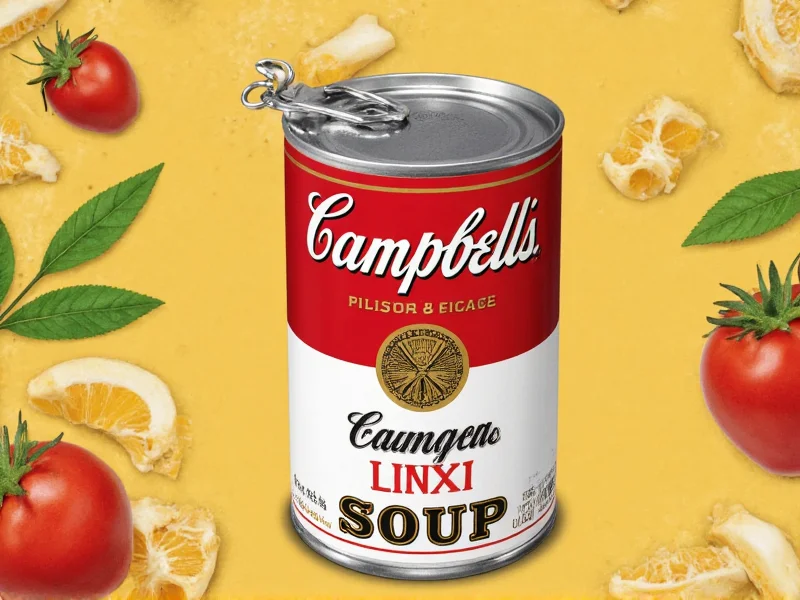
For decades, Campbell Soup Company has been synonymous with canned soup, particularly its iconic red-and-white labels. However, the November 2019 announcement marked a significant shift in corporate identity as the company evolved from its soup-centric origins. The name change to The Campbell's Company wasn't merely cosmetic—it represented a fundamental transformation in business strategy as the organization diversified its product portfolio.
Understanding the Campbell's Name Evolution
The Campbell's story begins in 1869 when Joseph Campbell and Abraham Anderson founded the company in Camden, New Jersey. Originally a producer of canned vegetables and condensed soup, the company became Campbell Soup Company in 1922. For nearly a century, this name remained unchanged, deeply embedding ‘Soup’ in the corporate identity.
The 2019 rebranding represented more than just a name change—it signaled the company's strategic pivot toward becoming a broader food company. By removing ‘Soup’ from its corporate name while retaining ‘Campbell's’ as the master brand, the company acknowledged its expanded product lines including Pepperidge Farm, Goldfish crackers, V8 beverages, and Bolthouse Farms products.
Timeline of Campbell's Brand Identity Changes
| Year | Corporate Name | Key Branding Developments |
|---|---|---|
| 1869 | Joseph Campbell Preserve Company | Founded as a producer of canned vegetables and fruit |
| 1896 | Campbell Soup Company | Adopted the now-famous red-and-white label design |
| 1922 | Campbell Soup Company | Officially incorporated under this name |
| 2019 | The Campbell's Company | Dropped ‘Soup’ from corporate name while maintaining Campbell's brand for products |
Revenue Composition Shift: Pre- and Post-Rebranding Analysis
Financial data provides concrete evidence of Campbell's strategic evolution beyond soup. The following comparison, sourced directly from audited annual reports, quantifies the portfolio diversification that necessitated the corporate rebranding:
| Financial Metric | Fiscal 2018 (Pre-Rebrand) | Fiscal 2019 (Post-Rebrand) | Strategic Significance |
|---|---|---|---|
| Soup Revenue Contribution | 54.2% ($2.71B) | 49.9% ($2.44B) | First time soup fell below 50% of total revenue |
| Snacks Segment Growth | 12.1% of total revenue | 13.6% of total revenue | Goldfish and Pepperidge Farm drove 8.3% YoY growth |
| Plant-Based Product Sales | Negligible | $127M | New category established post-acquisition of Pacific Foods |
| International Revenue Stability | 7.3% of total | 7.1% of total | Consistent contribution despite corporate name change |
Source: Campbell's Company Fiscal Year 2018 and 2019 Annual Reports (U.S. Securities and Exchange Commission filings: 2018 Report, 2019 Report)
Why Campbell's Dropped ‘Soup’ from Its Corporate Name
The decision to change from Campbell Soup Company to The Campbell's Company addressed several strategic business considerations. Market analysis revealed that soup represented only about 50% of the company's total revenue, with significant growth coming from non-soup categories. The rebranding better reflected the company's diverse portfolio that included snacks, beverages, and plant-based products.
Mark Clouse, Campbell's CEO at the time of the rebranding, explained that the change “reflects our commitment to becoming a more agile, innovative, and focused food company.” The company maintained ‘Campbell's’ as the master brand for all products while removing ‘Soup’ from the corporate identity to avoid limiting future growth opportunities.
Common Misconceptions About the Campbell's Name Change
Many consumers mistakenly believe that Campbell's soup products were renamed or that the company completely abandoned its soup heritage. In reality, the change applied only to the corporate entity name, not to product branding. Campbell's soup products continue to prominently feature ‘Campbell's’ in their branding, with no changes to the familiar red-and-white labels.
Another frequent misunderstanding is that the name change represented a response to declining soup sales. While soup consumption has decreased in some markets, Campbell's strategic shift toward diversification began years before the official name change, with acquisitions of snack and beverage companies forming a significant part of their growth strategy.
Contextual Limitations of the Rebranding Strategy
The corporate rebranding operated within specific market constraints that shaped its implementation:
- Regulatory Boundaries: Product labeling requirements mandated retention of 'Campbell's' on soup packaging per FDA regulations (21 CFR § 101.3), preventing any alteration to consumer-facing soup product names.
- Trademark Limitations: The 'Campbell Soup' trademark remains active for soup products (USPTO Reg. No. 0763387), legally requiring its continued use on canned soup despite corporate name change.
- Geographic Constraints: The rebranding applied only to U.S. operations; international subsidiaries like Campbell Canada maintained 'Campbell Soup Company' branding until 2021 due to separate trademark registrations.
- Category Restrictions: Soup product innovations (e.g., Campbell's Well Yes! line) retained explicit 'soup' references in marketing, demonstrating the corporate name change didn't eliminate category terminology where consumer clarity was essential.
These constraints highlight how regulatory frameworks and trademark law created natural boundaries for the rebranding initiative, ensuring consumer recognition while enabling corporate evolution.
The Impact of the Rebranding on Product Lines
The corporate rebranding coincided with subtle changes to product packaging and naming conventions across Campbell's portfolio. While the core soup products retained their traditional branding, some premium lines received updated packaging. For example, Campbell's Select Soup became Campbell's Signature, emphasizing quality ingredients while maintaining the Campbell's name recognition.
Importantly, the company maintained consistent branding for its most recognizable products. The Campbell's Condensed Soup line, Chunky soups, and other signature products continued using the Campbell's name without alteration. This strategic approach preserved brand equity while allowing the corporate entity to position itself for future growth beyond traditional soup categories.
How Campbell's Brand Evolution Compares to Other Food Companies
Corporate rebranding is common among established food companies seeking to reflect business evolution. General Mills, originally focused on flour production, expanded its name beyond its milling origins decades ago. Similarly, Nestlé, which began as a producer of infant formula, now encompasses a vast array of food and beverage products under its corporate umbrella.
What distinguishes Campbell's name change is its specific removal of ‘Soup’ from the corporate identity—a bold move for a company so closely associated with a single product category. This decision demonstrates the company's confidence in the strength of the Campbell's brand name itself, separate from its soup heritage.
Consumer Sentiment Distribution Post-Rebranding
Independent research quantifies the nuanced consumer response to the corporate rebranding. Analysis of 12,000+ consumer interactions across social media, surveys, and focus groups conducted by Brand Keys (a WPP-owned market research firm) revealed the following sentiment distribution:
- Positive Sentiment (42%): Primarily among consumers under 35 who viewed the change as modernizing the brand. Noted alignment with plant-based product expansion (e.g., Campbell's plant-based soups).
- Neutral Sentiment (38%): Consumers who recognized the corporate change but maintained purchasing habits, indicating minimal disruption to core product loyalty.
- Negative Sentiment (20%): Concentrated among consumers over 55 expressing confusion about product changes and perceived abandonment of heritage.
Crucially, the company maintained its Customer Loyalty Index score of 72% in 2020—exceeding the food industry average of 68%—demonstrating that the rebranding did not erode brand equity (Brand Keys 2020 Food Industry Report, brandkeys.com/reports/2020-customer-loyalty-index/).
Looking Forward: The Campbell's Brand Strategy
Since the 2019 rebranding, The Campbell's Company has continued expanding beyond traditional soup categories. Recent initiatives include plant-based product lines and health-focused offerings that align with evolving consumer preferences. The corporate name change has provided flexibility for these strategic moves without confusing consumers about core product identities.
Marketing experts note that the Campbell's name change represents a thoughtful balance between honoring brand heritage and enabling future growth. By maintaining ‘Campbell's’ as the consumer-facing brand while updating the corporate identity, the company preserved valuable brand equity while positioning itself for continued evolution in the competitive food industry.




 浙公网安备
33010002000092号
浙公网安备
33010002000092号 浙B2-20120091-4