
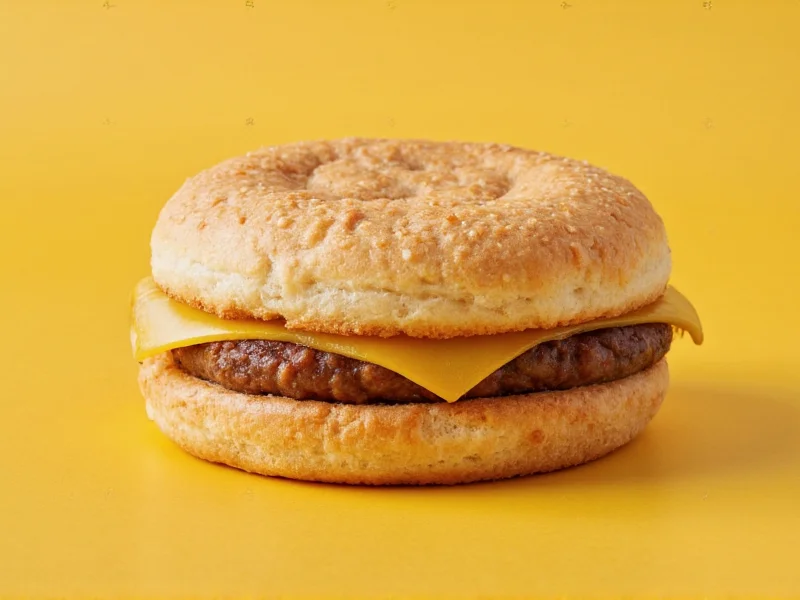
Understanding the nutritional profile of fast food breakfast options is essential for making informed dietary choices. The McDonald's Sausage Biscuit represents a common morning menu item that many consumers enjoy for its convenience and flavor, but it's important to consider how it fits within daily nutritional requirements.
Nutritional Breakdown of McDonald's Sausage Biscuit
When evaluating the nutritional value of the McDonald's Sausage Biscuit, it's helpful to examine the complete profile beyond just calorie content. This information comes directly from McDonald's official nutrition facts as published on their website.
| Nutrient | Amount | % Daily Value* |
|---|---|---|
| Calories | 460 | 23% |
| Total Fat | 32g | 41% |
| Saturated Fat | 12g | 60% |
| Trans Fat | 1.5g | - |
| Cholesterol | 65mg | 22% |
| Sodium | 1100mg | 48% |
| Total Carbohydrate | 30g | 11% |
| Dietary Fiber | 2g | 7% |
| Sugars | 2g | - |
| Protein | 16g | - |
*Percent Daily Values are based on a 2,000 calorie diet. Your daily values may be higher or lower depending on your calorie needs.
How This Fits Into Daily Nutrition Goals
For individuals following a standard 2,000-calorie diet, the McDonald's sausage biscuit accounts for approximately 23% of daily calorie needs. The sodium content represents nearly half of the recommended daily maximum, while saturated fat makes up 60% of the suggested limit.
Those monitoring their dietary intake should consider how this breakfast option aligns with their personal nutrition goals. The high fat and sodium content means this item should be consumed occasionally rather than as a daily breakfast choice for most health-conscious individuals.
Comparing McDonald's Breakfast Menu Options
When examining McDonald's breakfast menu nutrition facts, the sausage biscuit falls in the higher calorie range compared to other options:
- Egg McMuffin: 300 calories
- Hash Browns: 140 calories
- Fruit & Maple Oatmeal: 320 calories
- Sausage McGriddle: 550 calories
- Bacon, Egg & Cheese Biscuit: 460 calories (similar calorie count)
For those specifically searching for how many calories in McDonald's sausage biscuit with egg, adding a fried egg increases the count to approximately 530 calories, with additional protein but also more fat and sodium.
Ingredients and Preparation Factors
The standard McDonald's Sausage Biscuit contains three main components: a folded pork sausage patty, a buttermilk biscuit, and butter. The sausage contains pork, water, salt, spices, and other seasonings. The biscuit includes enriched flour, water, soybean oil, sugar, and baking powder.
Understanding McDonald's sausage biscuit nutritional information requires recognizing that preparation methods affect the final product. The sausage is grilled, while the biscuit is baked, contributing to the overall fat content. The butter added to the biscuit before serving also increases the calorie count.
Practical Considerations for Calorie-Conscious Consumers
For those wondering is McDonald's sausage biscuit high in calories, the answer is yes relative to other breakfast options. However, it does provide a substantial protein content that can help with satiety.
If you're tracking your daily intake, consider these strategies:
- Order without butter to reduce calories slightly
- Pair with a side of fruit instead of hash browns for a more balanced meal
- Consider splitting the biscuit if sharing a meal
- Check for regional variations that might have different nutritional profiles
When researching healthy breakfast options at McDonald's, the Fruit & Maple Oatmeal or Egg White Delight McMuffin typically offer lower calorie alternatives while still providing adequate protein.
Regional Variations and Menu Changes
It's worth noting that calorie count for McDonald's sausage biscuit may vary slightly by region or during limited-time menu changes. Always check the most current nutrition information on McDonald's official website for the most accurate data, as recipes and ingredients can be updated.
Some international locations offer different sausage formulations or biscuit styles that affect the nutritional profile. For the most reliable information regarding McDonald's breakfast menu nutrition facts, refer to the specific country's McDonald's nutrition calculator.
Frequently Asked Questions
How many calories are in a McDonald's Sausage Biscuit?
A standard McDonald's Sausage Biscuit contains 460 calories according to the company's official nutrition information.
Is the McDonald's Sausage Biscuit high in sodium?
Yes, a McDonald's Sausage Biscuit contains 1,100mg of sodium, which represents 48% of the recommended daily value based on a 2,000 calorie diet.
How does the sausage biscuit compare to other McDonald's breakfast items?
The sausage biscuit (460 calories) has more calories than an Egg McMuffin (300 calories) or Fruit & Maple Oatmeal (320 calories), but fewer than a Sausage McGriddle (550 calories).
What is the protein content of a McDonald's Sausage Biscuit?
A McDonald's Sausage Biscuit contains 16 grams of protein, which can help with feeling full until your next meal.
Are there lower calorie alternatives to the sausage biscuit at McDonald's?
Yes, lower calorie breakfast options at McDonald's include the Egg McMuffin (300 calories), Fruit & Maple Oatmeal (320 calories), and the Egg White Delight McMuffin (250 calories).




 浙公网安备
33010002000092号
浙公网安备
33010002000092号 浙B2-20120091-4