
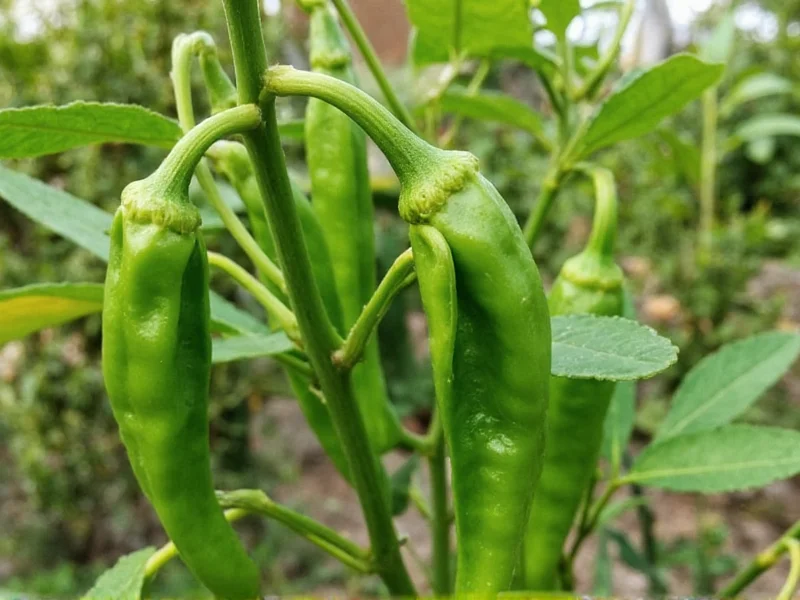
Understanding California chile pods begins with recognizing their botanical identity and culinary significance. These peppers, scientifically classified as Capsicum annuum var. ananuum, originated from New Mexico but became commercially associated with California agriculture. The term "chile pod" specifically describes the fruit's physical form before processing.
Characteristics of California Chile Pods
California chile pods display distinctive physical attributes that set them apart from other pepper varieties. When harvested young, they appear vibrant green with smooth, glossy skin. As they mature, they transform through yellow and orange stages before reaching a deep, brick red color. The pods typically measure 6-10 inches in length with a relatively thin wall thickness compared to bell peppers.
The heat level of California chile pods ranges from 2,500 to 4,000 Scoville Heat Units (SHU), placing them in the mild to medium category. For reference, this makes them significantly milder than jalapeños (2,500-8,000 SHU) but noticeably spicier than bell peppers (0 SHU). Their flavor profile combines subtle earthiness with a gentle warmth and slight fruitiness, particularly when fully ripened.
Historical Evolution and Commercial Development
California chile pods emerged through a distinct agricultural adaptation process. Commercial cultivation began in 1896 when Emilio Ortega introduced New Mexico chile seeds to Anaheim, California. According to University of California Agriculture and Natural Resources documentation, the first commercial harvest occurred in 1913, establishing Anaheim as a production hub. The 1950s marked a critical turning point when UC Davis researchers developed disease-resistant varieties specifically for California's Mediterranean climate, significantly increasing yields. By the 1990s, production shifted toward specialty markets and organic farming while maintaining the Central Valley as the primary cultivation region. This evolution reflects a unique California-specific adaptation of New Mexican chile traditions.
California Chile Pod Varieties
Several distinct varieties fall under the California chile pod umbrella, each with unique characteristics:
| Variety | Heat Level (SHU) | Color at Maturity | Common Uses |
|---|---|---|---|
| Anaheim | 500-2,500 | Green to Red | Stuffed peppers, roasting, sauces |
| California Wonder | 0 | Green to Red | Salads, stuffing, fresh consumption |
| Big Jim | 1,500-2,500 | Green to Red | Chile rellenos, drying, powder |
| Joe E. Parker | 2,500-4,000 | Green to Red | Canning, sauces, fresh market |
Culinary Applications of California Chile Pods
Chefs and home cooks value California chile pods for their versatility across multiple preparation methods. When roasted and peeled, they develop complex caramelized flavors ideal for:
- Traditional chile rellenos (stuffed peppers)
- Salsas and sauces requiring moderate heat
- Stews and braises where subtle warmth enhances other flavors
- Freezing for year-round use in Southwestern dishes
- Drying to create chile powder or ristras (decorative dried pepper strands)
Professional kitchens often roast California chile pods over open flames until the skin blisters, then seal them in paper bags to steam before peeling. This technique preserves their delicate flavor while removing the tough outer skin. Home cooks can achieve similar results using a broiler or gas stovetop. In California's Central Valley, roasted Anaheim peppers are essential in "Green Chile Chicken Stew," a regional adaptation of New Mexican cuisine that has sustained farm communities since the 1940s.
Growing California Chile Pods
California chile pods thrive in warm climates with long growing seasons. Gardeners should note these key cultivation requirements:
- Require 70-90 days to reach maturity from transplant
- Prefer well-drained soil with pH between 6.0-7.0
- Need full sun exposure (6-8 hours daily)
- Benefit from consistent moisture but suffer in waterlogged conditions
- Typically grow 18-24 inches tall with proper spacing (18-24 inches between plants)
Commercial production occurs primarily in California's Central Valley, where the Mediterranean climate provides ideal growing conditions. The state's agricultural research stations have developed numerous improved varieties specifically adapted to local conditions, enhancing disease resistance and yield potential. However, these peppers face significant limitations outside their ideal conditions. In humid regions like the Southeastern U.S., they are highly susceptible to fungal diseases such as Phytophthora blight, requiring raised beds and fungicide applications. Areas with fewer than 150 frost-free days often cannot mature pods fully without greenhouse intervention, as documented in UC ANR's chile production guidelines.
Nutrient Comparison and Health Implications
California chile pods offer notable nutritional advantages with distinct profiles compared to related varieties. The table below compares key nutrients per 100 grams of raw pepper:
| Nutrient | California Chile Pod (Anaheim) | Bell Pepper | Jalapeño |
|---|---|---|---|
| Calories | 25 | 20 | 29 |
| Vitamin C (mg) | 143.7 | 80.4 | 118.6 |
| Vitamin A (IU) | 3,750 | 3,131 | 2,014 |
| Scoville Heat Units | 2,500-4,000 | 0 | 2,500-8,000 |
Data sourced from USDA FoodData Central (2023). A single medium pod (45g) provides approximately 75% of the daily recommended vitamin C. According to the National Institutes of Health, capsaicin—the compound providing heat in chile peppers—may support healthy metabolism and provide temporary pain relief when consumed regularly. While California chile pods contain lower capsaicin levels than hotter varieties, they still contribute to these potential benefits without overwhelming heat.
Storage and Preparation Techniques
Proper storage extends the usability of California chile pods significantly. Fresh green pods maintain quality for 1-2 weeks when stored in perforated plastic bags in the refrigerator's crisper drawer. For longer preservation:
- Freezing: Roast, peel, and freeze in airtight containers for up to 12 months
- Drying: String pods into ristras or use a food dehydrator (135°F for 8-12 hours)
- Canning: Preserve in vinegar-based solutions for salsas and pickled preparations
- Powdering: Grind dried pods into chile powder for seasoning blends
When preparing California chile pods, always wear gloves to prevent capsaicin transfer to sensitive areas. Remove seeds and white membranes for reduced heat, though these contain significant flavor compounds. The pods work well raw in salads when sliced thinly, but roasting unlocks their most complex flavor profiles.
Substitutes for California Chile Pods
When California chile pods aren't available, several alternatives work well depending on your recipe requirements:
- For fresh applications: Poblano peppers (similar size, slightly hotter)
- For roasting: Cubanelle peppers (milder, thinner walls)
- For dried applications: New Mexico chile peppers (similar flavor profile)
- For canned goods: Mild green chiles (commercially prepared)
- For powder: Ancho chile powder (made from dried poblanos)
Chef's tip: When substituting, adjust quantities based on heat level differences. Poblanos run about 1.5 times hotter than Anaheim varieties, while Cubanelles are approximately half as spicy.




 浙公网安备
33010002000092号
浙公网安备
33010002000092号 浙B2-20120091-4