
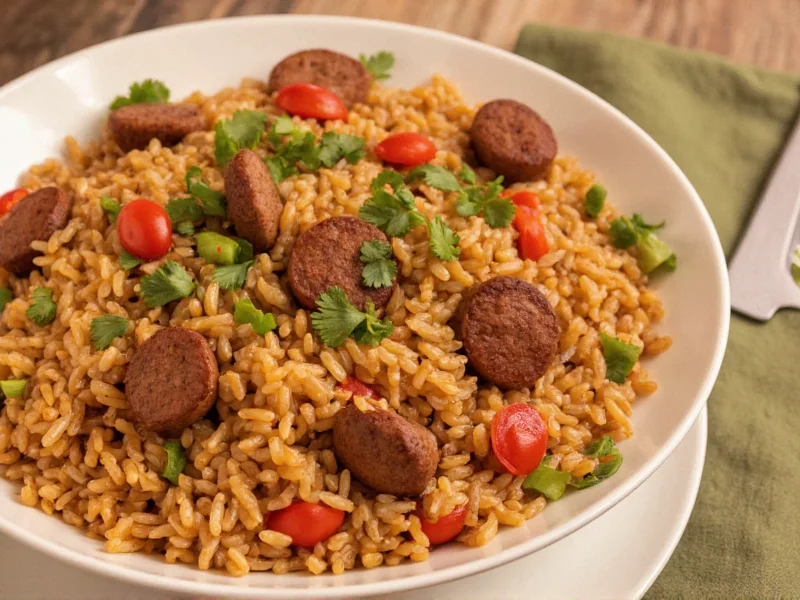
The Essence of Cajun Rice and Sausage
Cajun rice and sausage represents the heart of Louisiana cooking tradition—a simple yet deeply flavorful dish that transforms humble ingredients into something extraordinary. Unlike its Creole cousin jambalaya, this version focuses on sausage as the primary protein with rice absorbing all the rich flavors during cooking. The magic happens through the "holy trinity"—a foundational mix of diced bell peppers, onions, and celery—that forms the flavor base of countless Cajun dishes.
Historical Evolution and Cultural Roots
This dish emerged from the resourcefulness of Acadian exiles who settled in Louisiana after 1755, adapting French culinary traditions to local ingredients. Key milestones in its development:
- 1755-1764: Acadians expelled from Canada arrived in Louisiana, bringing rice-based cooking techniques but substituting unavailable ingredients (like carrots) with bell peppers
- Late 18th Century: The "holy trinity" replaced French mirepoix as bell peppers became widely cultivated in Louisiana's climate
- Early 1900s: Andouille sausage production became standardized using pecan wood smoking, cementing its role as the dish's signature protein
- 1971: The first Louisiana Food Festival celebrated Cajun cuisine, propelling regional dishes like this into national consciousness
Source: The Acadian Memorial, Louisiana State Museum's documentation of Acadian culinary adaptation.
Understanding Authentic Cajun Flavor Profile
What distinguishes true Cajun rice and sausage from imitations? Authentic versions rely on specific techniques and ingredients that create that unmistakable Louisiana taste. The dish should feature a careful balance of heat—not overwhelming but with a noticeable kick from cayenne pepper and black pepper. The sausage must be smoked for that characteristic depth, with andouille being the traditional choice due to its coarse texture and spicy profile.
| Ingredient | Traditional Choice | Substitute Options |
|---|---|---|
| Sausage | Andouille | Chorizo, kielbasa, smoked turkey sausage |
| Rice | Long-grain white rice | Basmati, jasmine (avoid instant rice) |
| "Holy Trinity" | Equal parts bell pepper, onion, celery | Can substitute 1 part onion for green onions |
| Broth | Chicken or vegetable | Seafood stock for coastal variation |
Step-by-Step Preparation Guide
Creating perfect cajun rice and sausage requires attention to timing and technique. Start by slicing 1 pound of andouille sausage into 1/2-inch rounds and browning them in a large cast-iron pot or Dutch oven over medium-high heat. Remove the sausage once browned, leaving the flavorful fat behind. Next, add 1 diced onion, 1 diced green bell pepper, and 2 diced celery stalks—the holy trinity—to the pot. Cook until softened but not browned, about 5-7 minutes.
Add 3 minced garlic cloves and cook for 1 minute until fragrant. Stir in 1 cup long-grain white rice, ensuring each grain gets coated with the flavorful oil. Return the sausage to the pot along with 2 cups chicken broth, 1 (14.5 oz) can diced tomatoes (undrained), 1 teaspoon paprika, 1/2 teaspoon cayenne pepper, 1 teaspoon dried thyme, and 2 bay leaves. Bring to a boil, then reduce heat to low, cover, and simmer for 20-25 minutes until rice is tender and liquid is absorbed.
Avoiding Common Preparation Mistakes
Many home cooks encounter issues with cajun rice and sausage that stem from simple mistakes. The most frequent problem is mushy rice, which happens when you stir the pot during cooking—resist the temptation! Another common error involves using the wrong sausage type; avoid sweet Italian sausage as it lacks the necessary smokiness. Some cooks also underestimate the importance of the holy trinity ratio—maintain equal parts onion, bell pepper, and celery for authentic flavor balance.
Timing matters significantly in this dish. Adding the rice too early or cooking at too high a temperature will result in unevenly cooked grains. For best results, maintain a gentle simmer after the initial boil. If your dish turns out too dry, add a splash of broth and let it sit covered for 5 minutes off heat. Too wet? Remove the lid and cook for an additional 2-3 minutes while gently fluffing the rice.
Contextual Boundaries and Practical Considerations
Understanding when and for whom this dish works best prevents culinary missteps:
- Ideal Occasions: Best for casual gatherings (Mardi Gras celebrations, family weeknight dinners), but less suitable for formal events or low-sodium dietary requirements
- Health Constraints: A single serving contains ~1,400mg sodium (exceeding the American Heart Association's ideal 1,500mg limit for hypertension management). Reduce sodium by 30% using low-sodium broth and turkey sausage
- Culinary Limitations: Requires immediate stovetop attention—slow cookers compromise texture. Not recommended for inexperienced cooks unfamiliar with rice-to-liquid ratios
- Regional Authenticity: True versions originate exclusively from Acadiana (South Louisiana). Dishes labeled "Cajun" outside this region often lack authentic smoked sausage preparation, per Louisiana Office of Tourism guidelines
Regional Variations Worth Trying
While traditional cajun rice and sausage remains beloved, several regional variations offer exciting twists on this classic. In coastal areas, cooks often add shrimp during the last 5 minutes of cooking for a delicious seafood infusion. Some families incorporate diced ham along with the sausage for additional depth of flavor. For a lighter version, substitute turkey andouille sausage and use vegetable broth.
Those seeking extra heat might add a diced jalapeño with the holy trinity or include a few dashes of hot sauce during cooking. For a richer version popular in restaurant settings, finish the dish with a pat of butter stirred in just before serving. Vegetarian adaptations work well with smoked portobello mushrooms and plant-based sausage alternatives, though they won't deliver the same authentic Cajun experience.
Serving and Storage Recommendations
Serve cajun rice and sausage hot, preferably in wide, shallow bowls that allow the beautiful colors to shine. Garnish with freshly chopped green onions and a sprinkle of chopped fresh parsley. This dish pairs beautifully with a simple green salad and crusty French bread for soaking up any remaining flavorful juices. For beverage pairings, consider a crisp lager beer, sweet iced tea, or a dry white wine like Sauvignon Blanc.
Store leftovers in an airtight container in the refrigerator for up to 4 days. When reheating, add a tablespoon of water per cup of rice to restore moisture, then heat gently on the stove or in the microwave. Freezing works well for this dish—portion into freezer-safe containers with some headspace, and it will keep for up to 3 months. Thaw overnight in the refrigerator before reheating.




 浙公网安备
33010002000092号
浙公网安备
33010002000092号 浙B2-20120091-4