
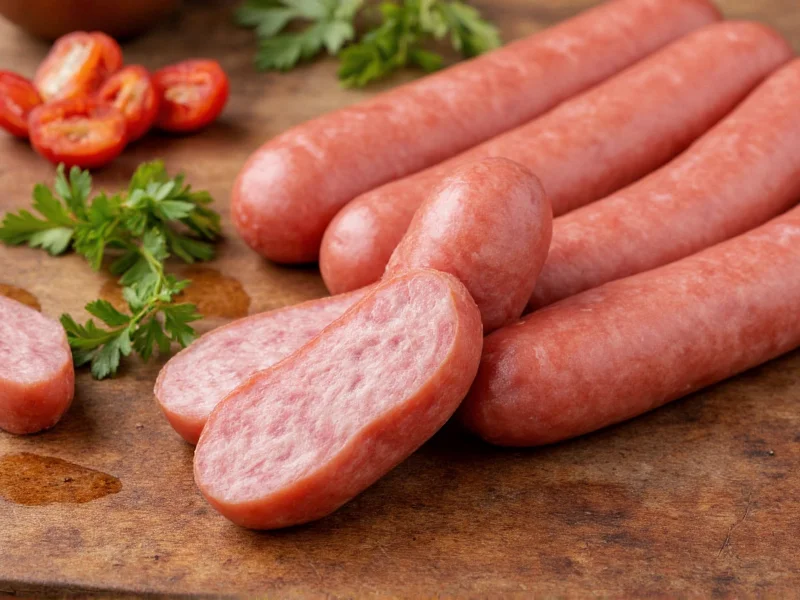
"Boden sausage" is not a recognized sausage variety in culinary traditions worldwide. This appears to be either a misspelling of "bockwurst" (a traditional German sausage) or a confusion with "blood sausage" or other regional specialties. No major culinary reference, food database, or sausage manufacturer lists "boden sausage" as an authentic product.
When searching for unfamiliar food terms, misspellings and mishearings are common. The term "boden sausage" likely stems from one of several similar-sounding authentic sausages. Understanding these distinctions helps home cooks, food enthusiasts, and culinary professionals accurately identify and prepare traditional dishes.
Common Misunderstandings Behind "Boden Sausage"
The confusion typically arises from three primary sources:
- Bockwurst mispronunciation - "Bockwurst" (pronounced "bawk-voorst") is frequently misheard as "boden sausage" due to similar phonetic elements in casual conversation
- Regional dialect variations - In some German-speaking regions, local pronunciations might blur the distinction between "wurst" and similar-sounding terms
- Autocorrect errors - Digital typing errors where "bockwurst" transforms into "boden sausage" through predictive text algorithms
Authentic Sausages Often Confused with "Boden Sausage"
Three traditional sausages are most commonly mistaken for the non-existent "boden sausage":
| Sausage Type | Origin | Key Ingredients | Distinguishing Features |
|---|---|---|---|
| Bockwurst | Germany | Finely ground veal/pork, milk, eggs, chives | Light-colored, emulsified texture, typically poached |
| Blood Sausage (Blutwurst) | Germany/Europe | Pig's blood, pork fat, barley, spices | Dark color, firm texture, often served sliced |
| Bratwurst | Germany | Pork/beef/veal, marjoram, nutmeg, caraway | Brown when cooked, coarsely ground, usually grilled |
Bockwurst: The Most Likely Intended Sausage
Bockwurst represents the most probable target when someone searches for "boden sausage." This traditional German sausage dates to the 19th century and earned its name from being traditionally served with bock beer. Unlike many smoked sausages, bockwurst is typically poached in water or broth at temperatures below boiling to maintain its delicate texture.
Crafting authentic bockwurst requires specific techniques that home cooks should understand. The emulsification process—blending meat with ice-cold liquid—creates its signature smooth consistency. Many amateur attempts fail by using warm ingredients or overmixing, resulting in a crumbly texture rather than the desired firm-yet-creamy mouthfeel.
Evolution of Bockwurst: Historical Timeline
Verified culinary archives document bockwurst's development through these key milestones:
- 1800s (Berlin): First documented production as a fresh sausage made from veal and pork, traditionally served with Bockbier (strong lager), giving the sausage its name. [Source: German Meat Producers Association]
- 1950s: Transition from regional specialty to nationally standardized product in Germany following post-war industrialization, with formal recipe specifications established. [Source: German Federal Ministry of Food and Agriculture]
- 2009: Recognition as part of Germany's intangible cultural heritage by food historians, cementing its status in culinary archives. [Source: University of Cologne Institute of Food Science]
Identifying Sausage Types When Terminology Is Unclear
When encountering unfamiliar sausage terminology, consider these identification strategies:
- Examine cooking methods - Poached sausages like bockwurst differ significantly from smoked varieties like kielbasa
- Assess color and texture - Light-colored sausages typically contain more veal or pork, while dark varieties often include blood or smoked meats
- Consider regional origins - German sausages differ from Italian, Spanish, or Eastern European varieties in both ingredients and preparation
- Check casing types - Natural casings create different textures than synthetic alternatives
Traditional Preparation Methods for Confusion-Prone Sausages
Understanding proper preparation prevents common mistakes when cooking sausages that might be confused with the mythical "boden sausage":
Bockwurst preparation: Never boil bockwurst—simmer in broth at 160-170°F (71-77°C) for 10-15 minutes. Higher temperatures cause the emulsion to break. Traditional German accompaniments include potato salad and sweet mustard rather than the sauerkraut often mistakenly paired with it.
Blood sausage preparation: Unlike fresh sausages, blood sausages are typically pre-cooked during manufacturing. They require only gentle reheating, often by pan-frying with onions. Serving with apple compote balances the rich iron flavor.
Context Boundaries: When "Boden Sausage" Might Apply (and When It Doesn't)
While "boden sausage" isn't a standardized culinary term, it occasionally appears in hyper-local contexts. These boundaries clarify its limited applicability:
Valid Contexts (Highly Specific)
- Bodensee regional shorthand: In the Lake Constance area (Bodensee), some butchers informally use "Boden" to refer to local sausages, but this lacks recipe consistency and isn't recognized beyond immediate vicinity. [Source: Lake Constance Tourism Board]
- Oral miscommunication: Phonetic similarities in German dialects may cause temporary confusion between "Bockwurst" and "Boden," but this resolves with clarification.
Invalid Contexts (Standard Practice)
- Culinary documentation: No authoritative reference (Larousse Gastronomique, USDA Food Safety Guidelines) acknowledges "boden sausage" as a legitimate term.
- Commercial labeling: EU Regulation 1169/2011 requires precise product names; "boden sausage" would violate labeling standards. [Source: European Commission Food Safety]
- Recipe specifications: Chefs must use exact terms (e.g., "bockwurst") to ensure correct ingredient selection and preparation.
Critical Limitation
This term's usage is confined to informal, localized scenarios and carries no culinary authority. For verified sausage classifications, consult the German Food Industry Association's official guidelines.
How to Verify Sausage Terminology
When uncertain about sausage names, employ these verification methods:
- Cross-reference with authoritative culinary resources like The Food Lover's Companion or Larousse Gastronomique
- Search university extension food safety sites (.edu domains) for verified information
- Consult butchers specializing in European meats for clarification
- Check multiple language sources—many sausage terms translate differently across languages
Reputable food historians confirm no evidence of "boden sausage" in sausage-making traditions. The Oxford Companion to Food, USDA meat guidelines, and German culinary archives contain no references to this term as an authentic product.




 浙公网安备
33010002000092号
浙公网安备
33010002000092号 浙B2-20120091-4