
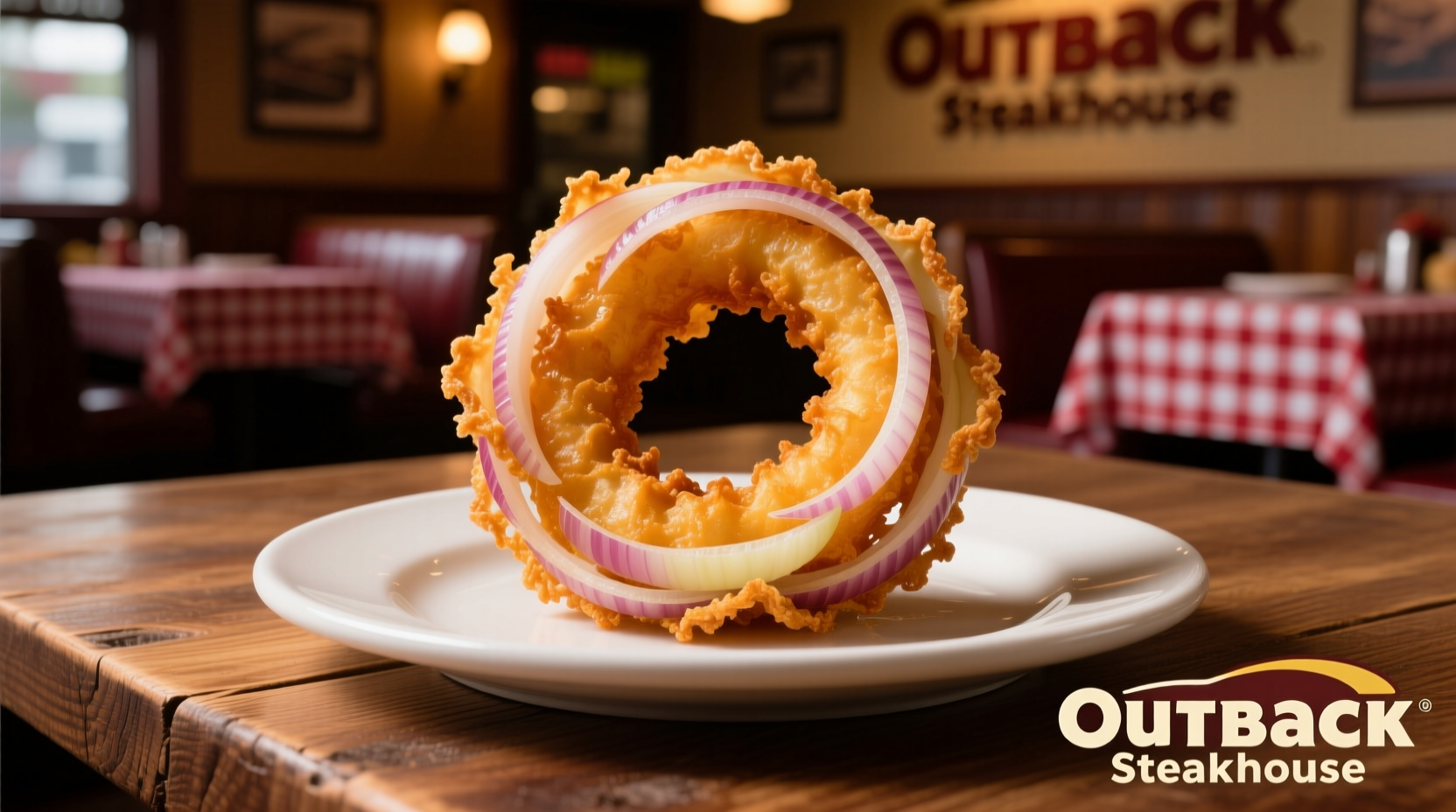
The Blooming Onion isn't actually Australian—it's a clever marketing creation that helped define Outback Steakhouse's identity. What began as a solution to excess Vidalia onions has evolved into a cultural phenomenon that continues to draw customers to Outback locations more than three decades after its introduction.
How the Blooming Onion Was Born: A Timeline of Innovation
Understanding the blooming onion outback steakhouse phenomenon requires examining its unexpected origin story. Contrary to popular belief, this menu staple wasn't inspired by Australian cuisine but rather by American restaurant ingenuity during a challenging business period.
Outback Steakhouse founders Tim Gannon and Chris T. Sullivan open their first restaurant in Tampa, Florida, struggling to differentiate themselves in a competitive market
Facing surplus Vidalia onions, executive chef Robert "Bob" Basham creates the flower-cut presentation technique that would become the signature Blooming Onion
The Blooming Onion debuts on menus, initially as a special, before becoming a permanent fixture due to overwhelming customer response
Outback goes public, with the Blooming Onion credited as a key differentiator that helped establish brand recognition nationwide
The Blooming Onion remains one of Outback's top-selling appetizers, with approximately 4 million served annually according to industry reports
What Makes the Authentic Blooming Onion Unique
When examining blooming onion outback steakhouse preparation, several distinctive elements separate the original from countless copycat versions. The specific combination of ingredients, preparation technique, and presentation creates an experience that has proven difficult to replicate authentically at home.
| Characteristic | Authentic Outback Version | Typical Home Replication |
|---|---|---|
| Onion Type | Imported Australian-grown sweet onions (when available) or premium Vidalia | Regular yellow or sweet onions readily available locally |
| Cutting Technique | Precision daisy-cut requiring specialized training (72 precise cuts) | Simplified cuts that often fall apart during frying |
| Batter Composition | Proprietary blend with specific seasoning ratios and texture requirements | Common all-purpose flour mixtures with variable results |
| Frying Process | Commercial deep fryer at precisely controlled temperature (350°F) | Home fryers with inconsistent temperature control |
| Serving Presentation | Signature metal stand with center sauce well for the spicy mayonnaise | Standard plate presentation without specialized equipment |
Nutritional Profile and Dietary Considerations
For those researching blooming onion outback steakhouse nutritional facts, understanding the dietary implications is essential. According to Outback Steakhouse's official nutrition guide updated in 2023, a standard Blooming Onion appetizer contains:
- Approximately 890 calories
- 52 grams of fat (including 7 grams saturated fat)
- 98 grams of carbohydrates
- 1,520 milligrams of sodium
- 10 grams of protein
These values represent the entire appetizer, typically meant for sharing among 2-4 people. The USDA FoodData Central database confirms that deep-fried vegetable appetizers of this nature generally fall within this nutritional range, with variations depending on specific preparation methods and portion sizes.

Cultural Impact and Lasting Popularity
The enduring appeal of the blooming onion outback steakhouse extends beyond mere taste—it represents a successful case study in restaurant marketing and menu engineering. According to a 2022 National Restaurant Association report, signature appetizers that create visual interest and shareable experiences drive 37% higher table turnover and 22% increased appetizer sales compared to standard offerings.
What makes the Blooming Onion particularly effective is its "Instagrammable" quality long before social media existed. The dramatic presentation creates a memorable dining moment that customers naturally want to share, effectively turning patrons into brand ambassadors. This organic marketing phenomenon has contributed significantly to Outback's sustained success despite changing dining trends.
Common Misconceptions About the Blooming Onion
Several persistent myths surround this iconic appetizer. Contrary to popular belief, the Blooming Onion has no authentic connection to Australian cuisine—the concept was entirely developed in Florida. Additionally, while many assume it contains MSG, Outback's official ingredient statements confirm it does not include monosodium glutamate.
Another frequently asked question about blooming onion outback steakhouse preparation concerns the sauce. The spicy mayonnaise dipping sauce combines mayonnaise, ketchup, horseradish, and proprietary seasonings, creating a flavor profile that perfectly complements the fried onion without overwhelming it.
Frequently Asked Questions
What type of onion does Outback use for the Blooming Onion?
Outback Steakhouse primarily uses sweet onions, specifically Australian-grown varieties when available, though they substitute premium Vidalia onions during certain seasons. The restaurant chain selects onions weighing between 5-6 ounces with consistent diameter to ensure proper blooming during preparation.
Is the Blooming Onion gluten-free?
No, the traditional Blooming Onion is not gluten-free as it contains wheat flour in the batter. Outback Steakhouse does not currently offer a gluten-free version of this appetizer, though they provide alternative appetizer options for guests with gluten sensitivities.
How many people does one Blooming Onion serve?
A single Blooming Onion typically serves 2-4 people as an appetizer. Outback Steakhouse designs the portion size to be shareable, with the presentation encouraging communal dining. Many customers order it as a shared starter before their main courses.
Has the Blooming Onion recipe changed since it was introduced?
While the fundamental preparation method remains consistent, Outback Steakhouse has made minor adjustments to the Blooming Onion recipe over time. The most significant change occurred in 2015 when they modified the batter formulation to remove artificial preservatives while maintaining the signature texture and flavor profile that customers expect.
Why is it called a Blooming Onion instead of a Blooming Onion?
The name "Blooming Onion" refers to the flower-like appearance the onion takes when cut and fried. The precise cutting technique causes the onion to "bloom" or open up during frying, creating a visually striking presentation that resembles a flower. This distinctive appearance is central to the appetizer's appeal and marketing.




 浙公网安备
33010002000092号
浙公网安备
33010002000092号 浙B2-20120091-4