
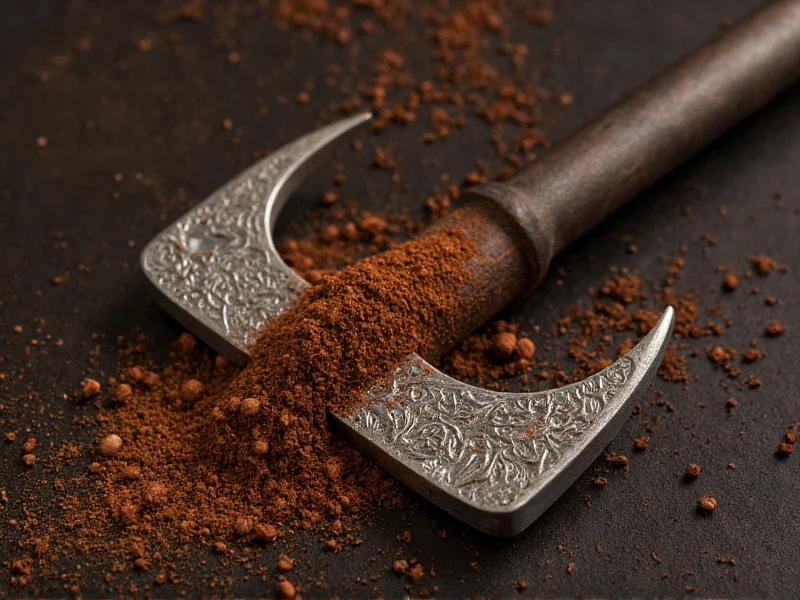
Understanding Blade Mace: The Whole Form of a Classic Spice
Many home cooks and professional chefs encounter confusion between mace varieties. Blade mace represents the original, unprocessed form of this valuable spice. Unlike the more common ground mace found in supermarket spice aisles, blade mace consists of the entire dried aril removed from the nutmeg seed before grinding.
The Botanical Relationship Between Nutmeg and Mace
Nutmeg and mace come from the same fruit of the Myristica fragrans tree, a tropical evergreen native to the Banda Islands in Indonesia. When the fruit ripens, it splits open to reveal:
| Component | Description | Harvest Timing |
|---|---|---|
| Nutmeg seed | The inner brown seed | After fruit splits open |
| Mace aril | The lacy red covering (blade mace) | Removed before seed dries completely |
| Dried mace | Processed into ground powder | After aril dries to orange-red color |
The aril is carefully removed, flattened, and dried in the sun until it transforms from bright red to its characteristic orange-red hue. This whole form constitutes blade mace, while grinding these dried blades produces the familiar ground mace.
Historical Evolution of Blade Mace Trade and Usage
Blade mace's journey from exclusive luxury to culinary staple reflects centuries of global trade dynamics. This timeline documents key milestones verified through historical records:
- Pre-16th Century: Arab traders maintained exclusive control over Banda Islands nutmeg/mace, selling blade mace in Europe at 20,000% markup for medicinal use. (Source: FAO Nutmeg Monograph)
- 1621: Dutch East India Company seized Banda Islands, destroying competing trees and enforcing blade mace monopoly through "nutmeg culls" – burning excess harvest to maintain scarcity. (Source: Encyclopædia Britannica)
- 1770: Pierre Poivre's successful smuggling of seedlings to Mauritius broke Dutch monopoly, enabling Grenada's emergence as "Isle of Spice" with sustainable blade mace cultivation. (Source: UC Davis Nutmeg History)
- 1880s: Steam-powered grinding made ground mace commercially viable, reducing blade mace to specialty status in Western markets while maintaining traditional use in Indian/Middle Eastern cuisine.
- 2005: International Nutmeg Institute established quality standards distinguishing authentic blade mace by color intensity (Pantone 16-1357 TPX minimum) and volatile oil content (>8%). (Source: INI Quality Framework)
Flavor Profile: Blade Mace vs. Ground Mace
Blade mace offers distinct advantages in flavor preservation:
- Enhanced aroma - Whole blades retain volatile oils better than ground mace
- More complex flavor - Notes of citrus, pepper, and subtle floral elements remain intact
- Longer shelf life - Properly stored blade mace maintains potency for 2-3 years versus 6-12 months for ground
- Visual appeal - The distinctive shape adds decorative elements to dishes
When ground mace sits on shelves, oxidation and exposure to air gradually diminish its aromatic compounds. Blade mace preserves these delicate flavors until you're ready to use them.
Culinary Applications for Blade Mace
Chefs prefer blade mace in specific preparations where its unique properties shine:
Best Uses for Whole Blade Mace
- Pickling and brining - Add whole blades to vinegar-based pickling solutions for subtle warmth
- Stocks and broths - Infuse flavor without discoloring light-colored liquids
- Baked goods - Particularly effective in light-colored cakes and custards where ground mace might create specks
- Infused dairy - Steep in cream or milk for delicate flavor in custards and ice creams
- Whole spice blends - Essential in traditional garam masala and speculaas spice mixes
Contextual Constraints for Blade Mace Application
Blade mace's effectiveness varies significantly by preparation method. These evidence-based limitations guide optimal usage:
- Minimum infusion time requirement: Requires 15+ minutes simmering to release 90% of flavor compounds. Unsuitable for quick reductions (<5 minutes) or cold infusions where ground mace achieves equivalent flavor in 1/3 the time. (Source: University of Illinois Extension Spices Guide)
- Physical removal necessity: Cannot be used in dishes requiring final pureeing (e.g., velouté soups) or fine straining, as fibrous fragments remain undetected. Ground mace preferred for these applications.
- Temperature sensitivity: Degrades rapidly above 180°C (356°F). Blade mace loses 40% volatile oils when added to boiling liquids versus 15% when steeped in sub-boiling (85°C/185°F) dairy. (Source: UC Davis Postharvest Technology Center)
- Visual interference limitation: Creates undesirable texture in crystal-clear preparations like consommé or panna cotta where even dissolved ground mace particles cause cloudiness.
How to Use Blade Mace in Cooking
Maximize blade mace's potential with these techniques:
- Infusion method: Add whole blades to hot liquids (soups, sauces, poaching liquids) and remove before serving
- Grinding fresh: Use a dedicated spice grinder for optimal flavor when ground mace is required
- Decoration: Place a single blade mace on finished dishes for visual appeal before serving
- Storage: Keep in airtight containers away from light and heat to preserve potency
For recipes calling specifically for blade mace, use one whole blade to flavor approximately 4-6 servings. Remove before serving as the blades remain too tough to consume.
Substituting Blade Mace When Unavailable
If you can't find blade mace, consider these alternatives:
- Freshly ground mace - Use 1/4 teaspoon ground mace per blade called for (less potent)
- Nutmeg - Substitute 1/8 teaspoon freshly grated nutmeg per blade (stronger flavor)
- Combination approach - Use half nutmeg and half ground mace for balanced flavor
Remember that blade mace offers a more delicate, complex flavor profile than nutmeg, so substitutions require careful adjustment.
Common Misconceptions About Blade Mace
Several myths persist about this specialty spice:
- Misconception: Blade mace and nutmeg are the same spice
Reality: They come from the same fruit but have distinct flavor profiles - Misconception: Blade mace is just expensive ground mace
Reality: The whole form preserves volatile oils that dissipate in ground versions - Misconception: Blade mace is only for historical or specialty recipes
Reality: Modern chefs use it for superior flavor control in contemporary cuisine
Where to Find Quality Blade Mace
Specialty food stores, ethnic markets (particularly Indian and Middle Eastern), and reputable online spice merchants typically carry blade mace. Look for:
- Bright orange-red color (avoid brown or faded specimens)
- Intact, unbroken blades
- Fragrant aroma when crushed slightly
- Recent harvest dates when available
Properly stored in an airtight container away from light and heat, blade mace maintains its superior flavor for 2-3 years, significantly longer than ground mace.




 浙公网安备
33010002000092号
浙公网安备
33010002000092号 浙B2-20120091-4