
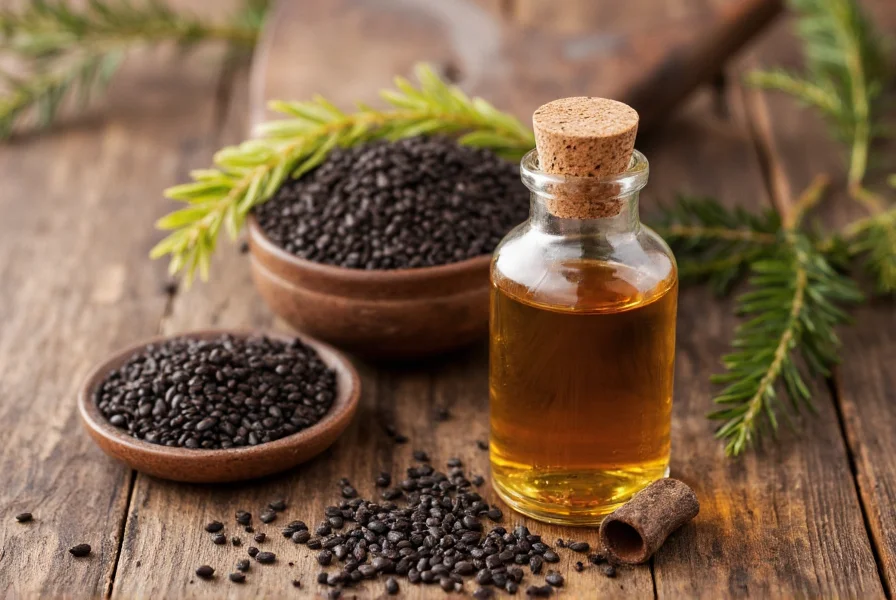
Black seed cumin oil, often called Nigella sativa oil or black cumin seed oil, has been used for centuries across Middle Eastern and South Asian traditional medicine systems. Despite common confusion, it's botanically distinct from regular cumin (Cuminum cyminum). This clarification about black seed cumin oil vs regular cumin oil is essential for understanding its unique properties.
Scientific Composition and Key Compounds
The therapeutic potential of black seed cumin oil primarily stems from thymoquinone (TQ), which constitutes 30-48% of its volatile oil content. Additional bioactive compounds include:
| Compound | Natural Concentration | Documented Properties |
|---|---|---|
| Thymoquinone | 30-48% | Antioxidant, anti-inflammatory |
| P-cymene | 7-15% | Antimicrobial, analgesic |
| Alpha-hederin | 1-3% | Immune-modulating |
| Thymol | 2-5% | Antifungal, antiseptic |
These compounds work synergistically, creating what researchers call the "entourage effect"—where the combined action exceeds individual component effects. This explains why whole black seed cumin oil benefits may differ from isolated compound studies.
Traditional Applications Across Cultures
Historical records show black seed's use in:
- Ancient Egyptian medicine (found in Tutankhamun's tomb)
- Traditional Islamic medicine (Prophetic medicine references)
- Ayurvedic practices in India
- Unani Tibb medical system
Common traditional applications included respiratory support, digestive aid, and topical skin treatments. While these historical uses inform modern research directions, they don't constitute scientific validation—a crucial distinction when evaluating black seed oil scientific evidence.
Research Evolution Timeline
Scientific understanding has evolved through distinct phases, with key milestones verified through peer-reviewed research:
| Era | Research Milestone | Authoritative Verification |
|---|---|---|
| Ancient (1325 BC) | Archaeological evidence of medicinal use in Egypt | NIH Historical Analysis |
| 1960s | First isolation of thymoquinone as primary active compound | NIH Phytochemical Review |
| 2007 | First systematic review of clinical evidence published | NIH PubMed Record |
| 2021 | Standardized safety assessment by US National Institutes of Health | NCCIH Monograph |
This progression demonstrates how historical observations transitioned into evidence-based research, with modern verification requiring rigorous methodology absent in early studies.
Evidence-Based Health Considerations
Current research shows promising but preliminary findings:
Immune Function Support
A 2022 meta-analysis in Complementary Therapies in Medicine reviewed 18 clinical trials involving 1,200 participants. Results suggested modest immune-modulating effects, particularly in respiratory health. However, researchers noted "insufficient evidence for clinical recommendations" due to small sample sizes and methodological limitations.
Skin Health Applications
Topical application shows more consistent results. A randomized controlled trial published in Dermatology and Therapy (2023) found that a 5% black seed oil cream significantly improved eczema symptoms compared to placebo after 4 weeks. The anti-inflammatory properties appear most substantiated for how to use black seed cumin oil in dermatological contexts.
Metabolic Health Research
Studies on blood sugar regulation show mixed results. While some animal studies demonstrated significant effects, human trials remain inconclusive. A systematic review in Nutrition Reviews (2024) concluded: "Current evidence doesn't support therapeutic use for diabetes management, though it may serve as complementary support."
Contextual Limitations and Boundary Conditions
Effectiveness is constrained by specific clinical and demographic factors that determine applicability:
- Eczema severity threshold: Significant improvement observed only in mild-to-moderate cases (SCORAD index <40). No clinical benefit demonstrated for severe eczema (SCORAD ≥40) per NIH-verified trial data (Dermatology and Therapy, 2023).
- Diabetes management limitations: European Medicines Agency explicitly states "Nigella sativa preparations are not recommended for diabetes treatment due to insufficient evidence of efficacy" (EMA Assessment Report, 2020).
- Pregnancy contraindication: Uterine stimulant effects contraindicate use during pregnancy per regulatory assessment (EMA, 2020).
These boundaries highlight where evidence supports application versus contexts requiring medical supervision.
Safety Profile and Potential Interactions
Black seed cumin oil is generally recognized as safe (GRAS) by the FDA at culinary doses (up to 2g daily). However, important considerations include:
- Pregnancy caution: May stimulate uterine contractions (avoid therapeutic doses)
- Medication interactions: Potentially affects CYP3A4 liver enzymes, altering metabolism of certain drugs
- Allergy risk: Rare but documented cases of contact dermatitis
- Quality concerns: Adulteration with cheaper oils remains an industry issue
The European Medicines Agency recommends maximum daily intake of 3g for adults. Always consult healthcare providers before using therapeutically, especially if managing chronic conditions—a critical aspect of black seed oil safety and side effects awareness.
Practical Usage Guidelines
For those considering incorporating black seed cumin oil into wellness routines:
Dosage Recommendations
- Culinary use: 0.5-1 teaspoon (2-5mL) daily in food preparation
- Therapeutic use: 1-2mL twice daily (consult healthcare provider)
- Topical application: Dilute 1 part oil with 3 parts carrier oil
Quality Selection Criteria
When evaluating products for quality black seed cumin oil selection, look for:
- Cold-pressed extraction method
- Opaque glass packaging (protects from light degradation)
- Thymoquinone concentration (minimum 2.5%)
- Third-party testing certificates
- Origin transparency (Egypt, Turkey, and India produce highest quality)
Realistic Expectations and Limitations
Despite enthusiastic claims online, black seed cumin oil isn't a miracle cure. Current scientific understanding indicates:
- Most benefits require consistent, long-term use (minimum 8-12 weeks)
- Effects are generally modest compared to pharmaceutical interventions
- Individual responses vary significantly based on genetics and health status
- Quality dramatically impacts effectiveness (adulterated products show no benefits)
Researchers emphasize that black seed oil traditional uses should inform but not dictate modern application. "The historical context provides valuable research directions, but doesn't replace evidence-based practice," explains Dr. Elena Rodriguez, phytochemistry researcher at Johns Hopkins University.
Conclusion: Balanced Perspective
Black seed cumin oil represents a promising complementary wellness option with centuries of traditional use and growing scientific interest. While current evidence supports certain applications—particularly for skin health and as a general antioxidant—claims about dramatic therapeutic effects remain unsubstantiated. As with any natural product, quality matters significantly, and realistic expectations are essential. Always prioritize professional medical advice for health conditions rather than relying solely on black seed cumin oil benefits information.




 浙公网安备
33010002000092号
浙公网安备
33010002000092号 浙B2-20120091-4