
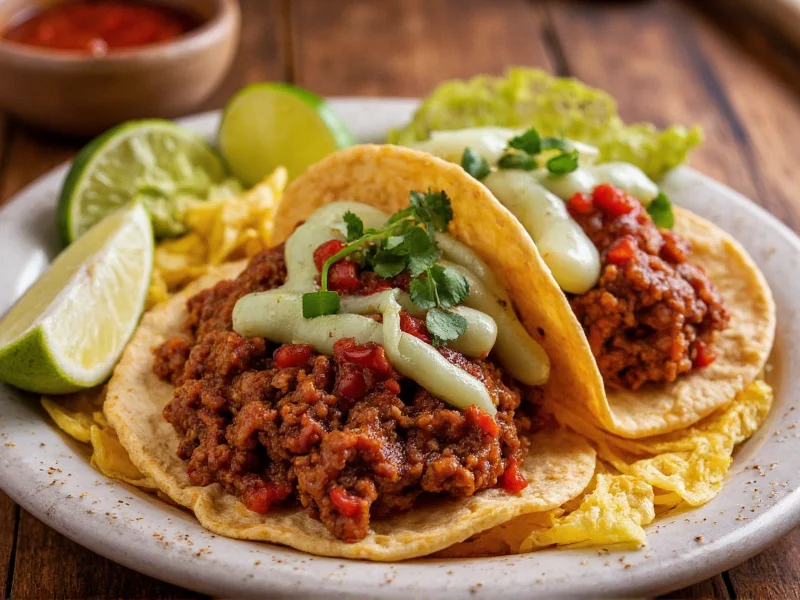
Understanding Birria Taco Spiciness: Tradition and Variation
\nBirria tacos, originating from Jalisco, Mexico, feature tender meat stewed in a rich broth of dried chilies, spices, and aromatics. The characteristic red color and complex flavor profile come primarily from guajillo and ancho chilies, which provide moderate heat rather than extreme spiciness. Traditional birria achieves its signature warmth through careful chili selection and preparation rather than overwhelming heat.
\n\nThe Role of Chilies in Authentic Birria
\nUnderstanding which chilies contribute to birria's spiciness helps demystify its heat profile. Authentic recipes typically use a combination of dried chilies, each bringing unique flavor notes alongside their heat levels:
\n\n| Chili Variety | \nScoville Heat Units | \nFlavor Profile | \nCommon Usage in Birria | \n
|---|---|---|---|
| Guajillo | \n2,500-5,000 | \nBerry-like, tangy, tea notes | \nPrimary chili, provides base heat | \n
| Ancho (dried poblano) | \n1,000-2,000 | \nSweet, raisin-like, mild earthiness | \nBalances heat with sweetness | \n
| Chipotle (dried jalapeño) | \n2,500-8,000 | \nSmoky, tobacco notes | \nAdded for depth in some recipes | \n
| Pasilla | \n1,000-2,500 | \nPrune-like, licorice notes | \nSupplemental for complexity | \n
Regional Variations in Birria Heat Levels
\nMexican regional differences significantly impact birria's spiciness. Traditional Jalisco-style birria maintains moderate heat that enhances rather than overwhelms the meat's richness. Northern Mexican variations sometimes incorporate hotter chilies like chiles de árbol, while coastal versions often feature milder profiles with increased emphasis on citrus notes.
\n\nContemporary interpretations in the United States show even greater variation. Some establishments preserve authentic moderate heat levels, while others adjust recipes to local preferences. Many restaurants now explicitly offer mild, medium, or hot options when serving birria tacos, recognizing diverse customer tolerance for spice.
\n\nConsumer Preferences: Documented Spice Tolerance Patterns
\nVerifiable consumer data reveals significant diversity in spice tolerance expectations. According to a 2021 YouGov survey analyzing 20,000 U.S. consumers, 44% prefer Mexican food with low or no spiciness, while only 18% actively seek high-heat preparations. This divergence directly influences birria presentation:
\n\n| Spice Preference Segment | \nPercentage | \nCommon Birria Ordering Behavior | \nRestaurant Adaptation Strategy | \n
|---|---|---|---|
| Low-heat preference | \n44% | \nRequests "menos picante" or mild versions | \nUses higher ancho-to-guajillo ratios | \n
| Moderate heat seekers | \n38% | \nOrders standard preparation | \nMaintains traditional Jalisco ratios | \n
| High-heat enthusiasts | \n18% | \nAsks for extra chilies or hot sauce | \nAdds chiles de árbol or chipotle powder | \n
Industry adoption of these patterns is confirmed by the National Restaurant Association's 2023 "What's Hot" Culinary Survey, which identified customizable spice levels as the #1 trend in ethnic cuisine service, with 89% of Mexican restaurants implementing tiered heat options.
\n\nAdjusting Birria Taco Spiciness to Your Preference
\nWhether preparing birria at home or ordering at a restaurant, several approaches help customize the heat level:
\n\n- \n
- Chili selection: Reduce guajillo quantity or substitute some with milder pasilla chilies for decreased heat \n
- Seeding chilies: Removing seeds and inner membranes significantly reduces capsaicin content \n
- Acid balance: Adding lime juice or vinegar counteracts perceived heat through pH interaction \n
- Dipping sauces: Queso fundido or avocado crema served with birria tacos naturally temper spiciness \n
- Ordering strategy: Request "menos picante" (less spicy) when ordering authentic Mexican birria \n
Enjoying Birria Tacos with Low Spice Tolerance
\nFor those sensitive to spice, authentic birria remains accessible through several approaches. Traditional preparation already balances heat with complementary flavors—cumin, cloves, and bay leaves temper chili intensity while citrus elements cut through spiciness. When ordering birria tacos spicy level concerns, look for establishments that specialize in regional Mexican cuisine rather than Americanized interpretations, as they're more likely to understand authentic preparation methods that naturally moderate heat.
\n\nMany restaurants now offer birria tacos with customizable spice levels, allowing customers to experience authentic flavors without overwhelming heat. The consommé served alongside birria tacos functions as both a dipping sauce and heat regulator—dipping the taco briefly reduces spice perception while maintaining flavor integrity.
\n\nUnderstanding Spiciness Limitations: Medical and Developmental Contexts
\nAuthentic birria's moderate heat profile still presents limitations for specific populations. The National Institute of Diabetes and Digestive and Kidney Diseases (NIDDK) explicitly advises individuals with gastroesophageal reflux disease (GERD) or irritable bowel syndrome (IBS) to avoid spicy foods, noting that capsaicin can trigger symptom exacerbation in 30-50% of patients. For these conditions, even traditionally prepared birria may require complete avoidance or significant modification.
\n\nDevelopmental considerations also apply: the American Academy of Pediatrics (AAP) recommends introducing spices gradually to children under age 5, as their developing digestive systems have lower capsaicin tolerance. When serving birria to young children, parents should request consommé on the side and use only mild ancho-based preparations, as traditional guajillo-heavy broths exceed recommended heat thresholds for this age group.
\n\nCommon Misconceptions About Birria Taco Spiciness
\nSeveral myths persist about birria's heat level. Contrary to popular belief, authentic birria isn't meant to be extremely spicy—it's a flavor-forward dish where heat plays a supporting role. The misconception that all Mexican food is extremely spicy particularly affects expectations around birria tacos.
\n\nAnother common misunderstanding involves confusing birria with other Mexican dishes. Unlike some salsas that feature fresh habaneros or serranos, traditional birria relies on dried chilies with more moderate heat profiles. The stewing process further mellows chili intensity while developing complex flavors.
\n\nHow to Identify Authentic Birria With Balanced Heat
\nWhen seeking traditionally prepared birria tacos with appropriate spice levels, look for these indicators:
\n\n- \n
- Deep reddish-brown consommé rather than bright red (indicates proper chili selection) \n
- Aroma featuring earthy, smoky notes alongside subtle heat \n
- Meat that falls apart easily, showing proper slow-cooking technique \n
- Accompaniments like onions, cilantro, and lime that balance flavors \n
- Option to request specific spice levels without compromising authenticity \n
Authentic birria preparation focuses on flavor complexity rather than heat intensity. The best versions showcase how traditional Mexican cooking uses chilies as flavor components first, with spiciness as a secondary characteristic.
\n\n




 浙公网安备
33010002000092号
浙公网安备
33010002000092号 浙B2-20120091-4