
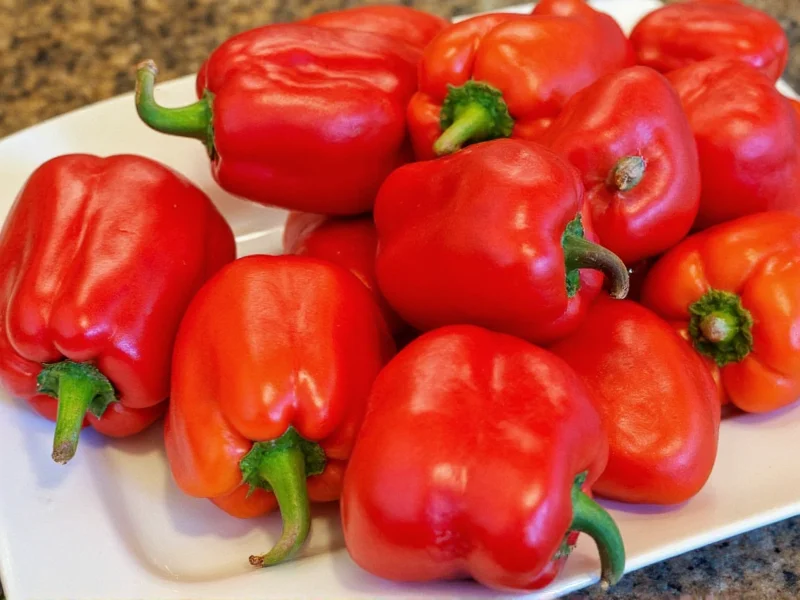
When preserving your garden harvest or preparing peppers for long-term storage, selecting the correct temperature is critical for achieving professional-quality results at home. The ideal dehydration temperature balances moisture removal with flavor preservation—a delicate process that varies slightly depending on pepper variety, moisture content, and your specific dehydrator model.
The Science Behind Pepper Dehydration Temperatures
Understanding why 125-135°F represents the sweet spot requires examining the food science involved. Peppers contain volatile compounds responsible for their distinctive flavors and heat. These compounds begin breaking down at temperatures above 140°F, particularly capsaicinoids that provide the characteristic burn in hot varieties.
At the optimal 125-135°F range, moisture evaporates efficiently through the pepper's cellular structure without damaging these delicate compounds. This temperature maintains enzyme activity that preserves color while allowing sufficient airflow to carry moisture away from the food. Lower temperatures extend drying time significantly, increasing the risk of mold development before complete dehydration occurs.
| Temperature (°F) | Capsaicin and Flavor Impact | Color Preservation | Relative Drying Time |
|---|---|---|---|
| 125 | Minimal degradation; optimal flavor retention | Excellent (vibrant color maintained) | Longest (up to 50% longer than 135°F) |
| 130 | Slight degradation; still excellent flavor | Very Good | Moderate |
| 135 | Noticeable degradation; flavor slightly diminished | Good (may darken slightly) | Shorter |
| 140+ | Significant degradation; \"cooked\" flavor develops | Fair to Poor (browning occurs) | Shortest but high risk of case hardening |
Source: University of Missouri Extension, Preserving and Preparing Dried Peppers (G6225)
Temperature Recommendations by Pepper Type
While the general 125-135°F range applies to most peppers, specific varieties benefit from slight temperature adjustments. Thicker-walled peppers require more careful temperature management to prevent case hardening—where the exterior dries too quickly, trapping moisture inside.
| Pepper Type | Recommended Temperature | Drying Time | Special Considerations |
|---|---|---|---|
| Bell Peppers | 125°F (52°C) | 8-12 hours | Thinly slice (1/8\") to prevent case hardening |
| Jalapeños | 130°F (54°C) | 10-14 hours | Remove seeds for faster, more even drying |
| Habaneros | 135°F (57°C) | 12-16 hours | Wear gloves during preparation; slice thinly |
| Cayenne | 130°F (54°C) | 10-14 hours | String entire peppers for traditional drying |
| Cherry Peppers | 125°F (52°C) | 6-10 hours | Prick skins to accelerate moisture release |
Factors Influencing Your Ideal Dehydration Temperature
Several environmental and equipment variables affect the perfect temperature setting for your specific situation when determining how to dehydrate peppers without losing flavor:
Humidity Levels
High ambient humidity requires slightly higher temperatures (up to 135°F) to overcome moisture saturation in the air. In arid climates, you may reduce to 120°F while maintaining effective drying. Monitor your dehydrator's airflow—if moisture visibly condenses on interior surfaces, increase temperature by 5°F increments.
Pepper Moisture Content
Freshly harvested peppers contain more moisture than store-bought varieties. Garden-fresh peppers benefit from a 1-2 hour pre-drying period at room temperature before dehydration begins. For extremely juicy peppers like certain bell varieties, start at 120°F for the first 2 hours, then increase to 130°F.
Dehydrator Type
Horizontal-flow dehydrators maintain more consistent temperatures throughout the unit, allowing you to use the lower end of the recommended range. Vertical-flow models may require 5°F higher settings to compensate for heat stratification. Always verify actual chamber temperature with a separate thermometer, as built-in gauges frequently vary by 10-15°F from actual conditions.
Context Boundaries: Conditions That Alter the Ideal Temperature Range
While 125-135°F is optimal under standard conditions, specific scenarios require adjustments to prevent quality issues. Food science research from land-grant universities identifies these critical boundaries:
| Condition | Boundary Limit | Recommended Adjustment | Source |
|---|---|---|---|
| High Ambient Humidity (>60%) | Standard range fails to overcome moisture saturation, extending drying time by 30-50% | Increase temperature by 5-10°F (to 130-140°F) but monitor for case hardening | University of Missouri Extension G6225 |
| Thick-Walled Pepper Varieties | Standard settings cause exterior drying before interior moisture escapes (case hardening) | Pre-dry at room temperature for 1-2 hours before dehydrating at 125-135°F | University of Missouri Extension G6225 |
Step-by-Step Pepper Dehydration Process
Follow these science-backed steps for perfect dried peppers every time, using the best dehydrator setting for bell peppers or other varieties:
- Preparation: Wash peppers thoroughly and pat completely dry. Remove stems and seeds (seeds contain most moisture and can become rancid). For thick-walled varieties, slice uniformly to 1/8" thickness.
- Pretreatment (Optional): Briefly blanch hot peppers in boiling water for 30 seconds to preserve color. Immediately plunge into ice water. This step helps maintain vibrant color in the optimal drying temperature for hot peppers.
- Arrangement: Place peppers in single layer with space between pieces for airflow. Do not overlap. For stringing varieties like cayenne, thread through stems.
- Temperature Setting: Set dehydrator to 125-135°F based on pepper type (refer to table above). Allow 30 minutes for temperature stabilization before adding peppers.
- Monitoring: Check after 6 hours. Rotate trays if using vertical dehydrator. Peppers should become leathery then brittle. Properly dried peppers will snap cleanly when bent.
- Conditioning: After drying, place peppers in airtight container for 7-10 days, shaking daily. This equalizes residual moisture and prevents mold in storage.
Storage and Usage Tips for Dehydrated Peppers
Properly dried peppers stored in vacuum-sealed containers with oxygen absorbers maintain peak quality for 2-3 years. For best flavor retention in the ideal temperature for dehydrating jalapeños and other varieties, store in dark, cool conditions below 70°F.
Reconstitute peppers by soaking in hot water for 20-30 minutes before use in sauces or stews. Alternatively, grind completely dry peppers into powder using a dedicated spice grinder. For maximum flavor extraction, toast dried peppers briefly in a dry skillet before grinding.
Troubleshooting Common Dehydration Issues
Problem: Peppers remain flexible after 12+ hours
Solution: Increase temperature by 5°F increments. Check for overcrowding on trays. Consider slicing thicker peppers more thinly. High humidity environments may require extending drying time by 50%.
Problem: Peppers darken significantly during drying
Solution: Reduce temperature to 120-125°F. Ensure peppers aren't exposed to direct sunlight during drying. For bell peppers, try the blanching pretreatment mentioned earlier.
Problem: Flavor seems diminished
Solution: You've likely exceeded the optimal drying temperature for hot peppers. Future batches should use the lower end of the temperature range (125°F). Store dried peppers away from strong odors which can affect flavor.




 浙公网安备
33010002000092号
浙公网安备
33010002000092号 浙B2-20120091-4