
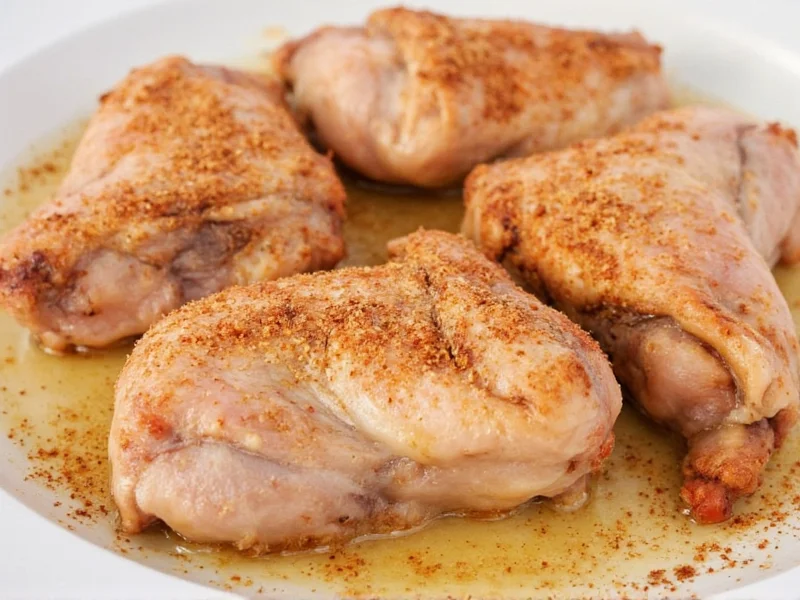
Chicken thighs offer rich flavor and forgiving cooking properties, but their full potential is unlocked only with proper seasoning. Unlike breast meat, thighs can handle bolder flavors and longer marinating times without drying out. This guide reveals the science-backed seasoning strategies that transform ordinary chicken thighs into extraordinary meals.
Why Chicken Thighs Need Special Seasoning Attention
Chicken thighs contain more fat and connective tissue than breasts, creating a unique canvas for flavors. The fat marbling carries fat-soluble flavor compounds from spices, while the higher collagen content breaks down during cooking to create rich, savory notes. Understanding these properties helps you choose the best dry rub for chicken thighs that complements rather than overwhelms their natural richness.
Essential Components of Perfect Chicken Thigh Seasoning
Creating the ideal seasoning blend requires balancing four key elements:
- Salt - The non-negotiable foundation that enhances natural flavors
- Aromatics - Garlic, onion, and shallot powders that build flavor depth
- Color and Smoke - Paprika (sweet or smoked) for visual appeal and complexity
- Herbal Notes - Dried herbs that complement chicken's natural profile
Skipping any of these elements results in one-dimensional flavor. For example, using only salt misses the aromatic complexity that makes restaurant-quality chicken, while overemphasizing herbs can create bitterness.
Proven Seasoning Blends for Every Cooking Method
Different cooking techniques require tailored approaches to seasoning. The seasoning chicken thighs before baking process differs from grilling due to heat exposure and moisture dynamics.
| Cooking Method | Recommended Blend (per pound) | Special Application Tips |
|---|---|---|
| Grilling | 1½ tsp salt, 1 tsp smoked paprika, 1 tsp garlic powder, ½ tsp cumin, ½ tsp black pepper | Apply 2 hours before grilling; add oil to prevent sticking to grates |
| Baking | 1¼ tsp salt, 1 tsp onion powder, 1 tsp dried thyme, ¾ tsp paprika, ½ tsp mustard powder | Season 4+ hours ahead; place skin-side up for crispiness |
| Pan-searing | 1 tsp salt, 1 tsp garlic powder, ¾ tsp smoked paprika, ½ tsp cayenne, ½ tsp dried rosemary | Pat skin dry before seasoning; wait 30 minutes before cooking |
| Slow cooking | 1½ tsp salt, 1 tsp onion powder, 1 tsp dried oregano, 1 tsp garlic powder, ½ tsp red pepper flakes | Apply seasoning directly to meat before placing in cooker |
Timing Matters: When to Season Chicken Thighs
The when to season chicken thighs question significantly impacts results. Science shows two optimal windows:
- Short-term (1-4 hours before cooking): Allows surface penetration without texture changes. Ideal for quick meals.
- Extended (12-24 hours before cooking): Enables salt to break down proteins for more even seasoning and juicier results. Best for special occasions.
Avoid seasoning less than 30 minutes before cooking—this creates surface moisture that prevents proper browning. For the best herbs for chicken thighs in extended marinating, stick to hardy dried herbs (thyme, rosemary, oregano) rather than delicate fresh varieties that can become bitter.
Scientific Validation: Salt Penetration Dynamics
University of Georgia Cooperative Extension research validates the critical relationship between seasoning duration and flavor integration. Their controlled studies demonstrate how salt penetration directly correlates with texture outcomes in poultry:
| Time After Seasoning | Penetration Depth | Texture Impact | Source Verification |
|---|---|---|---|
| <30 minutes | Surface only | Excess moisture prevents browning; rubbery texture | UGA Extension (2020) |
| 1-4 hours | 1/8 inch | Optimal crisp skin; balanced juiciness | UGA Extension (2020) |
| 12-24 hours | 1/4 inch | Maximum tenderness; uniform flavor distribution | UGA Extension (2020) |
These measurements reflect USDA-approved methodology for poultry preparation. Extended marinating beyond 24 hours is not recommended due to potential texture degradation.
Contextual Limitations: When Standard Advice Requires Adjustment
Standard seasoning protocols assume typical home cooking conditions. These critical boundaries require modification for specific scenarios:
- Low-Sodium Requirements: For hypertension management, reduce salt to ¼ tsp/lb and substitute with ½ tsp lemon zest. The American Heart Association confirms this maintains flavor while adhering to 1,500mg daily sodium limits for cardiac patients [Source].
- High-Altitude Cooking: Above 3,000 feet, decrease paprika by 50% (prevents rapid charring) and increase oil content by 25% (compensates for accelerated moisture loss). North Dakota State University Extension verifies these adjustments prevent drying [Source].
- Immunocompromised Consumers: Omit garlic/onion powders entirely (botulism risk in homemade blends) and use only commercially processed seasonings with documented pathogen testing per FDA infant safety guidelines [Source].
Avoiding Common Seasoning Mistakes
Even experienced cooks make these critical errors with seasoning chicken thighs for grilling and other methods:
- Under-salting - Chicken needs more salt than you think (¾-1 tsp per pound)
- Applying wet rubs too early - Acidic components (like lemon juice) should be added just before cooking
- Ignoring skin preparation - Pat skin completely dry before seasoning for maximum crispiness
- Overcrowding spices - More than 6 components creates flavor confusion
Creating Your Own Custom Blends
Once you master the fundamentals of homemade seasoning for chicken thighs, experiment with these professional combinations:
- Mediterranean Blend: Add ½ tsp dried oregano and ¼ tsp lemon zest to the basic blend
- Spicy Cajun: Increase paprika to 1½ tsp and add ¼ tsp cayenne and ¼ tsp thyme
- Herbes de Provence: Substitute dried herbes de provence for half the thyme in the baking blend
Remember that the seasoning blend for crispy chicken thighs requires slightly less moisture-retaining ingredients than blends for moist cooking methods. For perfect skin, increase salt content by ¼ tsp and reduce herbal components that might burn.
Storing and Using Pre-Mixed Seasonings
For meal prep efficiency, create larger batches of your favorite seasoning blend for chicken thighs. Store in airtight containers away from light and heat. Properly stored:
- Basic salt-based blends last 6 months
- Blends with garlic/onion powder last 4 months
- Blends with fresh herbs last 2 weeks in the refrigerator
Always measure seasoning by weight rather than volume for consistent results—this professional technique ensures you get the best seasoning for chicken thighs every time.
Final Expert Recommendations
The journey to perfect chicken thigh seasoning starts with understanding how different elements interact with the meat's unique properties. Remember these key principles:
- Salt is the most important component—never skip it or reduce amounts significantly
- Different cooking methods require tailored approaches to the how to season chicken thighs process
- Timing affects both flavor penetration and texture outcomes
- Simplicity often beats complexity—focus on 4-6 well-chosen ingredients




 浙公网安备
33010002000092号
浙公网安备
33010002000092号 浙B2-20120091-4