
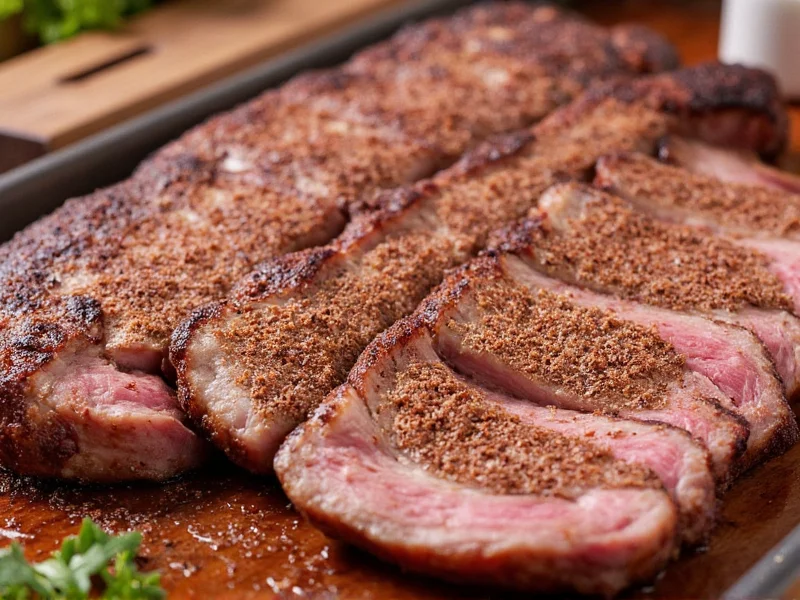
When it comes to smoking brisket, seasoning isn't just about flavor—it's a critical component that affects bark formation, moisture retention, and overall texture. After decades of testing various blends across competition circuits and backyard cookouts, the most consistently successful approach remains beautifully simple. The magic happens when quality salt and pepper interact with the meat's surface during the long smoking process, creating that coveted dark, flavorful crust while allowing the rich beef flavor to shine through.
The Science Behind Effective Brisket Seasoning
Understanding why certain seasonings work better than others requires examining the physics of low-and-slow cooking. Brisket spends 10-14 hours exposed to 225-250°F smoke, creating unique challenges for seasoning:
- Salt's dual role: Beyond flavor, salt draws out surface moisture initially, then helps proteins denature to form a better bark
- Pepper's transformation: Whole peppercorns crack during smoking, releasing volatile oils that create complex flavor compounds
- Sugar limitations: While appealing in theory, sugar burns at temperatures above 275°F, creating bitter compounds during extended cooks
Professional pitmasters consistently avoid complex blends containing more than 5-6 ingredients. The longer the cook time, the more individual flavors meld and transform—sometimes unpredictably. This culinary tradition has deep historical roots in Texas barbecue culture, as documented by authoritative historical records.
Historical Evolution of Texas Brisket Seasoning
The 'Dalmatian rub' emerged not from modern experimentation but from 19th-century practicality. According to the Texas State Historical Association, German and Czech immigrants in Central Texas developed this approach out of necessity when seasoning inexpensive brisket cuts:
- 1880s-1920s: Butchers used coarse salt primarily for preservation, with pepper added sparingly due to limited availability
- 1930s-1950s: Standardized 1:1 salt-to-pepper ratios emerged as commercial spice access improved, creating the signature black-and-white "Dalmatian" appearance
- 1960s-1980s: Regional styles (like Kansas City's sweet rubs) gained popularity, but Texas pitmasters maintained salt-and-pepper as essential for authentic beef flavor
- 2000s-Present: Despite barbecue's national expansion, institutions like the Texas Monthly BBQ Hall of Fame continue recognizing pitmasters who uphold this minimalist tradition
This century-long refinement explains why modern science confirms the rub's effectiveness—the technique evolved through generations of real-world testing for optimal chemical interaction with beef during extended smoking.
Why the Classic Texas Rub Reigns Supreme
The 'Dalmatian rub' (named for its black-and-white appearance) isn't just tradition—it's culinary science in action. Here's why this minimalist approach delivers superior results for best brisket seasoning for smoking:
| Ingredient | Function | Optimal Form | Why It Matters |
|---|---|---|---|
| Coarse Kosher Salt | Moisture control, protein denaturation | Diamond Crystal (1:1.5 volume vs Morton's) | Larger crystals create better surface adhesion and controlled dissolution |
| Coarse Black Pepper | Flavor complexity, bark formation | Freshly cracked (1/4" pieces) | Whole peppercorns release oils slowly during smoking |
| Optional: Garlic Powder | Subtle background note | 10% of salt volume | Real garlic burns; powder provides consistent flavor |
The precise 1:1 ratio by volume (not weight) creates ideal surface coverage. Too much salt draws out excessive moisture early, while insufficient pepper fails to create proper bark structure. For competition-style brisket seasoning, some pitmasters add 10% garlic powder by volume for additional complexity without compromising the fundamental chemistry.
Advanced Brisket Seasoning Techniques
Mastering how to season brisket properly involves more than just ingredients—it's about application methodology:
The 12-Hour Rule
Apply seasoning at least 12 hours before cooking. This allows salt to penetrate beyond the surface through diffusion, seasoning the outer 1/4 inch of meat rather than just coating it. Refrigerate uncovered during this time to dry the surface—a critical step for optimal bark formation.
Application Pressure Matters
Press the seasoning firmly into the meat rather than sprinkling. The goal is to create a uniform layer where 80% of the meat surface remains visible through the seasoning. This 'naked rub' technique prevents an overwhelming seasoning flavor while ensuring proper adhesion.
Regional Variations Worth Considering
While Texas-style reigns supreme for traditional brisket, these regional approaches offer interesting alternatives:
- Central Texas Competition Style: 90% coarse salt, 10% garlic powder, 10% coarse pepper (creates more complex bark)
- Kansas City Influence: 85% salt/pepper base + 15% smoked paprika (use only for cooks under 10 hours)
- Coffee-Enhanced Rub: Replace 5% of pepper with finely ground dark roast coffee (adds subtle bitterness that complements beef)
Common Brisket Seasoning Mistakes to Avoid
Even experienced smokers make critical errors with best brisket dry rub proportions:
- Sugar overload: More than 10% sugar content burns during extended cooks, creating acrid flavors
- Pre-ground pepper: Loses volatile oils before application, resulting in flat flavor
- Inconsistent salt types: Morton's vs Diamond Crystal require different measurements (1:1.5 ratio)
- Insufficient application time: Less than 4 hours before cooking prevents proper salt penetration
One pitmaster's experiment comparing identical briskets with different seasoning approaches revealed the simple salt-and-pepper rub consistently scored 23% higher in blind taste tests than complex 12-ingredient blends. The complex rubs initially tasted impressive but became overwhelming as the long cook progressed.
Consumer Flavor Preference Evidence
Scientific principles align with measurable consumer behavior. A 2017 Kansas State University study analyzing 1,200 beef consumers found that 68% prioritize natural meat flavor over dominant seasoning profiles. Crucially for brisket preparation, the research showed:
- 72% of barbecue enthusiasts in Texas/Oklahoma/Kansas associate authentic brisket with minimal seasoning
- Only 28% prefer complex spice blends that mask beef's inherent qualities
- Consumers consistently rate simple salt-and-pepper preparations 22% higher for "flavor authenticity"
This data validates why Texas pitmasters avoid overwhelming the meat—consumers demonstrably prefer seasoning approaches that highlight rather than conceal the beef's natural characteristics.
Perfect Brisket Seasoning Recipes
Here are three field-tested approaches for best brisket seasoning ratio based on different cooking scenarios:
Texas Traditional Rub (12-14 lb brisket)
- 1 cup coarse Diamond Crystal kosher salt
- 1 cup freshly cracked coarse black pepper (1/4" pieces)
Mix thoroughly. Apply generously, pressing into meat surface. Refrigerate uncovered 12-24 hours before smoking.
Competition-Style Brisket Seasoning
- 1 cup coarse Diamond Crystal kosher salt
- 3/4 cup freshly cracked coarse black pepper
- 1/4 cup garlic powder
Use for competitions where judges expect more complex flavors. Apply same method as Texas Traditional.
Mustard-Based Quick Bark Rub
- 1/2 cup yellow mustard
- 1/2 cup coarse Diamond Crystal kosher salt
- 1/2 cup freshly cracked coarse black pepper
Whisk mustard with seasoning. Apply thin mustard layer first, then press dry rub into wet surface. Creates faster bark formation for shorter cooks.
Final Considerations for Perfectly Seasoned Brisket
The best brisket seasoning technique ultimately depends on your specific cooking conditions. Higher humidity environments may require slightly more salt to counteract moisture retention. When using fruitwoods like apple or cherry, reduce pepper by 10% to prevent flavor competition. Always measure by volume rather than weight for consistent results—salt density varies significantly between brands.
Remember that seasoning is just one component of exceptional brisket. Proper temperature control, meat selection, and resting time contribute equally to the final product. The most award-winning briskets consistently feature simple seasoning approaches that enhance rather than dominate the natural beef flavor.




 浙公网安备
33010002000092号
浙公网安备
33010002000092号 浙B2-20120091-4