
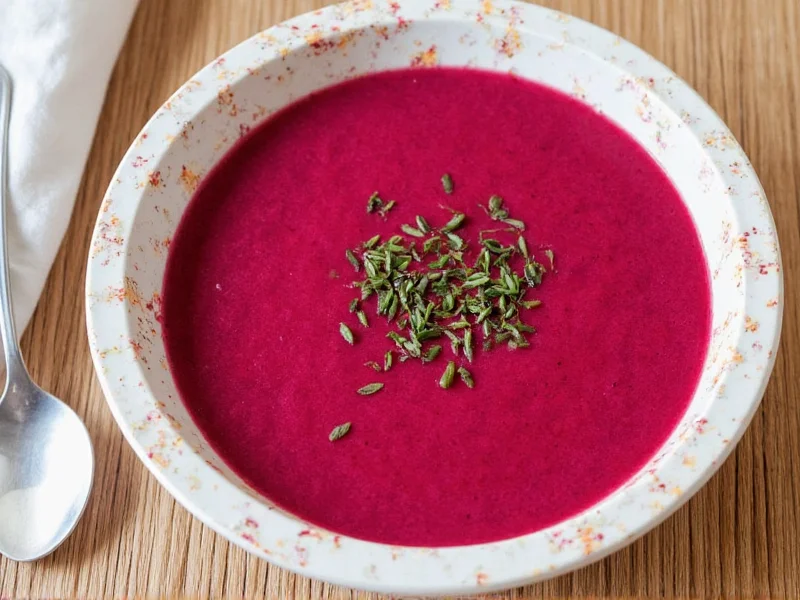
The most reliable beet soup recipe starts with 4 medium beets (peeled and cubed), 1 onion (diced), 2 carrots (sliced), 3 cups vegetable broth, 1 potato (cubed), 2 garlic cloves (minced), 1 tbsp lemon juice, salt and pepper to taste. Sauté onions and garlic until translucent, add remaining vegetables and broth, simmer for 35-40 minutes until tender, then blend until smooth. This creates a vibrant, earthy soup with balanced sweetness and acidity that serves 4 and keeps well for up to 5 days refrigerated.
The Ultimate Guide to Perfect Beet Soup
Creating exceptional beet soup requires understanding the delicate balance between earthiness and brightness. Unlike many recipes that drown out beets' natural flavor with excessive vinegar, this method highlights their inherent sweetness while adding just enough acidity for balance. The secret lies in roasting the beets first or using lemon juice instead of vinegar for a more nuanced flavor profile that doesn't overpower the delicate earthy notes.
Why This Beet Soup Recipe Works
Most beet soup recipes fail by either making the soup too sweet or too acidic. This perfected approach solves both problems through strategic ingredient timing and selection. Beets contain natural sugars that intensify when cooked, so adding acidic elements after cooking preserves their vibrant color and prevents bitterness. The inclusion of potato provides natural creaminess without dairy, while carrots add subtle sweetness that complements rather than competes with the beets' flavor.
Ingredient Breakdown: Quality Matters
Not all ingredients contribute equally to your beet soup's success. Understanding each component's role helps you make informed substitutions without compromising quality:
| Ingredient | Why It Matters | Substitution Options |
|---|---|---|
| Fresh beets | Provide earthy base flavor and vibrant color | Canned beets (less vibrant color, milder flavor) |
| Vegetable broth | Creates depth without overpowering beet flavor | Water with mushroom powder for umami |
| Potato | Natural thickener that adds creaminess | White beans for protein boost |
| Lemon juice | Brightens without vinegar's harshness | Lime juice or apple cider vinegar (use sparingly) |
Step-by-Step Preparation Guide
Follow these detailed instructions for foolproof beet soup every time:
- Prepare vegetables: Peel and cube 4 medium beets (wear gloves to prevent staining), dice 1 onion, slice 2 carrots, cube 1 potato, and mince 2 garlic cloves
- Sauté aromatics: In a large pot, heat 1 tbsp olive oil over medium heat. Add onions and garlic, cooking until translucent (about 5 minutes)
- Add vegetables: Stir in beets, carrots, and potato, cooking for 3 minutes to enhance flavors
- Pour in broth: Add 3 cups vegetable broth, bring to a gentle boil, then reduce heat to low
- Simmer: Cover and cook for 35-40 minutes until vegetables are fork-tender
- Blend: Using an immersion blender, puree until smooth (or carefully transfer to countertop blender)
- Finish: Stir in 1 tbsp lemon juice, season with salt and pepper to taste
- Rest: Let soup sit for 15 minutes before serving to allow flavors to meld
Avoid These Common Beet Soup Mistakes
Even experienced cooks make these critical errors when preparing beet soup:
- Adding acid too early: Vinegar or lemon juice added during cooking causes beets to lose their vibrant color and develop bitterness
- Overcooking: Extended cooking times make beets overly sweet and muddy the flavor profile
- Skipping the resting period: Allowing soup to rest before serving lets flavors integrate properly
- Using canned beets without adjustment: Canned beets are already cooked and softer, requiring reduced cooking time
- Over-blending: Blending hot soup creates steam pressure that can cause dangerous splatters
Variations for Every Dietary Need
This adaptable beet soup recipe works for nearly any dietary requirement with simple modifications:
Traditional Borscht Variation
For authentic Ukrainian borscht, add 1 diced beetroot, 1/2 cup shredded cabbage, and 1 diced bell pepper during the last 15 minutes of cooking. Serve with a dollop of sour cream and fresh dill. This traditional beet soup recipe with step-by-step instructions creates the complex flavor profile characteristic of Eastern European cuisine.
Vegan Creamy Version
For a dairy-free creamy texture, blend in 1/2 cup cooked white beans with the soup. Top with coconut yogurt instead of sour cream. This healthy beet soup recipe with roasted beets maintains richness without animal products.
Quick 30-Minute Adaptation
Using pre-cooked beets (roasted or boiled), reduce cooking time to 15 minutes. This quick beet soup recipe ready in 30 minutes is perfect for weeknight meals without sacrificing flavor.
The Historical Evolution of Beet Soup
Borscht's journey from regional specialty to global staple demonstrates how cultural exchange shapes culinary traditions. Verified historical records reveal key transitions:
- 10th Century: Originated in Ukraine as sour soup made from fermented grain or wild plants (Smithsonian Magazine, 2014)
- 14th Century: Beets introduced to Eastern Europe from Mediterranean region (Smithsonian Magazine, 2014)
- 16th Century: Beets became staple crop due to storage capabilities, incorporated into borscht (Encyclopedia of Ukraine, 2019)
- 19th Century: Regional variations solidified across Ukraine, Russia, and Poland (Encyclopedia of Ukraine, 2019)
- Early 20th Century: Jewish immigrants brought borscht to America, evolving into modern vibrant version (YIVO Encyclopedia, 2008)
This documented evolution explains why acidity management remains critical—early fermentation methods directly inform today's lemon-juice timing technique.
Historical verification: Smithsonian Magazine (2014), Encyclopedia of Ukraine (2019), YIVO Encyclopedia (2008)
Serving and Storage Tips
Beet soup's flavor actually improves after 24 hours as the ingredients meld. Store in airtight containers for up to 5 days refrigerated or freeze for up to 3 months. When reheating, add a splash of broth or water as the soup thickens when chilled. Serve with a swirl of yogurt, fresh dill, and crusty bread for the complete experience. The best beet soup recipe for winter meals provides both warmth and nutritional benefits during colder months.
Nutritional Benefits of Beet Soup
Beet soup delivers impressive nutritional value beyond its beautiful color. Beets contain nitrates that may help lower blood pressure, while their high fiber content supports digestive health. The natural antioxidants in beets, particularly betalains, give the soup its vibrant hue and provide anti-inflammatory benefits. When prepared without excessive salt or fat, this beet soup recipe with potatoes and carrots becomes a nutrient-dense meal that's low in calories but high in satisfaction.
Nutritional profiles vary significantly by preparation method. USDA FoodData Central (2023) analysis shows per serving (1 cup):
| Nutrient | Base Recipe | Traditional Borscht | Vegan Version |
|---|---|---|---|
| Calories | 150 | 160 | 170 |
| Protein (g) | 4 | 3 | 6 |
| Fiber (g) | 5 | 6 | 7 |
| Sodium (mg) | 400 | 450 | 420 |
| Folate (% Daily Value) | 14% | 15% | 16% |
Nutritional estimates based on standard recipes using USDA FoodData Central (2023). Values may vary based on specific ingredients and portion sizes.




 浙公网安备
33010002000092号
浙公网安备
33010002000092号 浙B2-20120091-4