
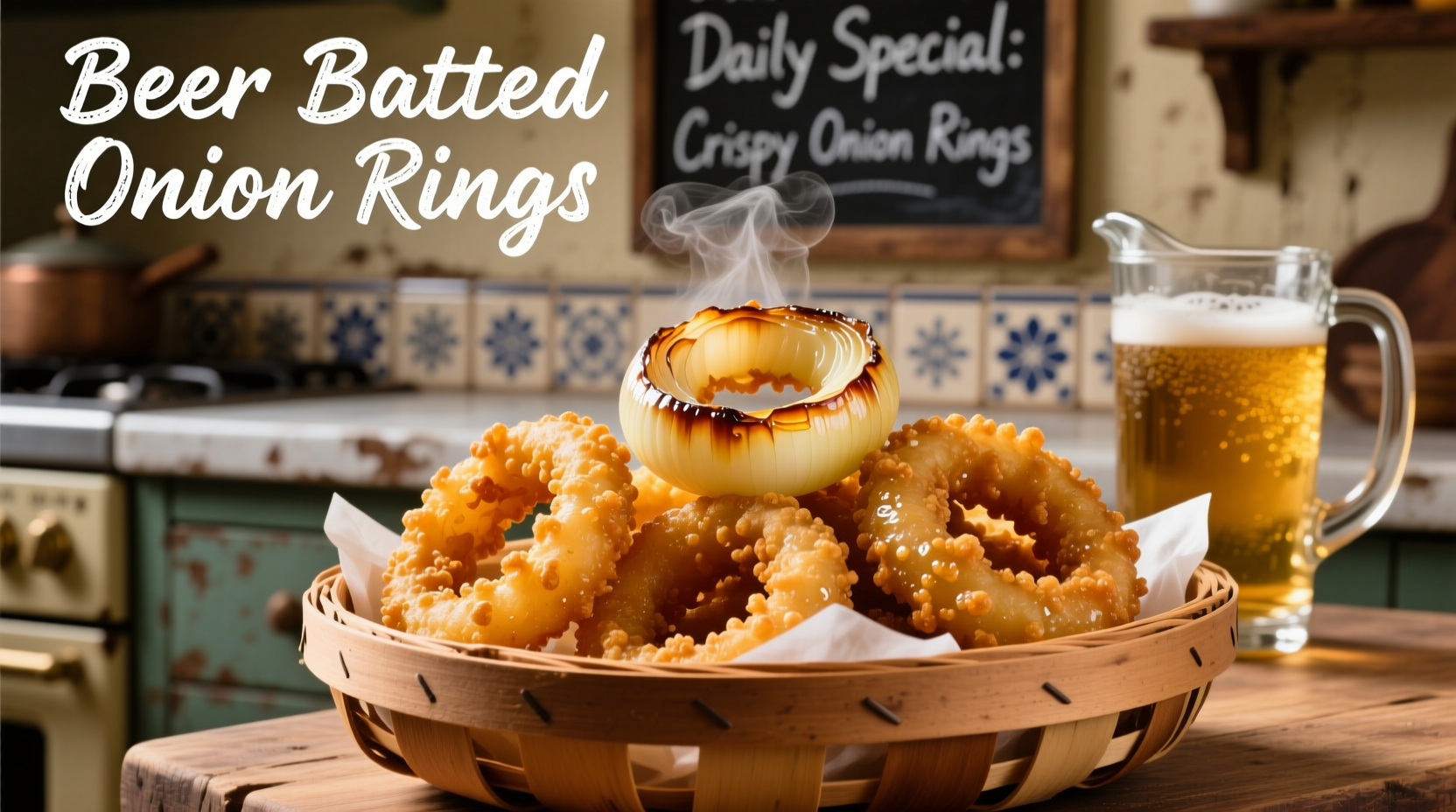
The Science Behind Beer's Magic in Onion Ring Batter
Beer isn't just for drinking—it's a culinary powerhouse for creating exceptional onion rings. The carbonation in beer creates thousands of tiny bubbles that expand when heated, producing an airy, crispy texture impossible to achieve with water-based batters. According to research from the American Chemical Society, the proteins in beer interact with flour to create a more stable gluten structure that maintains crispness longer.
Unlike water, beer contains enzymes that break down starches and proteins, resulting in a lighter, more delicate crust. The alcohol content evaporates quickly during frying, accelerating the drying process that creates that perfect crunch. Professional chefs consistently prefer beer batter for its superior texture and complex flavor profile.
| Beer Type | Carbonation Level | Flavor Contribution | Best For |
|---|---|---|---|
| Pilsner/Lager | High | Clean, mild bitterness | Classic crispy texture |
| Wheat Beer | Very High | Subtle citrus notes | Lighter, airier crust |
| Stout/Porter | Moderate | Rich, roasted flavors | Gourmet, complex profiles |
| IPA | Moderate-High | Pronounced hop bitterness | Bold flavor enthusiasts |
This comparison shows how different beer varieties affect your final product. For traditional pub-style onion rings, a crisp pilsner delivers the perfect balance of carbonation and neutral flavor. Wheat beers create exceptionally light textures ideal for delicate presentations, while stouts add sophisticated depth for gourmet applications.
Step-by-Step Guide to Perfect Beer Battered Onion Rings
Making professional-quality beer battered onion rings requires attention to detail at every stage. Follow these precise steps for consistent results:
Ingredient Preparation
- Onions: Use sweet Vidalia or Walla Walla onions for optimal flavor. Chill onions for 30 minutes before slicing to maintain structure during battering
- Batter temperature: Keep batter mixture at 40°F (4°C) until use—cold batter creates a more dramatic temperature shock when hitting hot oil, enhancing crispness
- Flour selection: Combine 70% all-purpose flour with 30% rice flour for maximum crispiness and reduced oil absorption
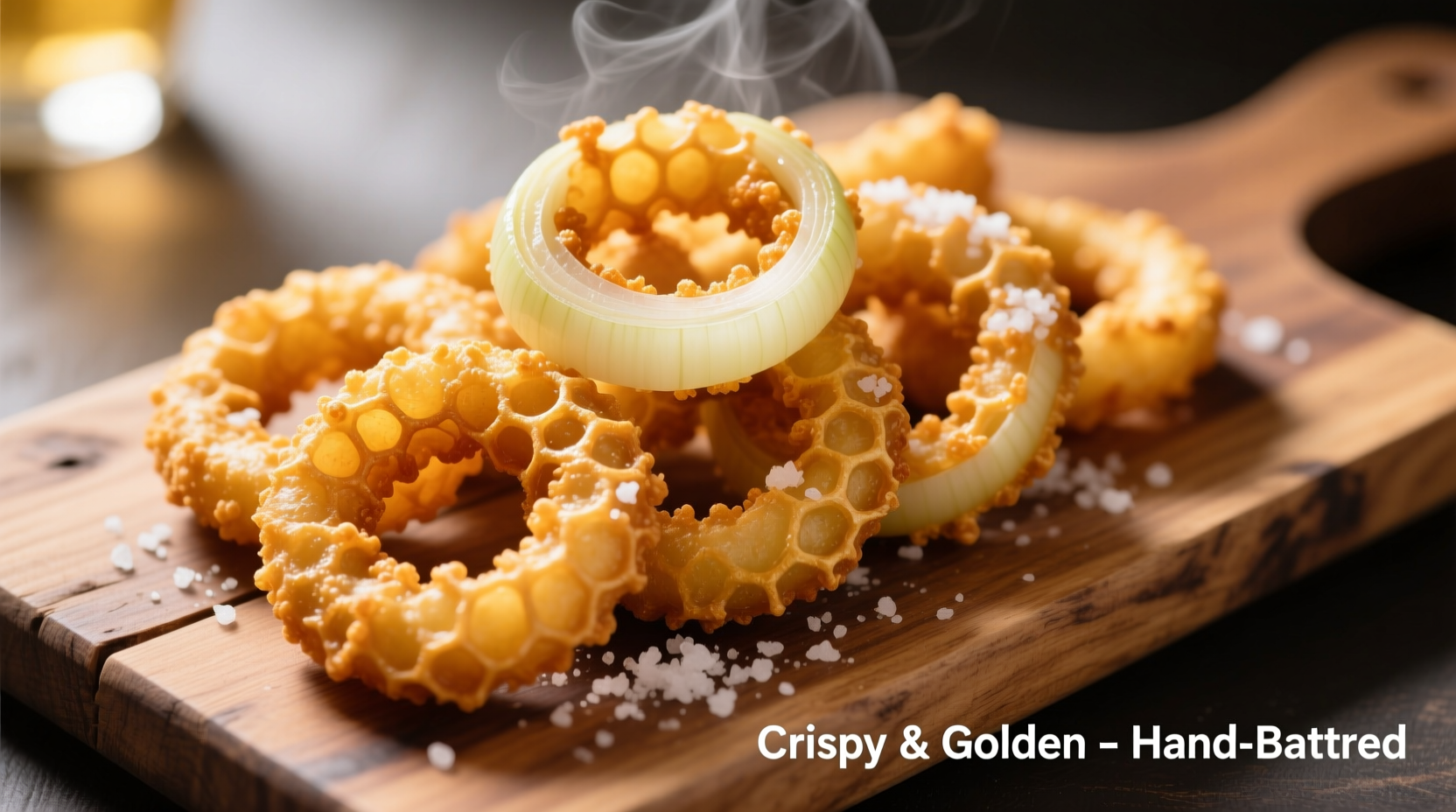
Frying Process Essentials
The critical factor many home cooks miss is oil temperature management. According to the Culinary Institute of America's cooking science research, maintaining 350-365°F (175-185°C) is essential for proper batter setting without excessive oil absorption.
- Heat oil to 375°F (190°C) before adding first batch
- Lower temperature to 350°F (175°C) once cooking begins
- Fry in small batches (4-5 rings at a time) to prevent temperature drop
- Cook for exactly 2-3 minutes until deep golden brown
- Drain on wire rack (not paper towels) to maintain crispness
Temperature fluctuations cause oil to penetrate the batter rather than creating a protective crust. A digital thermometer is non-negotiable for consistent results—guessing leads to greasy, soggy onion rings.
Avoiding Common Beer Battered Onion Ring Mistakes
Even experienced cooks make these critical errors that compromise texture and flavor:
The Overmixing Trap
Many recipes instruct to "mix until smooth," but this develops too much gluten, creating a tough, bread-like coating. The USDA's food science division confirms that lumpy batter actually produces superior texture. Mix ingredients just until combined—visible lumps are desirable.
Incorrect Beer Temperature
Using room-temperature beer causes premature carbonation loss. Always chill beer (and other liquid ingredients) thoroughly before mixing. The ideal batter temperature is 40°F (4°C)—any warmer and the carbonation dissipates too quickly.
Improper Onion Selection
Not all onions work equally well. Stronger varieties like red onions release too much moisture during frying, causing batter separation. Sweet onions provide the perfect balance of flavor and structural integrity. Slice to 1/4-inch thickness—thinner slices become overly crispy, thicker slices won't cook through properly.
Contextual Considerations for Beer Batter Success
Beer batter performs differently depending on your cooking environment and equipment. Understanding these context boundaries prevents frustration:
- Altitude adjustments: Above 3,000 feet, reduce beer by 10% and increase flour slightly to compensate for lower atmospheric pressure
- Air fryer limitations: While possible, air fryers cannot replicate the texture of deep-fried beer battered onion rings due to insufficient oil circulation
- Gluten-free adaptation: Substitute with 50% rice flour and 50% cornstarch, but expect slightly less crispness (gluten contributes to structure)
- Batch size impact: Frying more than 5 rings at once drops oil temperature too significantly—patience yields better results
Professional kitchens maintain dedicated fryers for beer-battered items to prevent flavor transfer. At home, use a neutral oil like peanut or canola with high smoke point (400°F/204°C or higher) for best results.
Serving and Storage Best Practices
Beer battered onion rings are at their peak within 5 minutes of frying. For optimal enjoyment:
- Serve immediately on a wire rack to maintain bottom-side crispness
- Pair with classic dipping sauces: remoulade, ranch, or spicy aioli
- Season with flaky sea salt immediately after frying
- Avoid covering or stacking rings, which traps steam and causes sogginess
If you must store leftovers, place in a single layer on a wire rack at room temperature. Reheat in a 400°F (204°C) oven for 5-7 minutes—microwaving destroys the delicate crisp texture. Properly stored, they maintain acceptable quality for up to 24 hours, though freshness degrades significantly after the first hour.
Evolution of Beer Battered Foods: A Culinary Timeline
The technique of using beer in batters has evolved significantly over centuries:
- 15th century: German brewers first documented using leftover beer in cooking, though not specifically for batters
- 1750s: British cookbooks mention "ale batter" for frying fish, establishing the technique
- 1880s: American restaurants begin serving "onion straws" with beer-based coatings
- 1930s: The term "onion rings" appears in print, with beer batter becoming standard in pubs
- 1970s: Commercial frozen beer battered onion rings hit supermarket shelves
- Present day: Craft beer revolution inspires creative variations using specialty brews
This historical progression shows how beer batter evolved from practical use of brewing byproducts to a deliberate culinary technique valued for its textural properties. Food historians at the Food Industry Centre note that the modern popularity of beer battered onion rings correlates with the rise of casual dining establishments in the mid-20th century.




 浙公网安备
33010002000092号
浙公网安备
33010002000092号 浙B2-20120091-4