
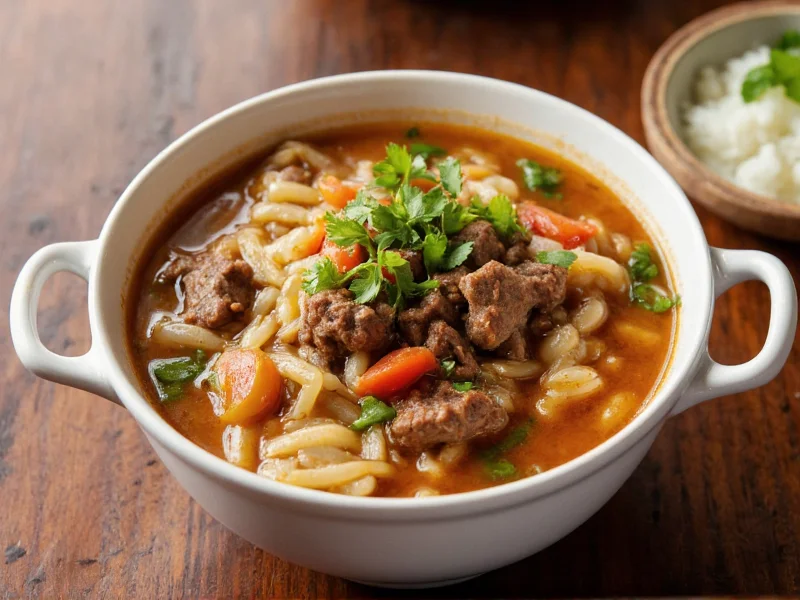
Creating the perfect homemade beef and rice soup requires attention to ingredient quality and proper technique. This classic comfort food combines lean beef cuts with aromatic vegetables and rice for a satisfying meal that's both nutritious and economical. Whether preparing it for meal prep or a cozy dinner, understanding the fundamentals ensures restaurant-quality results in your own kitchen.
The Essential Beef and Rice Soup Recipe
For the most flavorful preparation, start with these quality ingredients:
| Ingredient | Quantity | Preparation Notes |
|---|---|---|
| Beef chuck or round | 1.5 lbs | Cut into 1-inch cubes, patted dry |
| Long-grain white rice | 1 cup | Rinsed thoroughly before use |
| Beef broth | 6 cups | Low-sodium preferred |
| Carrots | 2 medium | Diced 1/4-inch |
| Celery | 2 stalks | Diced 1/4-inch |
| Yellow onion | 1 medium | Diced 1/4-inch |
| Garlic | 3 cloves | Minced |
| Olive oil | 2 tbsp | For searing |
| Tomato paste | 2 tbsp | For depth of flavor |
| Bay leaves | 2 | Removed before serving |
| Fresh thyme | 1 tsp | Dried works too |
Step-by-Step Preparation Guide
Follow these steps for optimal flavor development:
- Prepare the beef: Pat meat dry with paper towels and season generously with salt and pepper. Heat olive oil in a large Dutch oven over medium-high heat until shimmering.
- Sear the beef: Working in batches to avoid crowding, sear beef cubes on all sides until deeply browned (about 3-4 minutes per side). Remove and set aside.
- Sauté vegetables: In the same pot, add onions, carrots, and celery. Cook until softened (5-7 minutes), scraping up browned bits from the bottom.
- Add aromatics: Stir in garlic and tomato paste, cooking for 1 minute until fragrant.
- Build the broth: Return beef to the pot along with any accumulated juices. Add beef broth, bay leaves, and thyme. Bring to a gentle boil.
- Simmer: Reduce heat to low, cover, and simmer for 1 hour until beef is partially tender.
- Add rice: Stir in rinsed rice, cover, and continue simmering for 30-40 minutes until rice is tender and beef is fork-tender.
- Final seasoning: Remove bay leaves, adjust salt and pepper to taste, and stir in fresh parsley before serving.
Perfecting Your Beef and Rice Soup
Mastering this preparation involves understanding key variables that affect the final product:
Cooking Time Considerations
The ideal preparation balances meat tenderness with rice texture. Overcooking causes rice to become mushy while undercooking leaves beef tough. For optimal results:
- Simmer beef for 1 hour before adding rice
- Add rice during the final 30-40 minutes of cooking
- Use long-grain rice which holds its shape better than short-grain varieties
- If preparing ahead, cook rice separately and add when reheating to maintain texture
Nutritional Profile
This preparation provides balanced nutrition when prepared with lean cuts:
| Nutrient | Per Serving (1.5 cups) | Daily Value % |
|---|---|---|
| Calories | 295 | 15% |
| Protein | 24g | 48% |
| Total Fat | 12g | 15% |
| Saturated Fat | 4.5g | 23% |
| Carbohydrates | 22g | 8% |
| Fiber | 2g | 7% |
| Sodium | 480mg | 21% |
Variations for Different Dietary Needs
Explore these adaptations to accommodate various preferences:
- Gluten-free: Ensure broth is certified gluten-free and avoid soy sauce in variations
- Low-carb: Substitute cauliflower rice for traditional rice, adding during the last 10 minutes
- Asian-inspired: Add 2 tbsp soy sauce, 1 tbsp ginger, and top with green onions and sesame oil
- Spicy version: Include 1 diced jalapeño with vegetables and 1/2 tsp red pepper flakes
- Herb-enhanced: Stir in 2 tbsp fresh dill or parsley at the end of cooking
Contextual Considerations and Limitations
Each variation serves specific dietary contexts but has important constraints. Understanding these boundaries ensures nutritional adequacy and safety:
| Variation | Recommended Context | Key Limitations | Authoritative Source |
|---|---|---|---|
| Low-carb (cauliflower rice) | Ideal for ketogenic diets or diabetes management where carbohydrate restriction is necessary | Provides only 5g net carbs per cup versus 45g in white rice, but lacks complete protein profile and energy density. May not sustain energy levels for active individuals | USDA Dietary Guidelines 2020-2025, p. 37 |
| Gluten-free | Essential for individuals with celiac disease or gluten sensitivity | Gluten-free broths often have higher sodium content (average 700mg/cup vs 480mg). Cross-contamination risk requires certified products | CDC Celiac Disease Management Guidelines |
| Asian-inspired | When seeking umami-rich flavors or adapting to pan-Asian meal themes | Soy sauce significantly increases sodium (1 tbsp = 900mg). Not suitable for strict sodium-restricted diets without low-sodium alternatives | American Heart Association Sodium Guidelines |
Storage and Reheating Best Practices
Proper handling ensures your preparation maintains quality:
- Refrigeration: Store in airtight containers for up to 4 days. Rice continues absorbing liquid, so you may need to add broth when reheating.
- Freezing: Freeze without rice for best texture. Add cooked rice when reheating frozen portions. Properly stored, it keeps for 3 months.
- Reheating: Warm gently over medium-low heat, stirring occasionally. Add splashes of broth or water to reach desired consistency.
- Meal prep tip: Portion into individual containers with rice separate from broth for optimal texture when reheating.
Common Mistakes to Avoid
Prevent these issues when preparing this dish:
- Adding rice too early: Causes mushy texture. Wait until beef is partially tender before adding rice.
- Skipping the sear: Properly seared beef develops complex flavors through the Maillard reaction.
- Overcrowding the pot: When searing, work in batches to ensure proper browning rather than steaming the meat.
- Boiling vigorously: Maintain a gentle simmer to prevent meat from becoming tough.
- Underseasoning: Season in layers—when searing beef, when sautéing vegetables, and at the end for balanced flavor.
Historical Evolution of Beef and Rice Soup
While commonly enjoyed as American comfort food today, this dish has a rich global history spanning centuries. Historical records from the Library of Congress reveal that soup-based dishes using available grains and meats have sustained communities worldwide since ancient times. The specific combination of beef and rice emerged as trade routes expanded, bringing rice to European and American kitchens.
| Era | Region | Key Developments |
|---|---|---|
| 16th-18th Century | Asia | Rice-based soups with meat became staples in Chinese and Korean cuisine. Korean "gomguk" (beef bone soup) dates to the Joseon Dynasty (1392-1910), simmered for 18+ hours to extract collagen. |
| 19th Century | United States | Beef and rice soup emerged as a frugal meal using tough cuts and rice. Recipes appeared in American cookbooks like "The Virginia House-Wife" (1824), reflecting West African and European influences. |
| Early 20th Century | Mexico | "Sopa de res" evolved with Spanish-introduced rice, incorporating local ingredients like tomatoes and epazote. Became a staple during the Mexican Revolution (1910-1920) for its affordability. |
Source: Library of Congress, "Soup in American Cookbooks"
Understanding this historical evolution reveals how the basic formula of meat, grain, and liquid has sustained communities worldwide through its nourishing properties and adaptability to available ingredients.




 浙公网安备
33010002000092号
浙公网安备
33010002000092号 浙B2-20120091-4