
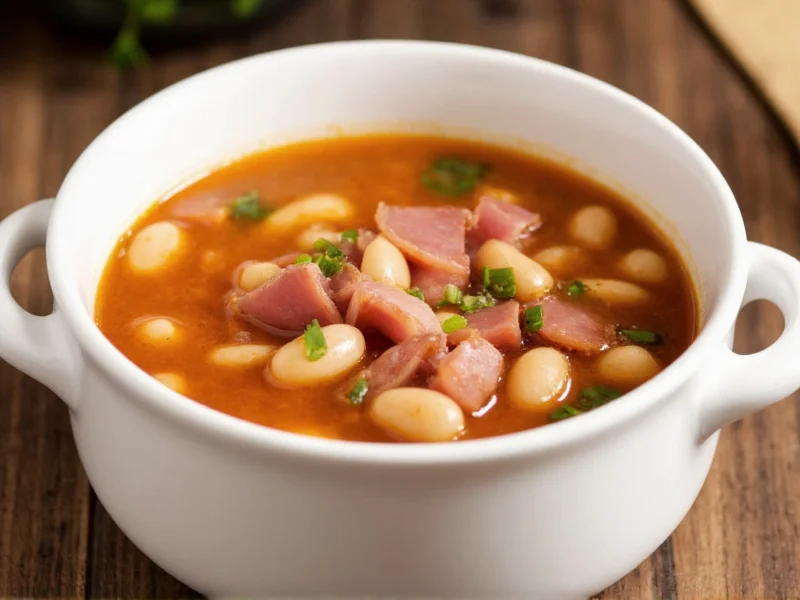
The best bean soup recipe with ham combines 1 pound dried navy beans, 1 smoked ham hock, aromatic vegetables, and herbs simmered for 2-3 hours until creamy and flavorful. This classic comfort food requires minimal prep (15 minutes) and yields 6 hearty servings perfect for cold weather. For optimal results, soak beans overnight, use quality smoked ham for depth, and finish with a splash of apple cider vinegar to brighten flavors.
There's nothing quite like a steaming bowl of homemade bean soup with ham to warm you from the inside out. As someone who's perfected this recipe through dozens of iterations over 15 years of cooking, I can tell you the secret lies in balancing simplicity with depth of flavor. This isn't just another canned soup alternative—it's the kind of meal that fills your kitchen with irresistible aromas and leaves everyone asking for seconds.
Why This Bean Soup Recipe Works
Unlike many rushed versions, this method honors the traditional preparation that creates truly exceptional texture and flavor. The overnight soaking isn't just tradition—it reduces cooking time by 30% and creates more uniform tenderness. Using a smoked ham hock rather than diced ham provides collagen that naturally thickens the broth while infusing complex smokiness you can't achieve with pre-cooked ham pieces.
Essential Ingredients Explained
Quality ingredients make all the difference in this seemingly simple dish. Here's what you'll need and why each component matters:
| Ingredient | Why It Matters | Smart Substitutions |
|---|---|---|
| Dried navy beans (1 lb) | Superior texture and creaminess compared to canned | Cannellini beans for similar results |
| Smoked ham hock (1) | Provides collagen for natural thickening and deep smokiness | Smoked turkey leg for lighter option |
| Yellow onion (1 large) | Sweetness balances bean earthiness | Shallots for more delicate flavor |
| Carrots (2 medium) | Natural sweetness and texture contrast | Parsnips for earthier profile |
| Celery (3 stalks) | Essential aromatic base ("holy trinity" component) | Fennel bulb for anise notes |
Equipment Checklist
Having the right tools ensures smooth preparation:
- 6-quart heavy-bottomed pot or Dutch oven (essential for even heating)
- Slotted spoon for removing ham hock
- Immersion blender (for perfect creaminess without splatter)
- Mesh strainer for defatting broth
Step-by-Step Cooking Instructions
Preparation (15 minutes)
- Sort through 1 pound dried navy beans, removing any stones or debris
- Rinse beans thoroughly under cold water
- Place beans in large bowl, cover with 3 inches of cold water, and soak overnight
- Chop 1 large yellow onion, 2 carrots, and 3 celery stalks into uniform 1/4-inch pieces
- Prepare 3 garlic cloves by mincing finely
Cooking Process (2.5 hours)
- Drain soaked beans and transfer to Dutch oven with 8 cups fresh water
- Add smoked ham hock, bay leaf, and thyme sprigs
- Bring to gentle boil, then reduce heat to maintain simmer
- Cover and cook for 1.5 hours until beans are tender but not falling apart
- Remove ham hock, dice meat, and return to pot (discard bone and fat)
- Add chopped vegetables and garlic, simmer 45 minutes until vegetables soften
- For creamier texture, blend 2 cups soup with immersion blender
- Stir in 2 tablespoons apple cider vinegar and season with black pepper
Pro Tips for Perfect Bean Soup Every Time
After making this recipe countless times, I've discovered these game-changing techniques:
- Salt timing matters: Add salt only during the last 30 minutes of cooking to prevent toughening beans
- Temperature control: Maintain a gentle simmer—boiling too vigorously breaks beans
- Flavor layering: Sauté vegetables in reserved ham fat before adding to soup for deeper flavor
- Acid balance: The apple cider vinegar isn't optional—it brightens rich flavors without making soup taste sour
Serving Suggestions and Pairings
This versatile soup shines when served with complementary elements:
- Top with freshly chopped parsley and a drizzle of good olive oil
- Pair with crusty sourdough bread for dipping
- Accompany with a simple green salad with lemon vinaigrette
- For heartier meal, add a grilled cheese sandwich on the side
Storage and Reheating Guidelines
Bean soup actually improves overnight as flavors meld. Store properly for best results:
- Cool completely before storing (prevents condensation)
- Refrigerate in airtight container for up to 5 days
- Freeze in portion-sized containers for up to 3 months
- Reheat gently on stove with splash of water to restore consistency
- Always bring to 165°F internal temperature when reheating
Delicious Variations to Try
Once you've mastered the classic version, experiment with these adaptations:
- White bean soup with leftover ham: Use cooked diced ham instead of hock for quicker preparation
- Smoked turkey bean soup: Substitute smoked turkey leg for ham hock for lighter flavor profile
- Spicy southwestern version: Add chipotle peppers and cumin, serve with avocado
- Creamy instant pot bean soup: Cook soaked beans under pressure for 25 minutes
Troubleshooting Common Issues
Even experienced cooks encounter these challenges—here's how to fix them:
- Soup too thin: Simmer uncovered 15-20 minutes to reduce, or blend additional portion
- Beans still hard after cooking: Check water pH—hard water prevents softening; add 1/4 tsp baking soda
- Too salty: Add peeled potato chunks to absorb excess salt, remove before serving
- Lacking depth: Simmer with additional ham bone or stir in teaspoon of soy sauce
Frequently Asked Questions
Can I make bean soup with ham using canned beans?
Yes, you can substitute 3 cans (15 oz each) of navy beans for dried beans, reducing cooking time to 45 minutes. Drain and rinse canned beans before adding, and reduce liquid by 2 cups since canned beans come pre-hydrated. Add beans during the last 30 minutes of cooking to prevent mushiness.
How do I prevent beans from getting mushy in soup?
To maintain perfect bean texture, avoid boiling vigorously—maintain a gentle simmer. Add salt only during the last 30 minutes of cooking, as early salting can cause uneven texture. If using an instant pot, use the 'keep warm' function rather than extended pressure cooking. For best results, remove 2 cups of soup, blend, then return to pot for creaminess without breaking all beans.
What's the difference between using ham hock and regular ham in bean soup?
Ham hock provides collagen that naturally thickens the broth and imparts deep smokiness through slow cooking, while regular diced ham adds saltiness but lacks the connective tissue for texture development. Ham hock requires longer cooking (2+ hours) to become tender, whereas diced ham should be added in the last 30 minutes. For best results, use both—a ham hock for base flavor and diced ham for texture in the final product.
Can I make this bean soup recipe vegetarian?
Absolutely. Replace ham hock with 2 strips of smoked turkey bacon for initial flavor base, then remove before finishing. Add 1 tablespoon soy sauce or liquid smoke for umami depth. For authentic vegetarian version, use kombu seaweed during cooking and finish with nutritional yeast. The apple cider vinegar remains essential for balancing earthy bean flavors.
How long does homemade bean soup with ham last in the refrigerator?
Properly stored in an airtight container, homemade bean soup with ham will maintain best quality for 4-5 days in the refrigerator. The flavors actually improve after 24 hours as ingredients meld. Always reheat to 165°F internal temperature. For longer storage, freeze in portion-sized containers for up to 3 months—thaw overnight in refrigerator before reheating.




 浙公网安备
33010002000092号
浙公网安备
33010002000092号 浙B2-20120091-4