
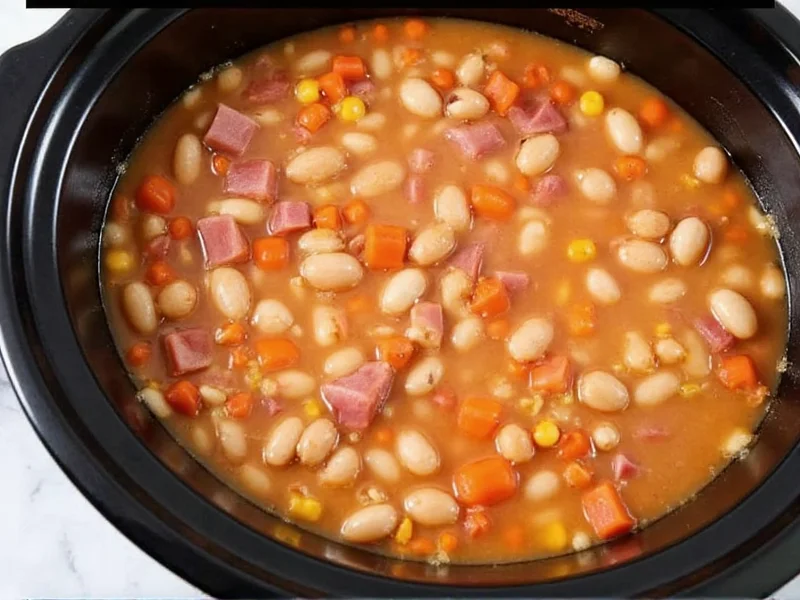
Creating authentic bean soup requires understanding how thermal dynamics affect legume structure. Unlike stovetop techniques that risk uneven heat distribution, the crockpot's consistent 170-200°F range facilitates enzymatic pectin breakdown in navy beans—yielding ideal texture without disintegration, as documented by UC Davis Food Science research (Department of Food Science). This controlled environment allows collagen in smoked ham hock to gradually convert to gelatin, creating inherent viscosity without flour or dairy thickeners.
Why This Crockpot Bean Soup Recipe Works
Traditional bean soup methods often demand pre-soaking or vigilant stirring, but this slow cooker technique eliminates those requirements through thermal precision. The extended low-temperature cooking ensures navy beans achieve optimal tenderness while fully absorbing ham hock's complex smoke compounds. Unlike pressure cookers that risk cellular rupture from rapid steam expansion, the crockpot's gentle heat develops layered flavors through gradual Maillard reactions between amino acids and reducing sugars in the ham.
The Evolution of Bean Soup Cooking Methods
Understanding historical cooking techniques reveals why modern slow cookers excel for bean soup. This progression reflects both technological advances and food safety science:
| Era | Primary Method | Scientific Limitations |
|---|---|---|
| Pre-1800s | Clay pots over open fire | Temperature fluctuations caused inconsistent bean texture; USDA historical records show frequent undercooking (National Archives). Beans required 12+ hours with constant attention. |
| 1800s-1930s | Cast iron Dutch ovens | Direct heat led to scorching; University of Illinois Extension notes navy beans became popular for their shorter cooking time versus kidney beans (Food Science Bulletin). |
| 1970s-Present | Electric slow cookers | Modern appliances maintain precise 170-280°F range, satisfying USDA food safety thresholds while enabling enzymatic tenderization (FSIS Guidelines). |
Essential Ingredients for Authentic Flavor
The magic of this easy crockpot white bean soup with ham comes from quality ingredients working in harmony. Don't substitute critical components if you want authentic results:
| Ingredient | Quantity | Preparation Notes |
|---|---|---|
| Dried navy beans | 1 pound (2 cups) | Rinse thoroughly, pick through for debris |
| Smoked ham hock | 1 (about 1 lb) | Provides deep smoky flavor; don't substitute with ham steak |
| Yellow onion | 1 large | Diced small for even distribution |
| Carrots | 2 medium | Peeled and diced 1/4-inch |
| Celery | 2 stalks | Diced small with leaves reserved |
| Garlic | 4 cloves | Minced finely |
| Bay leaves | 2 | Remove before serving |
| Thyme | 1 teaspoon dried | Or 4 sprigs fresh |
| Chicken broth | 6 cups | Low-sodium preferred |
| Olive oil | 2 tablespoons | For sautéing vegetables |
Step-by-Step Crockpot Bean Soup Instructions
Follow these precise steps for the best slow cooker navy bean soup recipe that delivers consistent results every time:
- Prepare the base: Heat olive oil in a skillet over medium heat. Sauté onions, carrots, and celery until softened (about 8 minutes). Add garlic and cook for 1 minute until fragrant.
- Layer ingredients: Place rinsed navy beans in the crockpot. Add sautéed vegetables, ham hock, bay leaves, thyme, and chicken broth. Do not add salt at this stage.
- Slow cook: Cover and cook on LOW for 6-8 hours. Avoid opening the lid frequently as this extends cooking time.
- Finish the soup: Remove ham hock and bay leaves. Shred meat from the bone and return to the pot. Season with salt and black pepper to taste.
- Adjust consistency: For thicker soup, mash some beans against the side of the crockpot. For thinner soup, add additional broth or water.
Crockpot Cooking Time Guidelines
Timing affects both texture and flavor development in this ham and bean soup crockpot recipe. These guidelines ensure optimal results:
- Low setting: 6-8 hours (ideal for texture development)
- High setting: 3-4 hours (acceptable but may yield slightly less tender beans)
- Minimum cooking time: 5 hours on low (beans will be al dente)
- Maximum cooking time: 9 hours on low (beans become very soft)
Never cook dried beans on high heat from the beginning as this can cause uneven cooking. The ham hock should become so tender it falls apart easily when done properly.
When Crockpot Bean Soup Shines (and When It Doesn't)
This method excels within specific parameters. Understanding these boundaries prevents culinary failures:
- Ideal scenarios: Unattended cooking during work hours, meal prepping for 4+ servings, or when developing deep umami from collagen conversion. USDA confirms slow cookers maintain safe temperatures (140°F+) throughout cooking (FSIS Guidelines).
- Limitations: Never use for dried kidney beans (requires boiling to destroy phytohaemagglutinin toxin), high-altitude cooking above 5,000 feet without time adjustment, or recipes needing initial searing above 300°F. National Center for Home Food Preservation warns high heat causes bean skins to toughen (NCHFP Research).
- Altitude adjustment: Above 3,000 feet, add 15 minutes per hour of cooking time. University of Wyoming Extension provides validated guidelines for high-altitude slow cooking (EBH0903 Publication).
Serving Suggestions for Hearty White Bean Soup
Elevate your crockpot ham bone bean soup with these professional presentation tips:
- Stir in 2 tablespoons of apple cider vinegar just before serving to brighten flavors
- Garnish with reserved celery leaves and freshly cracked black pepper
- Serve with crusty bread for dipping or a side salad for a complete meal
- Add a dollop of sour cream for creaminess without dairy heaviness
- Pair with cornbread for a traditional New England combination
Storage and Reheating Instructions
This bean soup in crockpot with ham actually improves in flavor after refrigeration. Follow these storage guidelines:
- Refrigeration: Store in airtight container for up to 5 days
- Freezing: Freeze without dairy additions for up to 3 months
- Reheating: Warm on stove over medium-low heat, adding broth if too thick
- Revitalizing: Stir in fresh herbs and a splash of vinegar when reheating
Common Mistakes to Avoid in Crockpot Bean Soup
Even experienced cooks make these errors with slow cooker bean soup recipes:
- Adding salt too early: Salt during initial cooking can toughen bean skins
- Using canned beans: Dried beans provide better texture and flavor absorption
- Overfilling the crockpot: Never fill beyond 2/3 capacity for proper heat circulation
- Adding acidic ingredients early: Tomatoes or vinegar before beans are tender prevents softening
- Skipping the vegetable sauté: Raw vegetables lack depth of flavor compared to sautéed
Customization Options for Dietary Preferences
This versatile crockpot white bean soup with ham adapts well to various dietary needs:
- Vegetarian version: Substitute ham hock with smoked paprika and liquid smoke
- Gluten-free: Naturally gluten-free; verify broth ingredients
- Lower sodium: Use no-salt-added broth and omit added salt until serving
- Extra protein: Add cooked turkey sausage during last hour of cooking
- Thicker texture: Blend 1 cup of soup and return to pot for creamier consistency




 浙公网安备
33010002000092号
浙公网安备
33010002000092号 浙B2-20120091-4