
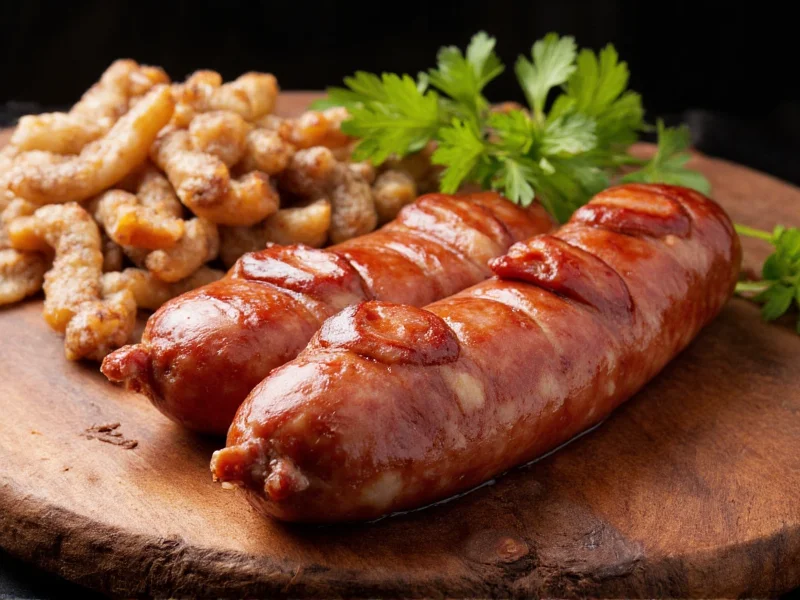
When exploring authentic Bavarian cuisine, understanding the distinction between traditional sausages and the iconic schweinshaxe reveals the heart of German culinary heritage. These dishes represent centuries of culinary tradition in southern Germany, where food culture intertwines with social customs and regional identity.
The Cultural Significance of Bavarian Meat Specialties
Bavarian food culture developed from agricultural traditions where preserving meat was essential through harsh winters. This necessity birthed distinctive preparation methods that evolved into celebrated culinary specialties. In Bavaria, enjoying these dishes isn't merely about sustenance—it's a social ritual often accompanied by locally brewed beer in traditional Gasthäuser (inns).
Authentic Bavarian Sausages: More Than Just Bratwurst
While many associate German sausages with generic "bratwurst," Bavaria boasts several distinct varieties, each with specific preparation methods and regional origins:
| Sausage Type | Key Characteristics | Traditional Serving Method |
|---|---|---|
| Weisswurst | White veal and pork sausage with parsley, lemon, and mace | Served before noon with sweet mustard and pretzel |
| Nürnberger Rostbratwurst | Small grilled pork sausages (typically served in sixes or twelves) | With sauerkraut and potato salad |
| Leberkäse | Meatloaf made from corned beef, pork, and bacon | Sliced in a roll with mustard |
| Blutwurst | Blood sausage with pork fat and spices | Cold with sweet mustard or fried for breakfast |
Understanding traditional Bavarian sausage preparation methods reveals why these differ from generic German sausages. Authentic versions use specific meat ratios, natural casings, and regional spice blends that can't be replicated with industrial production methods. The best places to try authentic Bavarian sausages remain small butcher shops (Metzgerei) that follow century-old recipes.
Schweinshaxe: Bavaria's Signature Roast
Schweinshaxe (sometimes called Haxe or Eisbein) represents Bavaria's most famous meat specialty. This dish features a marinated pork knuckle roasted until the skin becomes crackling-crisp while the meat remains succulently tender. The preparation process involves:
- Overnight marinating in beer, vinegar, and spices
- Initial roasting at high heat to crisp the skin
- Slow roasting at lower temperature to tenderize the meat
- Final high-heat blast to achieve perfect crackling
Authentic Bavarian schweinshaxe cooking techniques require specific equipment—traditionally roasted in a special pan that allows the knuckle to stand vertically. This method ensures even cooking and optimal crackling formation. Many tourists mistake the larger, drier versions served in tourist traps for authentic schweinshaxe, but true connoisseurs seek out traditional Wirtshaus establishments where butchers prepare the dish daily.
Traditional Pairings for Bavarian Specialties
No discussion of traditional Bavarian food pairings would be complete without mentioning the essential beverage and side dish combinations:
- Weisswurst with Weißbier (wheat beer) and sweet mustard
- Nürnberger sausages with Franconian beer and potato salad
- Schweinshaxe with Märzen beer, potato dumplings (Semmelknödel), and sweet-sour red cabbage (Rotkohl)
The specific Bavarian beer styles for meat pairings matter significantly. Dark lagers complement the richness of schweinshaxe, while lighter wheat beers cut through the fat of sausages. This pairing knowledge represents generations of culinary refinement where local ingredients naturally complement each other.
Regional Variations Across Bavaria
While often treated as monolithic, Bavarian cuisine features notable regional distinctions:
- Upper Bavaria (Munich area): Known for Weisswurst and darker beer pairings
- Lower Bavaria: Features more pork-based dishes and lighter beers
- Franconia (Northern Bavaria): Famous for Nürnberger sausages and unique potato salad
- Swabia (Western Bavaria): Incorporates more pasta-like dishes alongside meats
These regional differences in Bavarian meat dishes reflect historical agricultural practices and cultural influences. Understanding these variations helps visitors experience more authentic regional specialties rather than generic "Bavarian" dishes designed for tourists.
Historical Evolution of Bavarian Meat Specialties
The development of Bavarian meat preservation techniques spans centuries, evolving from necessity to celebrated tradition. Key milestones include:
- 1857: The Weisswurst was invented in Munich when a butcher ran out of veal casings and improvised with pork intestines (Munich City Tourism, 2023) [source]
- 19th Century: The Nürnberger Rostbratwurst recipe was formalized with specific size (7-9cm) and marjoram seasoning, leading to its Protected Geographical Indication status in 2003 (European Commission, 2003) [source]
- Early 20th Century: Schweinshaxe became standardized as a beer hall specialty with the rise of Munich's beer garden culture (Bavaria Travel, 2022) [source]
- 1966: The term "Weisswurstäquator" was coined by Bavarian journalist Robert Gwisdek to describe the cultural boundary for Weisswurst consumption (Bavaria Travel, 2021) [source]
Context and Cultural Boundaries for Consumption
Traditional Bavarian meat specialties come with unspoken rules that define their proper consumption context. Understanding these boundaries prevents cultural missteps and enhances authenticity:
- Weisswurst Time Limit: Consumed exclusively before noon in Bavaria, a rule stemming from pre-refrigeration freshness concerns. Ordering Weisswurst after 12 PM in Munich may mark you as a tourist (Munich City Tourism, 2023) [source]
- Beer Hall Protocol: Schweinshaxe is served as a main course in beer halls during lunch or dinner, never as an appetizer. It requires specific side dishes: potato dumplings and red cabbage are non-negotiable in Upper Bavaria (Bavaria Travel, 2022) [source]
- Regional Restrictions: The "Weisswurstäquator" divides Germany: north of this line (roughly through Frankfurt), Weisswurst is uncommon. Similarly, Nürnberger sausages are protected and primarily produced in the Nuremberg area (European Commission PGI, 2003) [source]
- Occasion Boundaries: These dishes are for casual beer hall or inn settings. Serving Schweinshaxe at formal dinners violates traditional context (Bavaria Travel, 2022) [source]
Modern Interpretations vs. Traditional Preparation
Contemporary chefs sometimes reinterpret these classics, but certain elements remain non-negotiable for authenticity:
- True Weisswurst never contains food coloring (its pale color comes from veal)
- Authentic schweinshaxe requires crackling skin achieved through specific roasting techniques
- Traditional Nürnberger sausages maintain a specific size (7-9cm length)
When seeking authentic Bavarian sausage and schweinshaxe experiences, look for establishments that prepare meats in-house and follow traditional methods rather than using pre-made products. The most respected venues often display their butchering credentials and regional affiliations.




 浙公网安备
33010002000092号
浙公网安备
33010002000092号 浙B2-20120091-4