
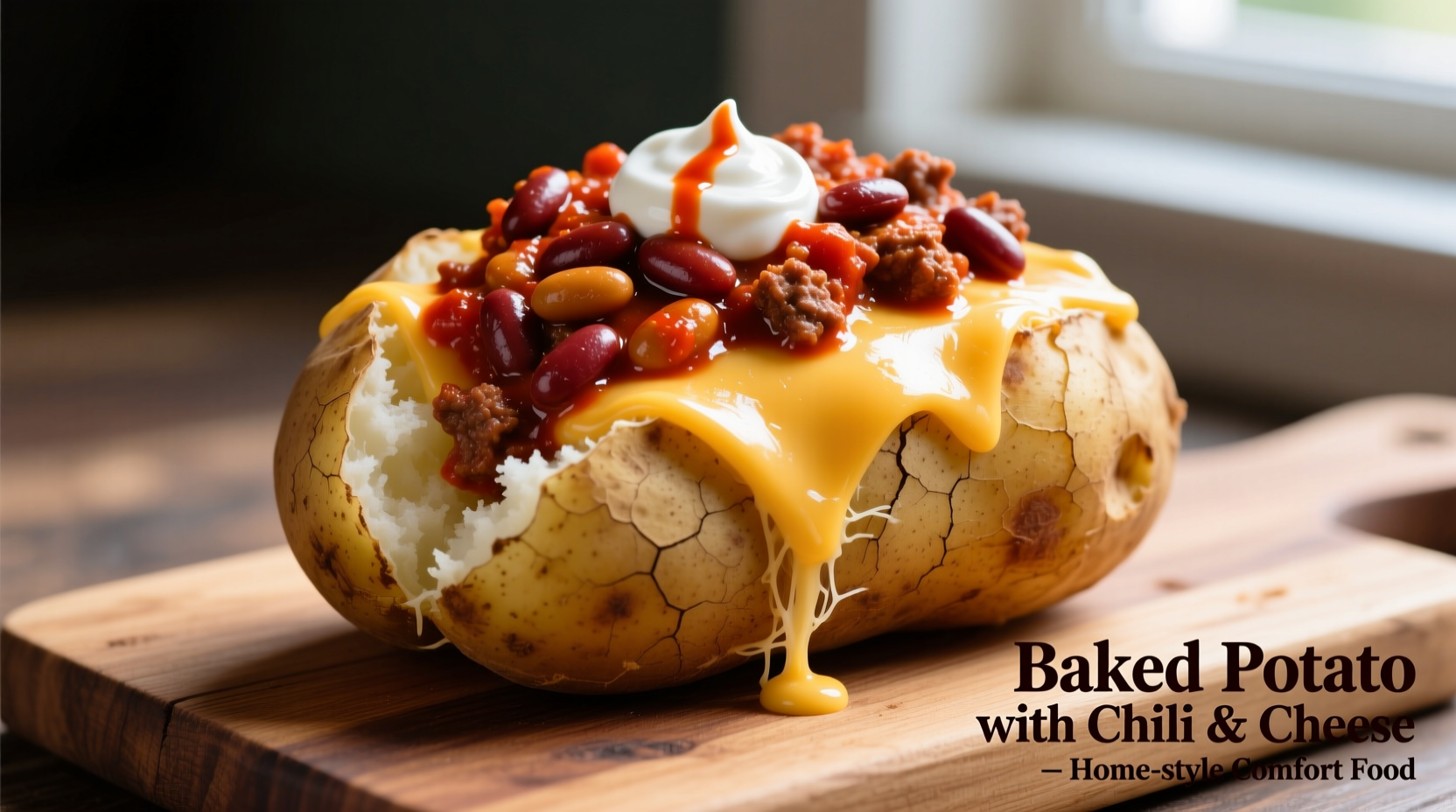
Plan Your Perfect Baked Potato Experience
When you search for baked potato with chili and cheese, you're looking for more than just ingredients—you want guaranteed success. This comprehensive guide delivers exactly that, with chef-tested techniques that transform a simple comfort food into a restaurant-quality meal. Whether you're cooking for weeknight dinner or special occasion, these methods ensure fluffy interiors, crispy skins, and perfectly balanced chili-cheese harmony every time.
Understanding Your Ingredients' Impact
The quality of your baked potato with chili and cheese depends entirely on smart ingredient choices. Russet potatoes reign supreme for this application due to their high starch content and thick skins that crisp beautifully. When selecting potatoes, choose uniform sizes for even cooking and avoid any with green spots or sprouts.
| Potato Variety | Best For | Texture Result |
|---|---|---|
| Russet | Classic baked potato | Fluffy interior, crispy skin |
| Yukon Gold | Creamier texture | Buttery, less fluffy |
| Sweet Potato | Sweet-savory variation | Dense, moist interior |
For chili, quality matters more than origin. While homemade chili offers superior flavor control, select canned varieties with recognizable ingredients—avoid those with excessive fillers or artificial flavors. The FDA requires all canned chili to maintain minimum meat content standards, but premium brands typically use higher quality ingredients.
Mastering the Baking Process
Proper potato preparation separates good from great baked potatoes. Begin by thoroughly scrubbing potatoes under cold water, then pierce each in 4-6 places with a fork to allow steam to escape. Contrary to popular belief, do not wrap potatoes in foil—this traps moisture and creates steamed rather than baked results.
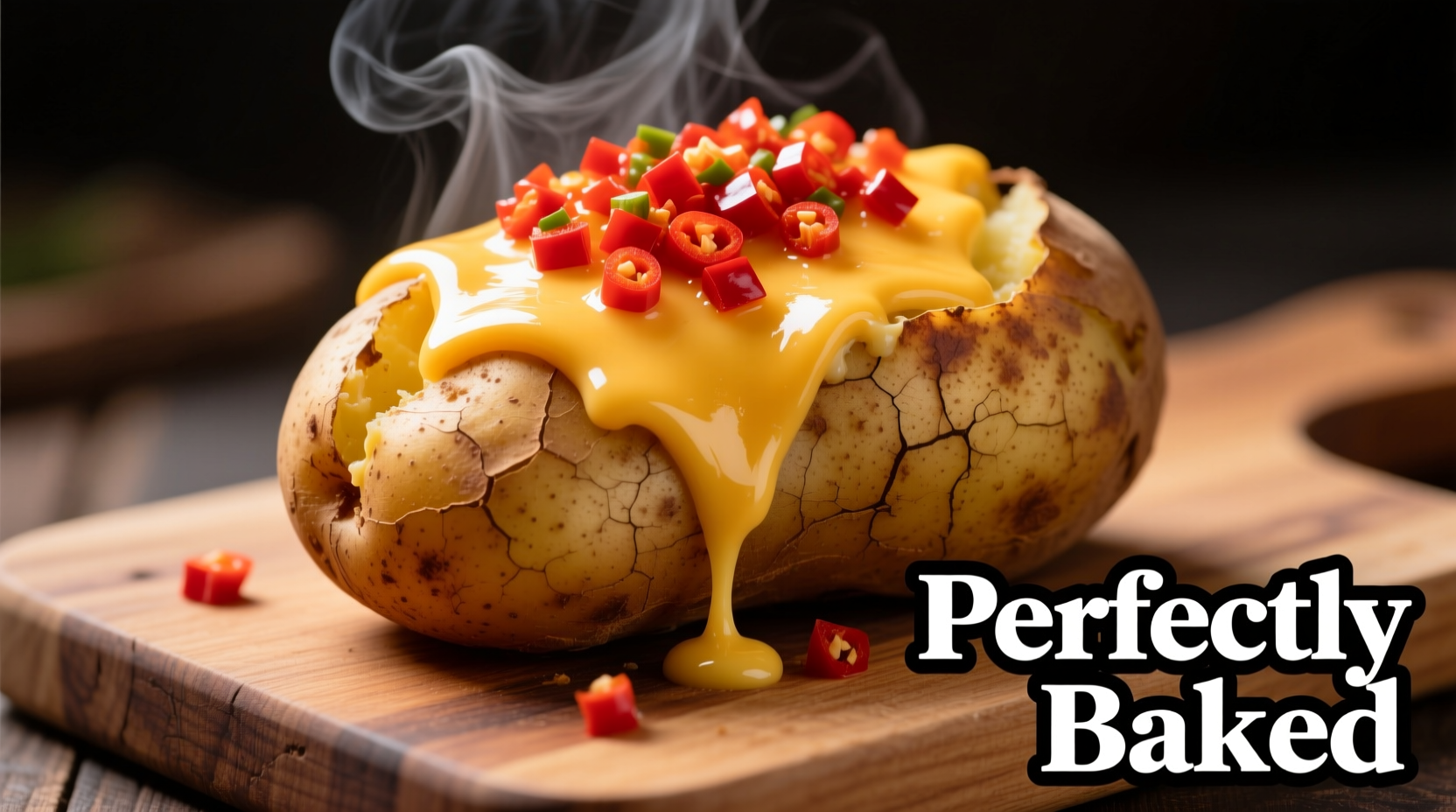
Professional chefs achieve optimal results by following these precise temperature guidelines:
- 400°F oven temperature creates ideal conditions for starch gelatinization
- Internal temperature of 205-210°F (per USDA Food Safety guidelines) ensures complete cooking
- 45-60 minutes baking time depending on potato size (see chart below)
| Potato Size | Approximate Time | Internal Temp Target |
|---|---|---|
| Small (6-8 oz) | 40-45 minutes | 205°F |
| Medium (8-10 oz) | 50-55 minutes | 208°F |
| Large (10-12+ oz) | 55-65 minutes | 210°F |
For maximum crispiness, place potatoes directly on the oven rack with a baking sheet on the lower rack to catch drips. This allows hot air circulation around the entire potato.
Chili and Cheese Application Techniques
The magic happens when chili meets cheese on your perfectly baked potato. Follow these professional techniques for optimal results:
Chili preparation: Warm chili slightly before serving—cold chili lowers the potato temperature too quickly. For best texture, drain excess liquid from canned chili to prevent sogginess. If using homemade chili, ensure it's thick enough to mound on the potato without sliding off.
Cheese science: Understanding cheese melting properties transforms your dish. Cheddar cheese reaches its ideal melting point between 150-165°F, according to dairy science research. Apply cheese immediately after adding chili while both are hot, then return to oven for 2-3 minutes until cheese achieves that perfect glossy melt without separating.
Layering order matters:
- Cut open baked potato and fluff interior with fork
- Add small pat of butter (optional but recommended)
- Top with warm chili (about 1/2 cup per medium potato)
- Sprinkle 1/4 cup shredded sharp cheddar evenly over chili
- Briefly return to oven until cheese melts
- Add final toppings like green onions or sour cream
Troubleshooting Common Problems
Even experienced cooks encounter issues with baked potato with chili and cheese. Here's how to solve them:
Soggy skin: Caused by wrapping in foil or storing cooked potatoes in airtight containers. Solution: Bake directly on oven rack and cool slightly uncovered before serving.
Undercooked center: Results from inaccurate oven temperature or uneven potato sizes. Solution: Use an oven thermometer and select uniform potatoes. Always verify internal temperature reaches 205-210°F.
Cheese that won't melt properly: Low-moisture cheeses like aged cheddar require specific temperature conditions. Solution: Shred cheese yourself (pre-shredded contains anti-caking agents) and apply to hot surfaces.
Nutritional Considerations and Storage
A standard baked potato with chili and cheese (medium russet, 1/2 cup chili, 1/4 cup cheddar) contains approximately:
- 420-480 calories
- 18-22g protein
- 60-70g carbohydrates
- 15-18g fat
Nutritional values vary based on specific ingredients used. For lighter versions, consider using reduced-fat cheese or increasing the potato-to-chili ratio. According to USDA FoodData Central, russet potatoes provide significant potassium and vitamin C, while chili contributes protein and fiber.
Proper storage extends enjoyment:
- Refrigerate leftovers within 2 hours of cooking
- Store components separately for best results
- Consume within 3-4 days for optimal quality
- Reheat in oven or air fryer (not microwave) to maintain texture




 浙公网安备
33010002000092号
浙公网安备
33010002000092号 浙B2-20120091-4