
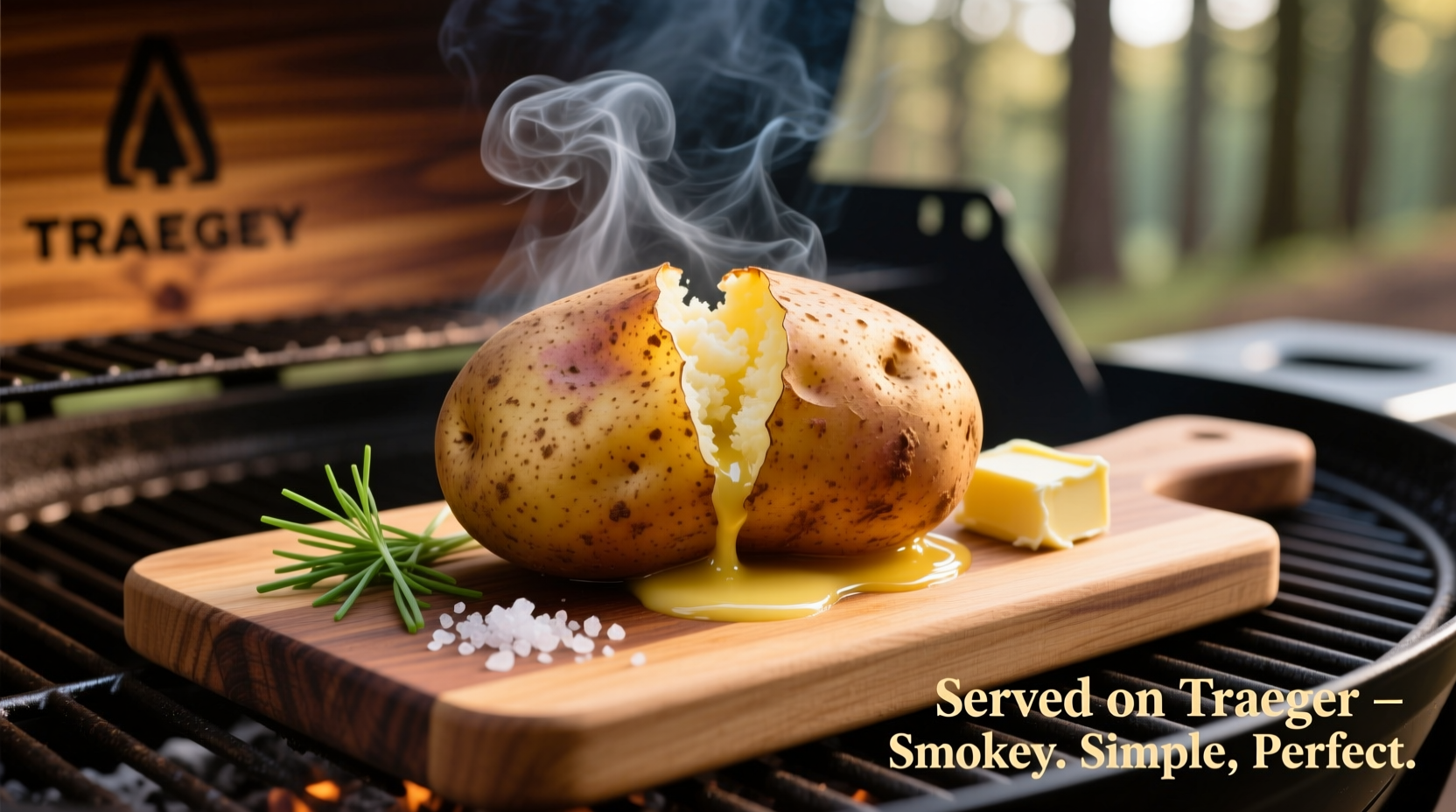
Unlock restaurant-quality baked potatoes with your Traeger pellet grill using this science-backed method. Forget soggy foil-wrapped potatoes - we'll show you how to achieve crispy skin and fluffy interior through precise temperature control and strategic placement. This guide delivers the exact cooking times, temperature settings, and seasoning techniques that professional chefs use, adapted specifically for Traeger's unique indirect heat system.
The Traeger Advantage for Baked Potatoes
Unlike conventional ovens, Traeger grills provide consistent indirect heat that cooks potatoes evenly while infusing subtle wood-fired flavor. The precise temperature control eliminates guesswork, and the convection effect from the fan ensures even cooking without hot spots. Most home cooks make the critical mistake of wrapping potatoes in foil, which steams rather than bakes them, resulting in rubbery skin and waterlogged texture.
Step-by-Step Cooking Process
Preparation Essentials
Start with starchy Russet potatoes (10-12 ounces each) for optimal fluffiness. Scrub thoroughly but don't peel - the skin contains valuable nutrients and becomes delightfully crispy. Prick each potato 6-8 times with a fork to allow steam to escape during cooking, preventing explosions. Rub with olive oil and coarse salt to enhance crispness and flavor absorption.
| Potato Type | Best For | Cooking Time | Texture Result |
|---|---|---|---|
| Russet | Classic baked potato | 45-60 minutes | Fluffy interior, crispy skin |
| Sweet Potato | Sweet flavor profile | 50-65 minutes | Creamy interior, caramelized skin |
| Yukon Gold | Buttery texture | 40-55 minutes | Creamy throughout, thin skin |
Grill Setup and Cooking
Preheat your Traeger to 375°F with the lid closed for 15 minutes. Place potatoes directly on the grill grate, not in foil or a pan, spacing them 2 inches apart for proper air circulation. For authentic wood-fired flavor, use hickory or apple wood pellets. The USDA Food Safety and Inspection Service recommends cooking potatoes to an internal temperature of 205-210°F for perfect texture (USDA FSIS guidelines).
Timing and Temperature Guide
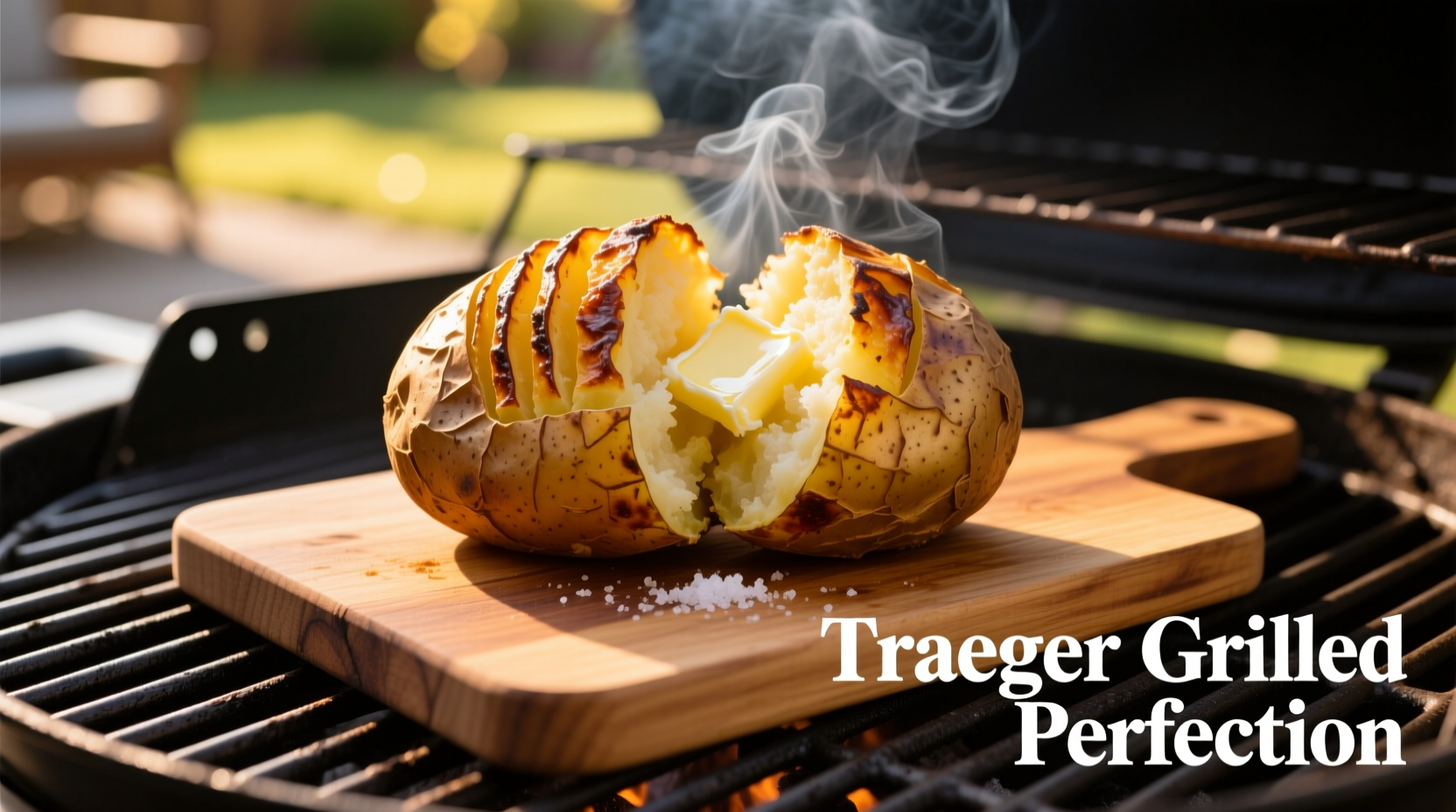
Smaller potatoes (8-10 oz) need 45 minutes, while larger ones (12-16 oz) require 60 minutes. Check for doneness by inserting a fork - it should slide in with no resistance. For extra-crispy skin, increase temperature to 400°F during the last 10 minutes. Never wrap potatoes in foil on a Traeger - this creates steam that prevents proper crisping and extends cooking time by 15-20 minutes.
Finishing Touches
Remove potatoes when they reach 205-210°F internally. Let them rest 5 minutes before cutting - this allows residual heat to finish cooking while preventing steam from making the interior wet. Slice open and fluff with a fork before adding toppings. For professional presentation, make a cross-shaped cut on top and press the sides inward to open naturally.
Common Mistakes to Avoid
Many home cooks make these critical errors that compromise results:
- Foil wrapping - creates steamed potatoes instead of baked
- Insufficient preheating - leads to uneven cooking
- Overcrowding the grill - blocks airflow and creates hot spots
- Skipping the resting period - results in wet interior texture
Advanced Techniques
For next-level results, try these professional methods:
- Two-stage cooking: Start at 350°F for 30 minutes, then increase to 400°F for final crisping
- Oil infusion: Mix olive oil with garlic powder before rubbing on potatoes
- Wood pairing: Use cherry wood for sweet potatoes, oak for Russets
Storage and Reheating
Store leftovers in an airtight container for up to 5 days. Reheat in the Traeger at 350°F for 15-20 minutes to restore crispness - microwaving makes skin rubbery. For meal prep, partially cook potatoes (about 75%), then finish when ready to serve.
Why This Method Works: The Science
The Maillard reaction (browning) occurs optimally between 300-400°F, creating complex flavors in the skin. Starch gelatinization happens at 205-210°F, giving that perfect fluffy texture. Traeger's consistent temperature control hits both sweet spots simultaneously. According to food science research from the University of California, Davis, dry-heat cooking preserves more nutrients than boiling or steaming methods.
Troubleshooting Guide
Problem: Soggy skin
Solution: Increase final 10 minutes to 400°F and ensure potatoes aren't touching
Problem: Undercooked center
Solution: Use a digital thermometer to verify 205-210°F internal temperature
Problem: Burnt spots
Solution: Rotate potatoes halfway through cooking and check pellet hopper level




 浙公网安备
33010002000092号
浙公网安备
33010002000092号 浙B2-20120091-4