
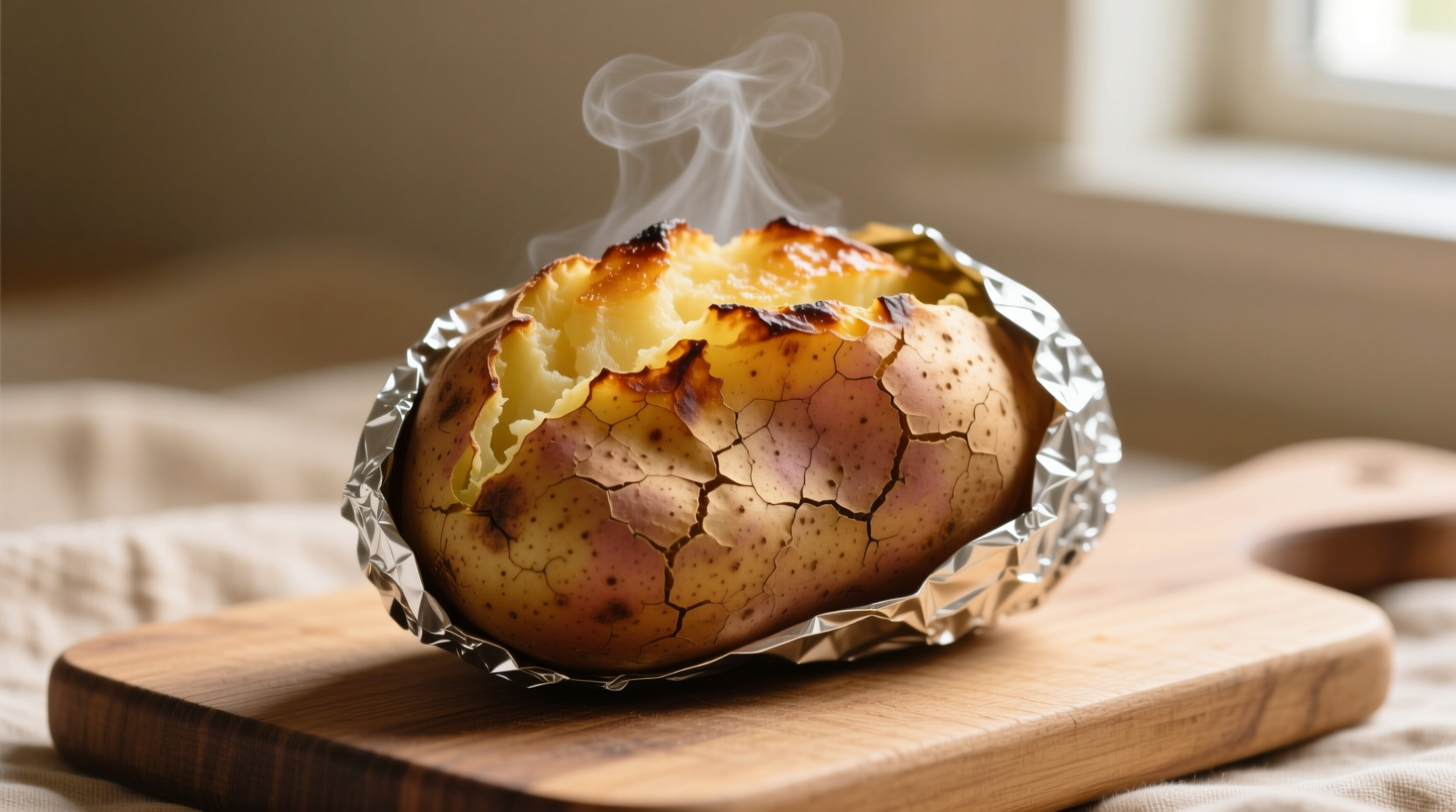
The Science Behind Superior Skin Texture
When you skip the foil, moisture escapes naturally during baking, creating the perfect conditions for crispy skin formation. The USDA's Food Safety and Inspection Service confirms that baking potatoes directly on oven racks allows for optimal air circulation, which promotes even cooking and desirable textural development. Unlike foil-wrapped potatoes that essentially steam in their own moisture, uncovered potatoes develop that sought-after crunchy exterior while maintaining fluffy interiors.
Professional chefs at the Culinary Institute of America have long advocated for the no-foil method, noting that "trapping steam creates a barrier to Maillard reaction development on the skin surface"—the chemical process responsible for complex flavor compounds and appealing brown coloration.
Step-by-Step Perfect Baked Potato Method
Follow these professional kitchen-tested steps for consistently excellent results:
- Selection: Choose Russet potatoes with uniform shape and no green spots (per Cornell University's Food Science Department recommendations)
- Preparation: Thoroughly scrub under cold water, then dry completely with paper towels
- Pricking: Pierce 6-8 times with fork to allow steam escape (critical food safety step)
- Oil application: Rub with 1 tsp olive oil per potato—this promotes browning without adding excess moisture
- Seasoning: Sprinkle with sea salt before baking for deeper flavor penetration
- Placement: Position directly on oven rack with baking sheet on lower rack to catch drips
- Temperature: Bake at 400°F (204°C) for 45-60 minutes depending on size
| Method Comparison | No Foil | With Foil |
|---|---|---|
| Cooking Time (8oz potato) | 45-55 minutes | 55-70 minutes |
| Skin Texture | Crispy, flavorful | Soft, sometimes soggy |
| Interior Moisture | Ideal fluffy texture | Can become waterlogged |
| Flavor Development | Enhanced natural sweetness | Muted flavor profile |
Common Mistakes to Avoid
Even experienced home cooks make these critical errors when attempting the no-foil method:
- Skipping the drying step: Moisture on the skin prevents proper crisping. The University of Minnesota Extension emphasizes that "surface moisture creates a barrier to heat transfer"
- Using too high temperature: Baking above 425°F risks burnt skin before interior cooks through
- Not rotating potatoes: Turn potatoes halfway through cooking for even browning on all sides
- Adding toppings too early: Wait until after baking to add butter or sour cream to preserve skin crispness
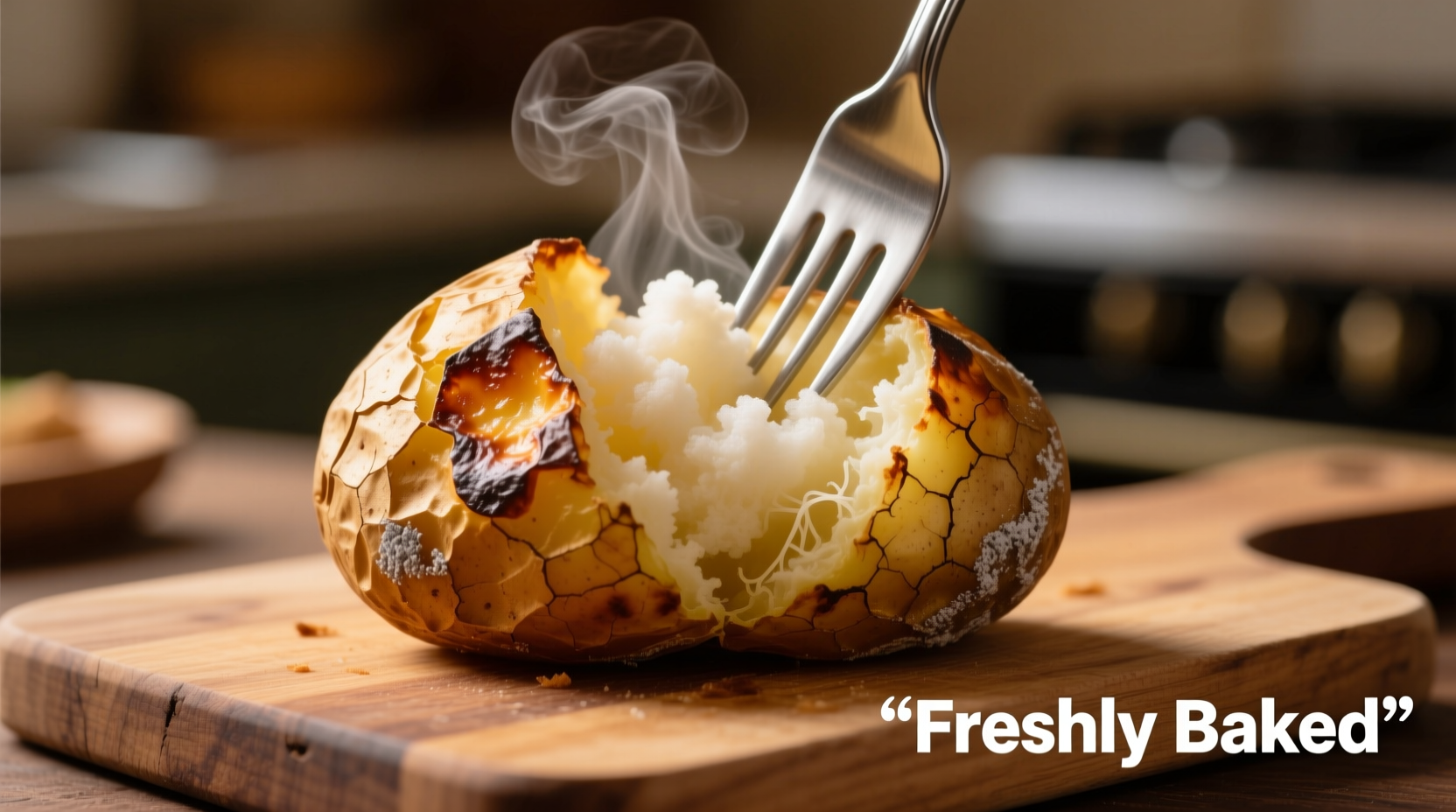
When Foil Might Be Necessary
While the no-foil method produces superior results in most cases, the Food Network Kitchen notes specific scenarios where foil remains appropriate:
- When baking potatoes in advance for large gatherings (foil helps maintain temperature)
- For extremely high-altitude baking where moisture retention becomes critical
- When using convection ovens without proper moisture monitoring
- For certain stuffed potato preparations requiring extended cooking times
Flavor Enhancement Techniques
Elevate your baked potato experience with these professional chef techniques:
- Pre-bake oil infusion: Rub skin with garlic-infused olive oil before baking
- Salt crust method: Apply coarse sea salt directly to damp skin for enhanced texture
- Herb placement: Tuck fresh rosemary or thyme beneath potatoes on the rack
- Post-bake finish: Immediately after removing from oven, brush with melted butter and sprinkle with flaky sea salt
Storage and Reheating Best Practices
Proper storage maintains that desirable texture even when reheating. According to the National Potato Council, cooled baked potatoes should be stored uncovered in the refrigerator for up to 5 days. When reheating:
- For optimal texture: Place directly on oven rack at 350°F for 15-20 minutes
- Air fryer method: 375°F for 8-10 minutes restores crispiness better than microwave
- Microwave option: Place on paper towel to absorb excess moisture during reheating
Why This Method Benefits Your Health
Beyond superior taste and texture, baking without foil offers health advantages. Research published in the Journal of Agricultural and Food Chemistry indicates that aluminum migration from foil to food can occur at high temperatures, particularly with acidic ingredients. While the amounts are generally considered safe by regulatory standards, eliminating this potential exposure completely aligns with the precautionary principle recommended by many nutrition experts.




 浙公网安备
33010002000092号
浙公网安备
33010002000092号 浙B2-20120091-4