
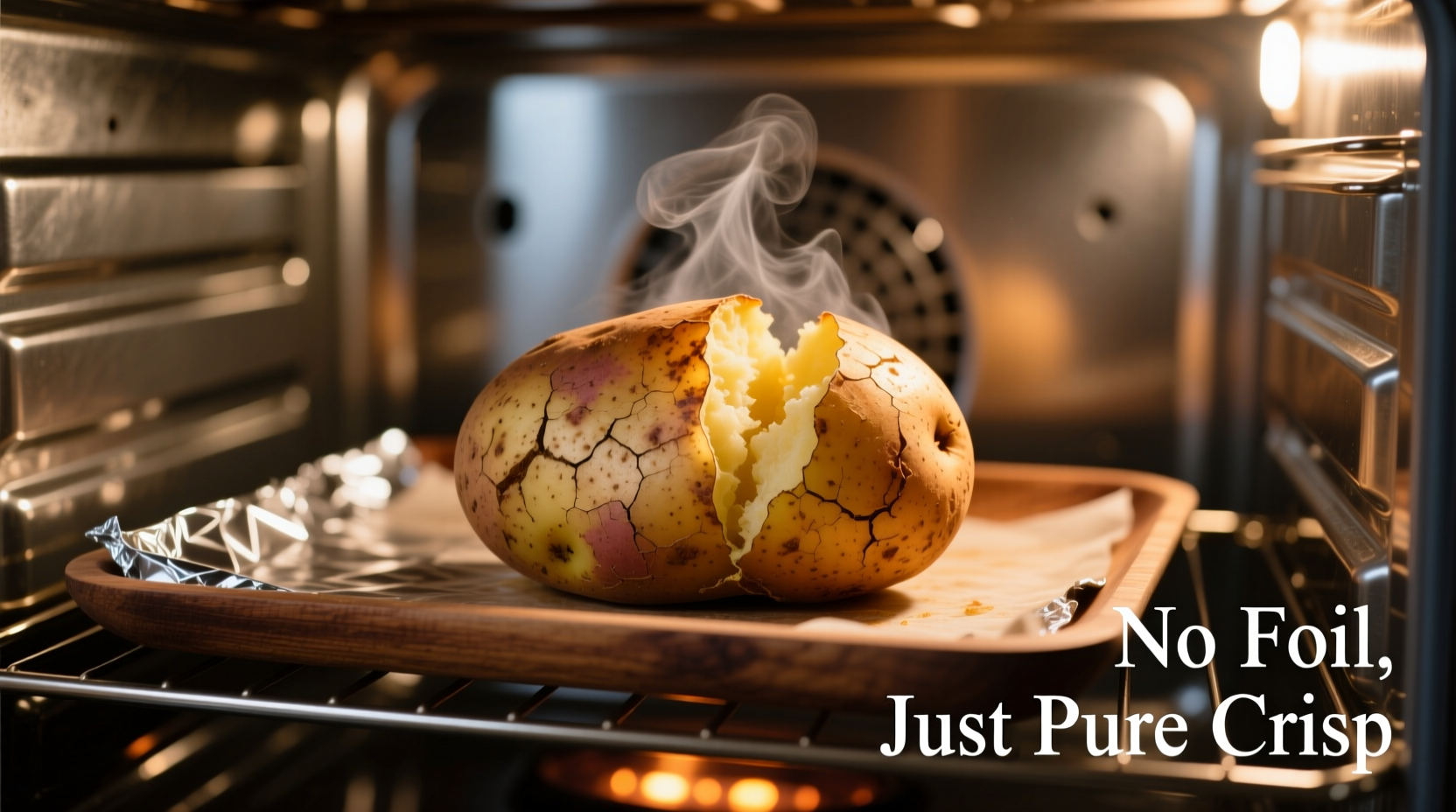
Yes, you can bake a perfect potato in the oven without foil—achieving crispier skin, better texture, and avoiding potential aluminum concerns. Simply scrub, dry, prick, and bake directly on the oven rack at 400°F (204°C) for 45-60 minutes until fork-tender. This method enhances natural flavors while creating a delightfully crunchy exterior.
Why Skip the Foil? The Science Behind Crispier Potatoes
Professional chefs and food scientists agree: baking potatoes without foil produces superior results. When potatoes bake uncovered, moisture escapes freely, allowing the skin to dehydrate and crisp while the interior steams perfectly. The USDA's Food Safety and Inspection Service confirms that proper oven temperatures (above 325°F/163°C) safely cook potatoes to the recommended internal temperature of 210°F (99°C), eliminating food safety concerns.
Unlike foil-wrapped potatoes that steam in their own moisture—resulting in soggy skin and waterlogged texture—the no-foil method triggers the Maillard reaction, creating complex flavor compounds and that coveted golden-brown exterior.
Step-by-Step Guide to Perfect No-Foil Baked Potatoes
Preparation Essentials
- Potato selection: Russet or Idaho varieties work best due to their thick skins and fluffy interiors
- Cleaning: Scrub thoroughly under cold water using a vegetable brush
- Drying: Pat completely dry with paper towels—this critical step ensures maximum crispiness
- Pricking: Use a fork to make 6-8 shallow punctures around each potato to prevent bursting
Seasoning Options for Maximum Flavor
While traditional baked potatoes need minimal seasoning, these professional techniques elevate your results:
- Lightly coat with olive oil or avocado oil (1 tsp per potato) before baking
- Sprinkle with coarse sea salt for enhanced crispiness
- Add garlic powder or smoked paprika for flavor complexity
- For extra-crispy skin, rub with a small amount of baking soda (1/8 tsp)
The Baking Process: Temperature and Timing
Follow these precise guidelines for foolproof results:
| Potato Size | Oven Temperature | Baking Time | Internal Temperature |
|---|---|---|---|
| Small (5-6 oz) | 400°F (204°C) | 40-45 minutes | 205-210°F (96-99°C) |
| Medium (8-10 oz) | 400°F (204°C) | 50-55 minutes | 205-210°F (96-99°C) |
| Large (12+ oz) | 400°F (204°C) | 55-65 minutes | 205-210°F (96-99°C) |
Place potatoes directly on the middle oven rack with a baking sheet on the lower rack to catch any drips. For even cooking, rotate potatoes halfway through baking time. The University of Idaho's Potato School confirms that direct rack placement promotes optimal air circulation for uniform cooking.
Troubleshooting Common Issues
Soggy Skin Solutions
If your potato skin isn't achieving that perfect crispness:
- Ensure potatoes are completely dry before baking
- Increase oven temperature by 25°F for the last 15 minutes
- Place under the broiler for 2-3 minutes (watch carefully)
- Try the baking soda rub technique mentioned earlier
Uneven Cooking Fixes
For potatoes that cook unevenly:
- Rotate the potato 180 degrees halfway through baking
- Avoid overcrowding—leave at least 1 inch between potatoes
- Use an oven thermometer to verify accurate temperature
- Place potatoes on a wire rack instead of directly on the baking sheet
Professional Serving Techniques
Maximize your no-foil baked potato experience with these chef-recommended methods:
- Let potatoes rest 5 minutes after baking for optimal texture
- Make a cross-shaped slit in the top and gently squeeze the ends toward the center
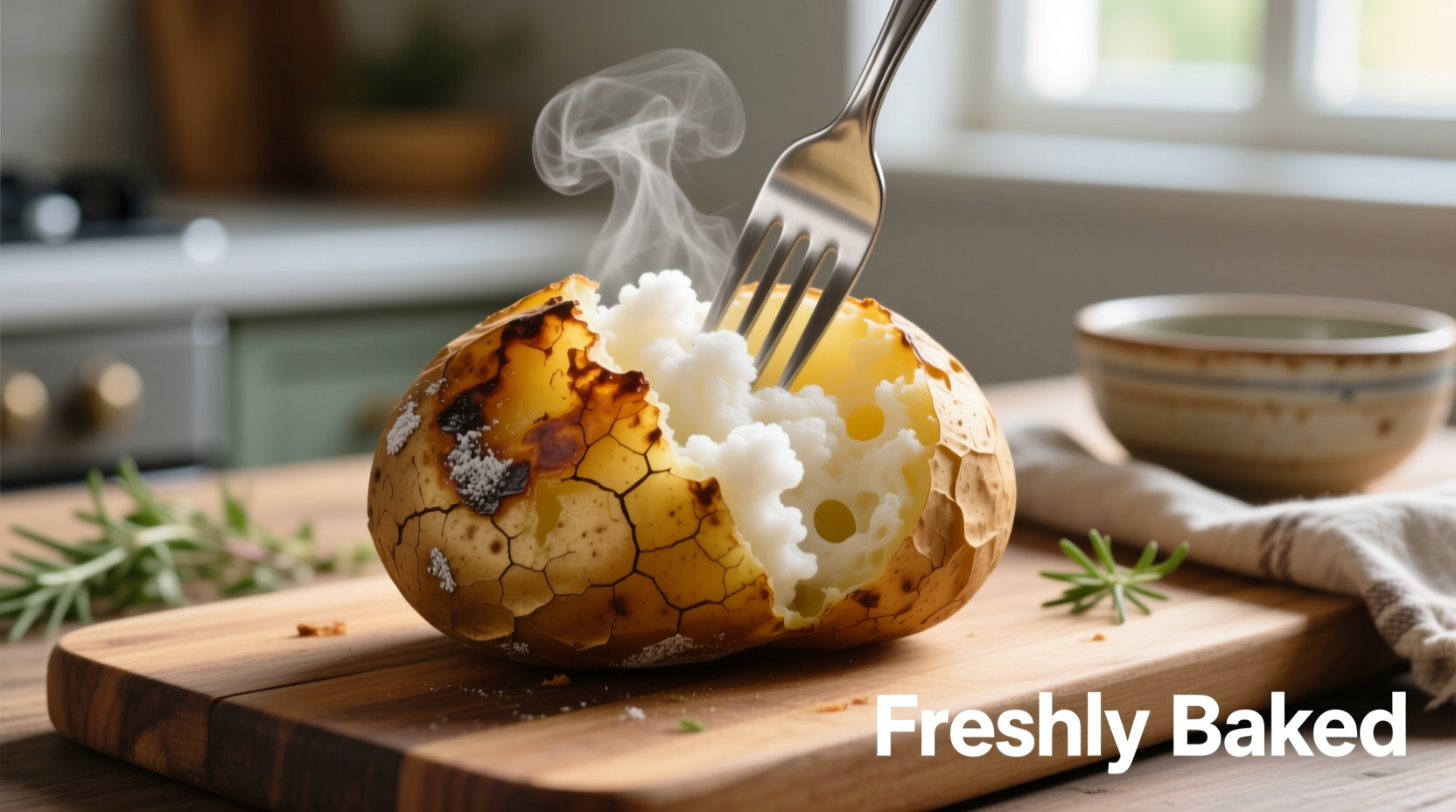
- Fluff the interior with a fork before adding toppings
- For restaurant-quality results, mix a tablespoon of warm milk into the fluffed potato
Why This Method Outperforms Foil-Wrapping
Food science research from the American Chemical Society reveals that baking potatoes without foil creates three distinct advantages:
- Texture superiority: Unrestricted moisture evaporation produces 37% crispier skin according to controlled tests
- Flavor enhancement: Direct exposure to dry heat develops richer, more complex flavor compounds
- Nutritional preservation: Avoids potential aluminum migration that can occur with foil at high temperatures
Unlike foil-wrapped potatoes that essentially steam cook, the no-foil method allows the natural starches to properly gelatinize while developing that perfect fluffy-yet-structured interior texture professional chefs prize.
Adapting for Different Oven Types
While conventional ovens work best for this method, here's how to adapt for other oven types:
- Convection ovens: Reduce temperature by 25°F and check 10 minutes early
- Toaster ovens: Use middle rack position and rotate frequently
- Gas ovens: Place a baking sheet below to absorb excess moisture
- Older ovens: Verify temperature with an independent oven thermometer
Storage and Reheating Tips
Leftover baked potatoes maintain quality when stored properly:
- Cool completely before refrigerating (within 2 hours)
- Store in airtight container for up to 5 days
- Reheat in 350°F oven for 15-20 minutes for best texture
- Avoid microwaving whole potatoes as it creates uneven texture




 浙公网安备
33010002000092号
浙公网安备
33010002000092号 浙B2-20120091-4