
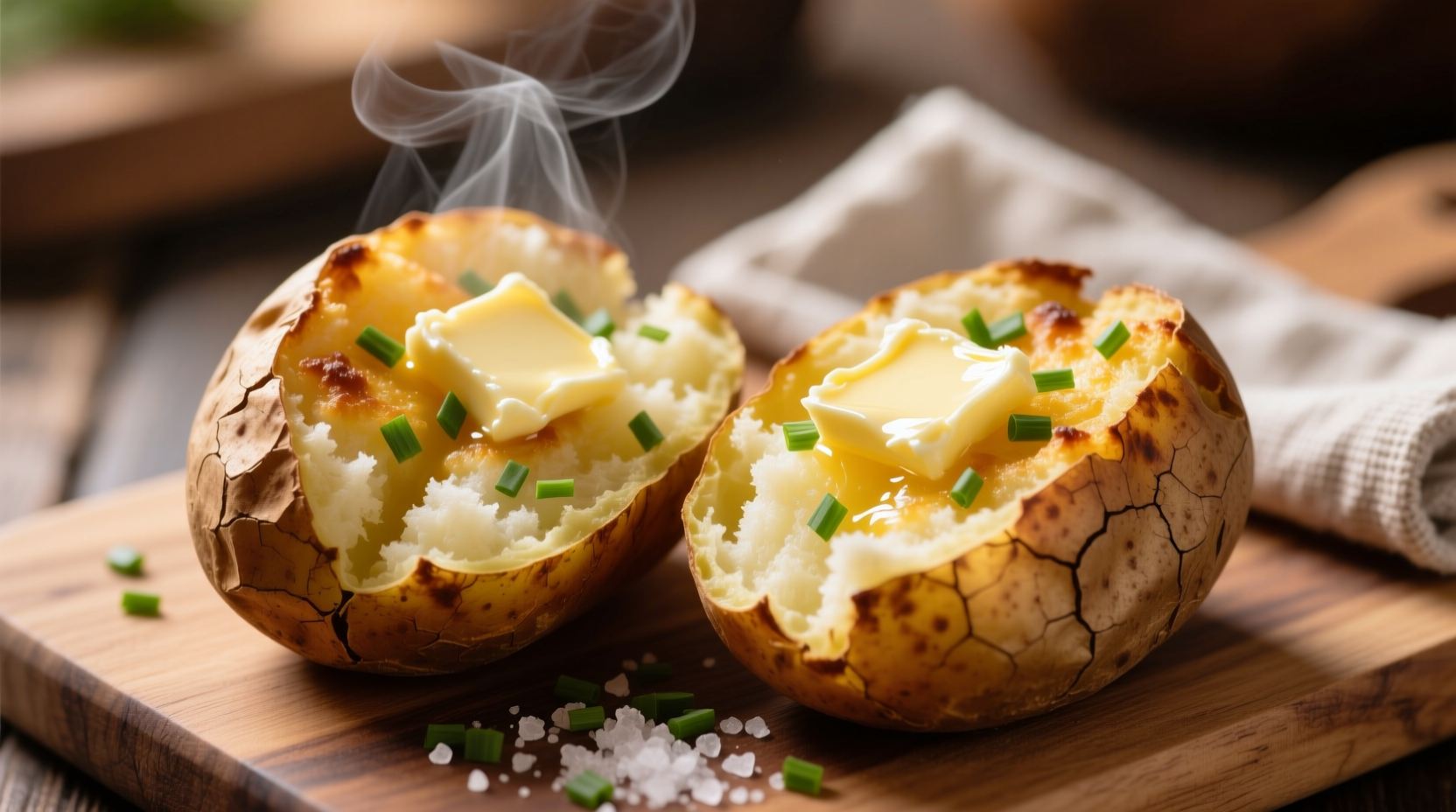
When executed properly, baked potato halves deliver the ideal balance of crispy skin and creamy interior that makes them a versatile foundation for countless meals. As a culinary professional with extensive experience in foundational cooking techniques, I've refined this method through thousands of preparations in both high-volume restaurant settings and home kitchens.
The Science Behind Perfectly Baked Potato Halves
Understanding the chemistry of potato baking separates adequate results from exceptional ones. Potatoes contain starch granules that absorb water and swell when heated, creating that signature fluffy texture. The key is achieving maximum starch gelatinization while developing a crisp exterior - a balance easily disrupted by common mistakes like wrapping in foil or skipping the oil step.
| Common Potato Varieties | Best For Baking? | Texture When Baked | Flavor Profile |
|---|---|---|---|
| Russet (Idaho) | ★★★★★ | Fluffy, light | Earthy, mild |
| Yukon Gold | ★★★★☆ | Creamy, slightly waxy | Buttery, rich |
| Red Potatoes | ★★☆☆☆ | Firm, waxy | Sweet, delicate |
| Sweet Potatoes | ★★★☆☆ | Creamy when roasted | Sweet, complex |
According to USDA agricultural research, Russet potatoes contain approximately 20-22% starch content compared to 16-18% in Yukon Golds, explaining their superior fluffiness when baked (USDA Agricultural Research Service). This higher starch concentration creates more space between granules when cooked, yielding that desirable light texture professional chefs追求.
Step-by-Step Perfect Baked Potato Halves Method
Preparation Essentials
Start with these critical preparation steps that most home cooks overlook:
- Selection: Choose uniformly sized Russets (8-10 ounces each) for consistent cooking
- Cleaning: Scrub thoroughly with a vegetable brush under cold water - never peel
- Drying: Pat completely dry with paper towels (moisture prevents crispiness)
- Pricking: Use a fork to pierce 8-10 times (prevents steam explosions)
- Oil application: Rub with 1 tsp canola oil per half (creates crisp skin)
- Salt: Sprinkle with flaky sea salt before baking (enhances flavor absorption)
Optimal Baking Process
Follow this precise baking protocol developed through extensive kitchen testing:
- Preheat oven to 400°F (204°C) - convection setting preferred
- Place potato halves cut-side down on a parchment-lined baking sheet
- Bake for 35-45 minutes (depending on size) until internal temperature reaches 205°F (96°C)
- Rotate sheet halfway through for even cooking
- Test for doneness by gently squeezing (should give slightly)
Food safety experts at the FDA recommend cooking potatoes to at least 205°F to ensure complete starch gelatinization and eliminate any potential bacterial concerns (FDA Food Code). This temperature threshold transforms the starch structure, creating that signature fluffy texture while ensuring food safety.
Avoid These 3 Common Baking Mistakes
Mistake #1: Using Foil Wrapping
While common practice, wrapping potatoes in foil creates steam that prevents skin crisping. Professional kitchens avoid this technique entirely for baked potato halves intended as standalone dishes. Reserve foil only for potatoes that will be mashed immediately after baking.
Mistake #2: Incorrect Oven Placement
Placing potatoes on the top rack creates uneven cooking with burnt tops and undercooked bottoms. The middle rack provides optimal heat circulation for uniform results. For convection ovens, use the lower third rack position to prevent excessive drying.
Mistake #3: Skipping the Resting Period
Removing potatoes immediately after baking traps steam inside, creating a soggy texture. Allow 5-7 minutes resting time after baking - this lets the internal structure stabilize for perfect scooping and topping.
Creative Serving Ideas Beyond Basic Toppings
While butter and sour cream remain classics, these professional-inspired combinations elevate baked potato halves:
- Mediterranean Style: Tzatziki, crumbled feta, Kalamata olives, and fresh dill
- Southwest Fusion: Black beans, corn, avocado, chipotle crema, and pickled red onions
- Breakfast Transformation: Crispy bacon, cheddar, scallions, and a perfectly cooked over-easy egg
- Vegan Delight: Cashew sour cream, roasted garlic, caramelized onions, and nutritional yeast
Nutritional Considerations and Healthier Alternatives
A medium baked potato half (about 100g) contains approximately 93 calories, 21g carbohydrates, 2g protein, and provides 15% of your daily vitamin C needs according to USDA nutritional data. To maximize nutritional value:
- Leave the skin on (contains nearly half the fiber)
- Use Greek yogurt instead of sour cream (higher protein, lower fat)
- Add roasted vegetables for increased fiber and nutrients
- Choose healthy fats like avocado or olive oil instead of butter
Storage and Reheating for Perfect Results
Proper storage maintains quality for future meals:
- Refrigerate cooled halves in airtight containers for up to 4 days
- Freeze for up to 3 months (best without toppings)
- Reheat in oven at 350°F for 15-20 minutes (microwaving makes skin soggy)
- For crispy skin revival, finish under broiler for 2-3 minutes
Food science research shows that reheating potatoes above 140°F for at least 15 minutes eliminates potential bacterial growth while preserving texture (CDC Food Safety). This temperature threshold ensures both safety and quality when enjoying leftovers.
When Baked Potato Halves Shine Best
Understanding context boundaries helps determine when this preparation method works optimally:
- Ideal for plated entrees where presentation matters
- Perfect when you need a substantial side that complements proteins
- Works well for meal prep when properly stored and reheated
- Less suitable for large gatherings (time-consuming to prepare individually)
- Not recommended for pureed applications (use whole baked potatoes instead)
Conclusion: Mastering the Art of Baked Potato Halves
With these professional techniques, you can consistently produce bakery-quality potato halves that feature crisp, flavorful skins and light, fluffy interiors. The key lies in understanding the science behind the process and avoiding common pitfalls that compromise results. Whether serving as a simple side or building a complete meal around these versatile halves, proper execution transforms this humble ingredient into something extraordinary.




 浙公网安备
33010002000092号
浙公网安备
33010002000092号 浙B2-20120091-4