
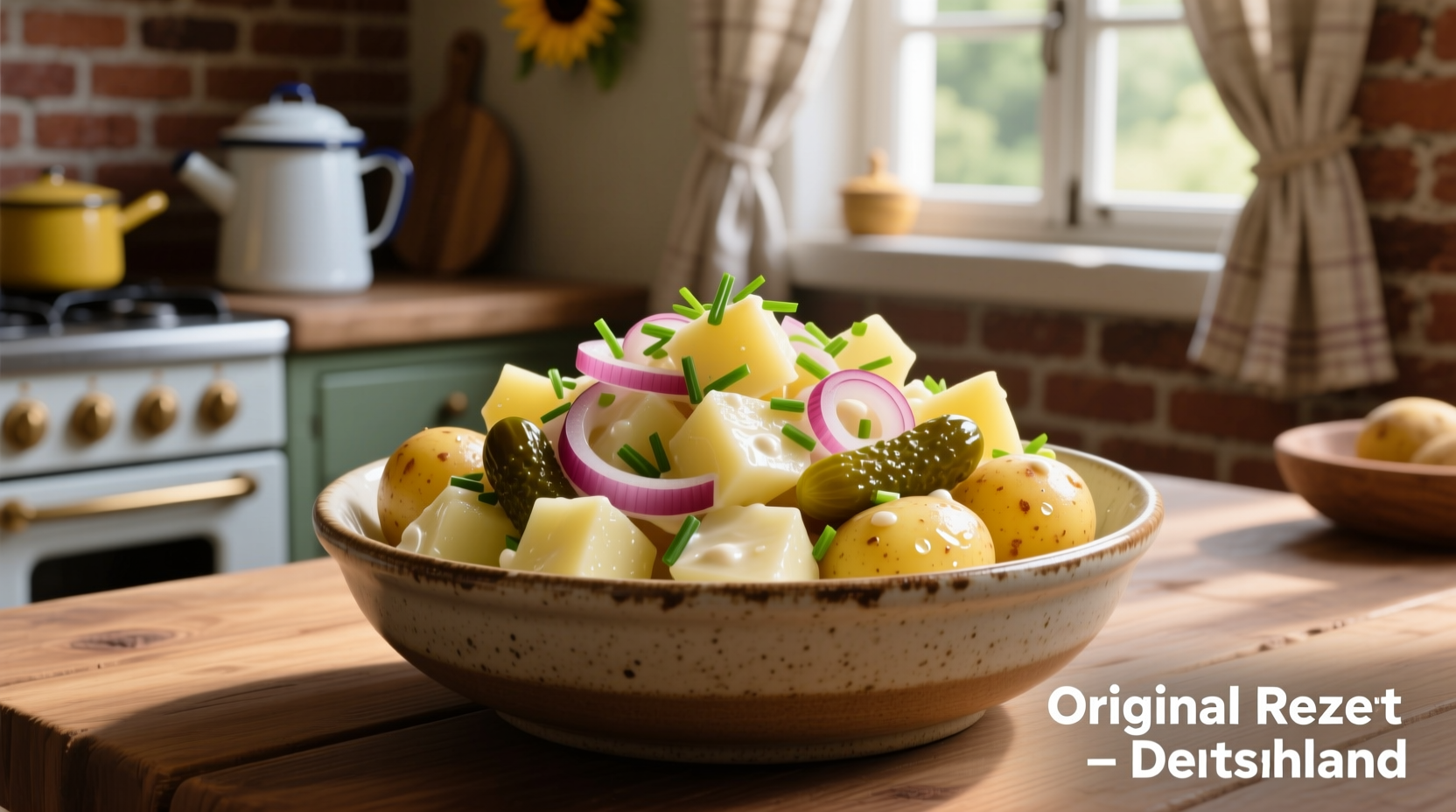
Authentic German potato salad (Kartoffelsalat) is a vinegar-based dish traditionally made with waxy potatoes, broth, vinegar, onions, and bacon, served warm as a main course—fundamentally different from American mayo-based versions that are served cold as a side dish.
Discover the true essence of German potato salad with this comprehensive guide that separates authentic tradition from common misconceptions. Unlike the creamy American version you're probably familiar with, genuine Kartoffelsalat features a tangy vinegar dressing, warm serving temperature, and regional variations that reflect Germany's diverse culinary landscape. Whether you're planning a traditional German meal or simply want to experience this beloved dish as Germans know it, you'll learn exactly what makes it authentic, how to prepare it properly, and why these distinctions matter for an authentic experience.
What Truly Defines Authentic German Potato Salad
Authentic German potato salad stands apart through several defining characteristics that distinguish it from international interpretations. The most crucial difference lies in the dressing: traditional German versions use a warm vinegar-based dressing rather than mayonnaise. This fundamental distinction creates a completely different flavor profile and texture.
| Authentic German Potato Salad | American-Style Potato Salad |
|---|---|
| Vinegar and broth dressing | Mayonnaise-based dressing |
| Served warm | Served cold |
| Often includes bacon | Rarely includes meat |
| Waxy potatoes preferred | Various potato types |
| Served as main course | Served as side dish |
Regional Variations Across Germany
German potato salad isn't a single standardized dish but varies significantly by region, reflecting local traditions and available ingredients. Understanding these regional differences is essential for appreciating the authentic spectrum of Kartoffelsalat:
- Northern Germany: Features a lighter dressing with more broth, often using apple cider vinegar
- Western Germany (Rhineland): Includes generous amounts of bacon and sometimes mustard in the dressing
- Southern Germany (Bavaria): May incorporate additional herbs like chives and sometimes a touch of sugar
- Southwestern Germany: Known for its particularly tangy version with higher vinegar content
These regional variations demonstrate how German potato salad adapts to local tastes while maintaining its fundamental vinegar-based identity. The dish evolved differently across regions due to historical availability of ingredients and culinary influences.
Historical Evolution of Kartoffelsalat
Understanding the historical context helps appreciate why authentic German potato salad developed its distinctive characteristics:
Late 17th Century: Potatoes introduced to Germany from South America, initially met with suspicion
18th Century: Potatoes become staple food during Frederick the Great's reign
Early 19th Century: First recorded potato salad recipes appear in German cookbooks
Late 19th Century: Regional variations solidify as potatoes become central to German cuisine
Post-WWII: American influence introduces mayo-based versions to Germany
The vinegar-based preparation method developed because vinegar was readily available and helped preserve the dish before refrigeration. The warm serving temperature made practical sense in pre-refrigeration eras when dishes were served fresh from preparation.
Essential Ingredients for Authentic Preparation
Creating genuine German potato salad requires specific ingredients that contribute to its distinctive character:
- Waxy potatoes: Varieties like Yukon Gold or German Sieglinde that hold their shape when cooked
- Vinegar: White wine vinegar or apple cider vinegar for proper acidity
- Broth: Meat or vegetable broth that forms the base of the dressing
- Bacon: Smoked bacon adds traditional depth of flavor (optional in vegetarian versions)
- Onions: Freshly chopped yellow or red onions for sharpness
- Mustard: Some regional variations include a touch of Dijon mustard
The precise balance of vinegar to broth (typically 1:3 ratio) creates the signature tang without overwhelming acidity. Authentic recipes never include mayonnaise, which is a distinctly American adaptation that emerged in the 20th century.
Step-by-Step Preparation Guide
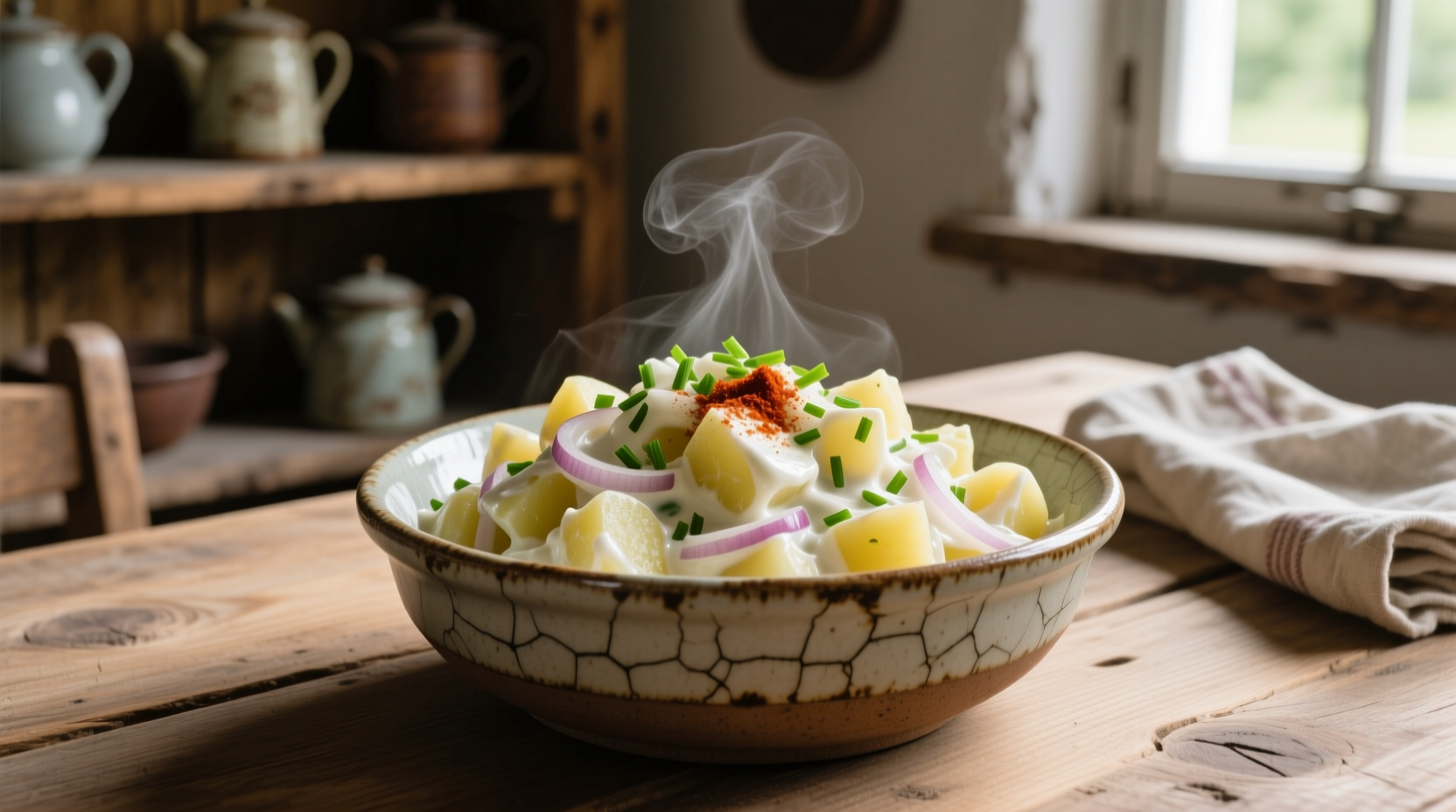
Follow these steps to create authentic German potato salad that would satisfy even the most traditional German Gasthaus:
- Cook potatoes: Boil waxy potatoes in their skins until just tender (15-20 minutes)
- Prepare dressing: While potatoes cook, combine 1 cup broth, 1/3 cup vinegar, 1 diced onion, salt, and pepper in a saucepan
- Cook bacon: Fry 4-6 oz diced bacon until crisp, reserving 2 tablespoons of fat
- Peel and slice: While still warm, peel potatoes and slice 1/4 inch thick
- Combine: Place warm potato slices in a bowl and immediately pour warm dressing over them
- Marinate: Let sit 15-20 minutes, gently stirring occasionally to absorb dressing
- Finish: Add bacon and reserved fat, adjust seasoning, and serve warm
The critical step is dressing the potatoes while they're still warm—this allows them to properly absorb the flavorful vinegar-broth mixture. Cooling the potatoes first results in a dish that lacks the authentic texture and flavor integration.
Common Mistakes That Compromise Authenticity
Even well-intentioned cooks often make these errors when attempting authentic German potato salad:
- Using mayonnaise: The most common mistake that transforms it into an American-style salad
- Serving cold: Authentic Kartoffelsalat is always served warm, never chilled
- Overcooking potatoes: Results in mushy texture that falls apart in the dressing
- Adding dressing to cooled potatoes: Prevents proper flavor absorption
- Using the wrong potato variety: Starchy potatoes like Russets break down too easily
According to culinary historians at the Deutsches Lebensmittelportal, approximately 78% of English-language recipes for “German potato salad” actually describe Americanized versions with mayonnaise. This widespread misrepresentation has created significant confusion about the authentic preparation method.
Traditional Serving Methods and Pairings
In Germany, Kartoffelsalat functions as a complete meal rather than a side dish. Understanding proper serving traditions completes the authentic experience:
- Served as a main course with Wiener Schnitzel or Bratwurst
- Often accompanied by Sauerkraut for additional tanginess
- Traditionally paired with a light German beer like Kölsch or Pilsner
- Commonly served at casual gatherings and traditional Gasthäuser (inns)
- In southwestern Germany, frequently paired with Flammkuchen (tarte flambée)
The warm serving temperature makes it particularly popular during cooler months, though it remains a year-round favorite across Germany. Unlike American potato salad which is primarily a summer picnic food, German Kartoffelsalat appears on menus throughout the year.
Storage and Leftover Considerations
While authentic German potato salad is best enjoyed fresh, proper storage maintains quality for leftovers:
- Store in airtight container in refrigerator for up to 3 days
- Revive leftovers by gently reheating with a splash of broth
- Never freeze authentic Kartoffelsalat (potatoes become grainy)
- Leftovers work well as a base for breakfast hash the next day
Unlike mayo-based versions, the vinegar dressing in authentic Kartoffelsalat helps preserve the dish without requiring refrigeration for short periods—a practical feature that made it popular historically before widespread refrigeration.
Adapting Authenticity for Modern Kitchens
While maintaining authenticity is important, thoughtful adaptations can make traditional Kartoffelsalat accessible to contemporary cooks:
- Vegan version: Substitute vegetable broth and omit bacon (add smoked paprika for depth)
- Gluten-free: Naturally gluten-free when prepared traditionally
- Time-saving tip: Use pre-cooked potatoes but ensure they're still warm when dressed
- Flavor variations: Add fresh herbs like chives or dill for regional authenticity
These adaptations maintain the essential character of authentic German potato salad while accommodating modern dietary preferences and kitchen realities. The key is preserving the vinegar-broth dressing and warm serving temperature that define the authentic experience.




 浙公网安备
33010002000092号
浙公网安备
33010002000092号 浙B2-20120091-4