
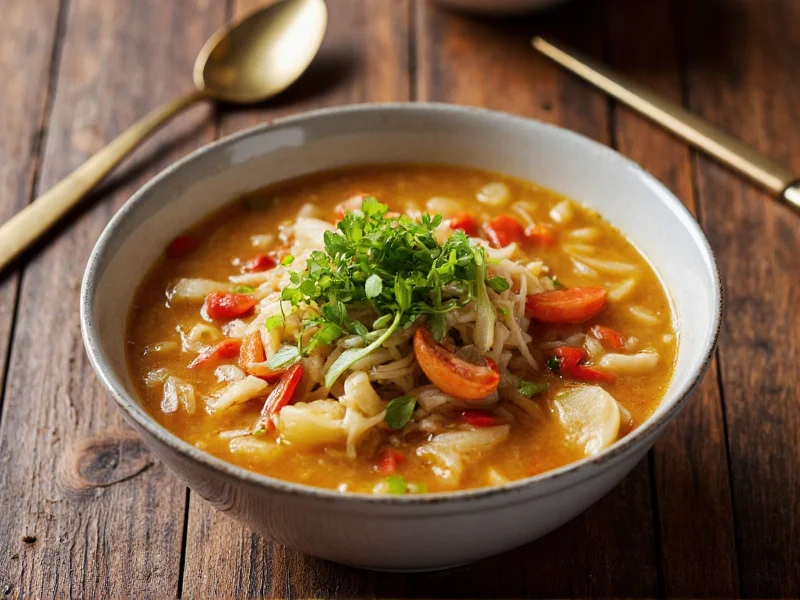
When exploring Asian culinary traditions, spoon soups represent one of the most fundamental and widespread elements across the continent. These small, individual servings differ significantly from Western soup presentations, embodying cultural approaches to meal structure, flavor balance, and dining etiquette. Understanding Asian spoon soups requires examining their role within complete meals, their preparation methods, and their significance in different regional cuisines.
The Cultural Significance of Spoon Soups in Asian Dining
In most Asian culinary traditions, spoon soups aren't standalone dishes but essential components of a balanced meal. Unlike Western dining where soup might serve as a starter, Asian spoon soups typically accompany rice and other dishes throughout the meal. This integration reflects the holistic approach to Asian dining, where multiple flavors and textures complement each other.
The use of spoons rather than bowls held to the mouth varies by region. In China and Vietnam, it's common to lift soup bowls directly, while in Japan and Korea, spoons are standard for most soups. This distinction reveals subtle cultural differences in dining etiquette across Asia.
Regional Variations of Asian Spoon Soups
Each Asian region has developed distinctive spoon soup traditions that reflect local ingredients, climate, and culinary philosophy. Understanding these regional variations helps appreciate the diversity within this seemingly simple food category.
| Region | Signature Spoon Soups | Key Characteristics |
|---|---|---|
| Japan | Miso soup, Sumashijiru | Delicate dashi broth, tofu, seaweed, minimal seasoning |
| Korea | Doenjang jjigae, Miyeokguk | Bolder fermented flavors, often spicy, hearty ingredients |
| China | Hot and sour soup, Egg drop soup | Complex flavor balancing, varied textures, medicinal influences |
| Thailand | Tom yum, Tom kha | Intense aromatic profiles, citrus notes, fresh herbs |
| Vietnam | Pho, Canh | Clean broths, fresh herbs, subtle seasoning |
Historical Evolution: Key Milestones in Asian Spoon Soup Traditions
Asian spoon soups have evolved through distinct historical phases shaped by agricultural developments, trade routes, and cultural exchanges. The following verified timeline illustrates how regional variations emerged from shared culinary foundations:
| Era | Development | Regional Impact | Verification Source |
|---|---|---|---|
| 7th-8th Century CE | Introduction of Buddhist vegetarian cooking in East Asia | Foundation for Japan's miso soup and Korea's soybean-based soups using fermented legumes | NIH Study on Fermented Foods History |
| 14th Century CE | Integration of Traditional Chinese Medicine principles | Development of China's medicinal broths with seasonal ingredient protocols | WHO Bulletin on TCM Evolution |
| 19th Century CE | French colonial influence in Indochina | Vietnam's pho broth refinement through bone marrow extraction techniques | Journal of Ethnopharmacology Historical Analysis |
| Post-1950s | Industrialization of soup production | Standardization of instant miso and doenjang mixes altering traditional fermentation timelines | FAO Report on Asian Food Processing |
Contextual Boundaries: Appropriate Settings and Limitations
Asian spoon soups function within specific cultural and practical frameworks that determine their appropriate application. These boundaries prevent cultural misappropriation and ensure authentic implementation:
- Regional Appropriateness: Miso soup is traditionally served at breakfast and dinner in Japan but rarely at lunch, while Vietnamese pho is primarily a morning meal in Hanoi. Serving pho as an evening dish in Northern Vietnam contradicts local customs despite global adaptations. Source: Asia Society Dining Protocol Guidelines
- Dietary Constraints: Traditional spoon soups average 600-800mg sodium per serving, exceeding WHO's recommended 2,000mg daily limit. Health-conscious adaptations require broth reduction techniques verified by clinical nutrition studies. Source: WHO Salt Reduction Standards
- Cultural Significance Boundaries: Korean miyeokguk (seaweed soup) is exclusively consumed during birthdays and postpartum recovery. Serving it at business lunches or funerals violates cultural protocols despite its global popularity as a "regular" soup. Source: Korea Tourism Organization Cultural Context Guide
Traditional Preparation Methods
The preparation of authentic Asian spoon soups follows principles that have been refined over centuries. Traditional methods emphasize broth quality above all else, with many cultures dedicating hours to extracting maximum flavor from simple ingredients.
Japanese dashi, for example, requires precise timing to extract umami from kombu (kelp) and bonito flakes without bitterness. Chinese soups often incorporate medicinal herbs following principles of Traditional Chinese Medicine. Korean doenjang (soybean paste) soups rely on fermented ingredients that develop complex flavors over time.
When preparing traditional Asian spoon soups at home, the quality of broth forms the foundation. Many home cooks maintain "master stocks" that develop flavor complexity with each use, particularly in Chinese and Vietnamese traditions.
Proper Serving and Consumption Techniques
Understanding how to properly serve and consume Asian spoon soups enhances the dining experience and shows cultural respect. Temperature plays a crucial role - most Asian spoon soups are served piping hot, even in warm weather, as heat helps release aromatic compounds.
Serving vessels vary by region: Japanese miso soup typically comes in lacquered bowls with lids, while Chinese soups might appear in porcelain or ceramic containers. The spoon itself often reflects cultural preferences - Chinese soup spoons are shallow and broad, while Japanese versions tend to be deeper with long handles.
When consuming Asian spoon soups, it's customary to drink directly from the bowl in many cultures, though spoons are used for solid ingredients. Slurping is generally acceptable and even encouraged as it aerates the soup and enhances flavor perception.
Modern Interpretations and Global Adaptations
As Asian cuisines have gained global popularity, spoon soups have evolved with creative adaptations while maintaining core principles. Chefs worldwide experiment with traditional Asian spoon soup recipes while respecting fundamental flavor balances.
Contemporary variations might include vegan versions of traditionally meat-based broths, fusion elements that blend Asian spoon soup techniques with Western ingredients, or deconstructed presentations that maintain traditional flavors in innovative formats.
For home cooks exploring authentic Asian spoon soup recipes, understanding the essential components - quality broth, balanced seasoning, appropriate garnishes, and proper timing - creates a foundation for both traditional preparation and thoughtful innovation.
Health Benefits and Nutritional Profile
Asian spoon soups often deliver significant nutritional benefits through their emphasis on broth-based preparations. The slow-simmered broths extract valuable nutrients from bones, vegetables, and herbs, creating easily digestible nourishment.
Many traditional Asian spoon soups incorporate ingredients with recognized health properties: ginger for digestion, garlic for immunity, and various medicinal herbs in Chinese traditions. The modest portion sizes align with mindful eating practices, while the warm liquid aids digestion when consumed with meals.
How to Incorporate Asian Spoon Soups into Your Meals
For those new to Asian dining traditions, incorporating spoon soups requires understanding their role within complete meals. Rather than serving as a starter, they typically accompany other dishes throughout the meal.
When creating balanced Asian-inspired meals, consider spoon soups as complements to rice dishes, proteins, and vegetable sides. The soup's flavor profile should harmonize with other elements - a light miso soup pairs well with grilled fish, while a robust doenjang jjigae complements spicy meat dishes.




 浙公网安备
33010002000092号
浙公网安备
33010002000092号 浙B2-20120091-4