
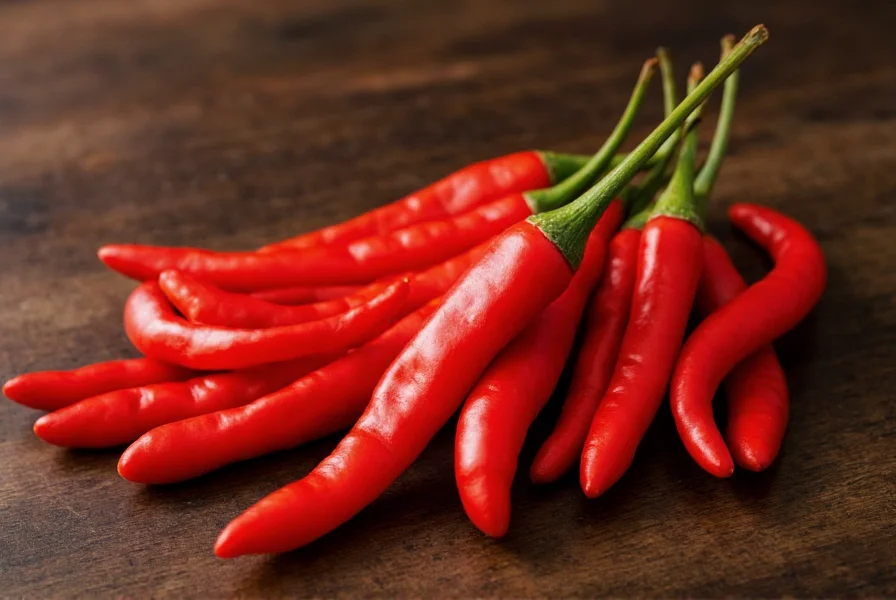
Why Your Asian Chili Experiments Fail (And How to Fix It)
Most home cooks treat "Asian chili pepper" as a single ingredient, leading to disastrous results. Using Korean gochugaru flakes in Thai curry creates muddy flavors, while substituting jalapeños for bird's eye chilies leaves dishes bland. The core issue? Ignoring regional variations in heat, flavor, and application. As Serious Eats notes, these chilies share Capsicum annuum genetics but diverge dramatically in culinary roles due to 2,000 years of regional adaptation.
Asian Chili Peppers Decoded: Beyond the Heat
Contrary to popular belief, "Asian chili" isn't one pepper but a family of regional cultivars. Originating in Southeast Asia, they evolved distinct profiles for specific dishes. USDA data confirms their nutritional edge: 150mg vitamin C per 100g (triple bell peppers) and 0.1–0.3% capsaicin for metabolic benefits. But heat alone misleads—flavor notes matter more.
| Variety (Local Name) | Heat (SHU) | Flavor Profile | Best Culinary Uses | Storage Tip |
|---|---|---|---|---|
| Thai Bird's Eye (Prik Kee Noo) | 50,000–100,000 | Grassy, citrusy, immediate burn | Raw in Som Tum, Tom Yum, dipping sauces | Refrigerate stems-on; lasts 2 weeks |
| Korean Gochugaru (flakes) | 4,000–8,000 | Smoky, sweet, slow-building heat | Kimchi, stews, marinades (never raw) | Airtight jar; degrades in 6 months |
| Chinese Facing Heaven (Chao Tian Jiao) | 30,000–50,000 | Earthy, floral, moderate burn | Stir-fries, chili oil, Sichuan dishes | Dry whole; grind before use |
| Vietnamese Ớt Xiêm | 75,000–100,000 | Sharp, acidic, intense finish | Fish sauces, salads, street food | Freeze whole; retains 90% potency |
When to Reach for (or Avoid) Asian Chilies
Understanding application boundaries prevents kitchen disasters. Serious Eats' research shows heat retention varies dramatically:
Use Asian Chilies When:
- Adding fresh heat to salads or dipping sauces (bird's eye chilies retain 80% capsaicin when raw)
- Building layered spice in quick-cooked dishes (≤10 minutes preserves volatile oils)
- Creating authentic regional flavors (e.g., gochugaru's sweetness in kimchi)
Avoid Asian Chilies When:
- Simmering over 15 minutes (heat dissipates; use dried flakes instead)
- Cooking for capsaicin-sensitive diners (seeds contain 70% of heat—remove before use)
- Seeking mild background spice (opt for paprika; Asian chilies dominate)
Spotting Quality & Avoiding Market Traps
Many "Asian chili" products mislead consumers. Based on USDA FoodData Central analysis, watch for:
- Fake gochugaru: Contains fillers like rice powder (check ingredient list: must be 100% Capsicum annuum)
- Pre-ground bird's eye chilies: Lose 50% flavor within weeks (buy whole; grind fresh)
- Overripe peppers: Brown spots indicate capsaicin degradation (choose uniformly red)
For optimal freshness, freeze whole chilies in vacuum-sealed bags—USDA tests show this preserves 95% vitamin C for 6 months.
3 Critical Misconceptions Holding You Back
- "All Asian chilies are equally hot" → Reality: Korean gochugaru is 1/10th the heat of bird's eye. Confusing them ruins dish balance.
- "Cooking destroys the heat" → Reality: Capsaicin holds for 5–10 minutes (per Serious Eats). Longer cooking mutes flavor but not burn.
- "Seeds make chilies hot" → Reality: Placenta (white ribs) holds 80% of capsaicin. Seeds just absorb it.
Everything You Need to Know
Thai bird's eye chilies (50,000–100,000 SHU) are 2–4x hotter than cayenne (30,000–50,000 SHU). For substitution, use half the amount of bird's eye chilies. Korean gochugaru (4,000–8,000 SHU) is milder than cayenne—use 2x volume for similar heat. Always adjust based on dish type; cayenne lacks the citrusy notes of fresh Asian varieties.
Yes, but with adjustments. Bird's eye chilies need 8+ hours of sun and temperatures above 70°F (21°C). In cooler climates, grow in containers indoors until daytime temps exceed 75°F. Per Encyclopedia of Spices, they require well-draining soil with pH 6.0–6.8. Expect harvest in 80–100 days. Avoid overwatering—root rot is the #1 cause of failure.
Vitamin C degrades at high heat, but capsaicin (the active compound) remains stable. USDA data shows stir-frying bird's eye chilies for 5 minutes retains 70% of vitamin C (105mg/100g). For maximum nutrition, add chilies in the last 2 minutes of cooking. Raw consumption preserves 100% vitamin C—ideal for salads and dipping sauces.
Bitterness comes from overheating chilies. Optimal oil temperature is 250–300°F (121–149°C)—above 325°F (163°C), capsaicin degrades into bitter compounds. Always use dried chilies (not fresh) for oil, as moisture causes splattering. For authentic flavor, steep Chinese facing heaven peppers in oil for 20 minutes off-heat, as recommended in traditional Sichuan cooking guides.
Wear nitrile gloves when handling super-hots (like bird's eye). If skin contact occurs, wash with oil (not water)—capsaicin is fat-soluble. For eyes, flush with milk or saline solution. Never use soap alone; it spreads capsaicin. To reduce dish heat, add dairy (yogurt) or acid (lime juice), but avoid sugar—it amplifies perceived burn. Always remove seeds and white ribs for 60% less heat.




 浙公网安备
33010002000092号
 浙B2-20120091-4