
Confused about whether sweet potatoes qualify as true potatoes? You're not alone. This common culinary misconception affects home cooks, grocery shoppers, and even some professional chefs. Understanding the fundamental differences between these two staple foods matters for your cooking, nutrition choices, and even gardening plans. Let's clear up this confusion once and for all with science-backed facts that will transform how you select and use these vegetables.
The Botanical Reality: Two Different Plant Families
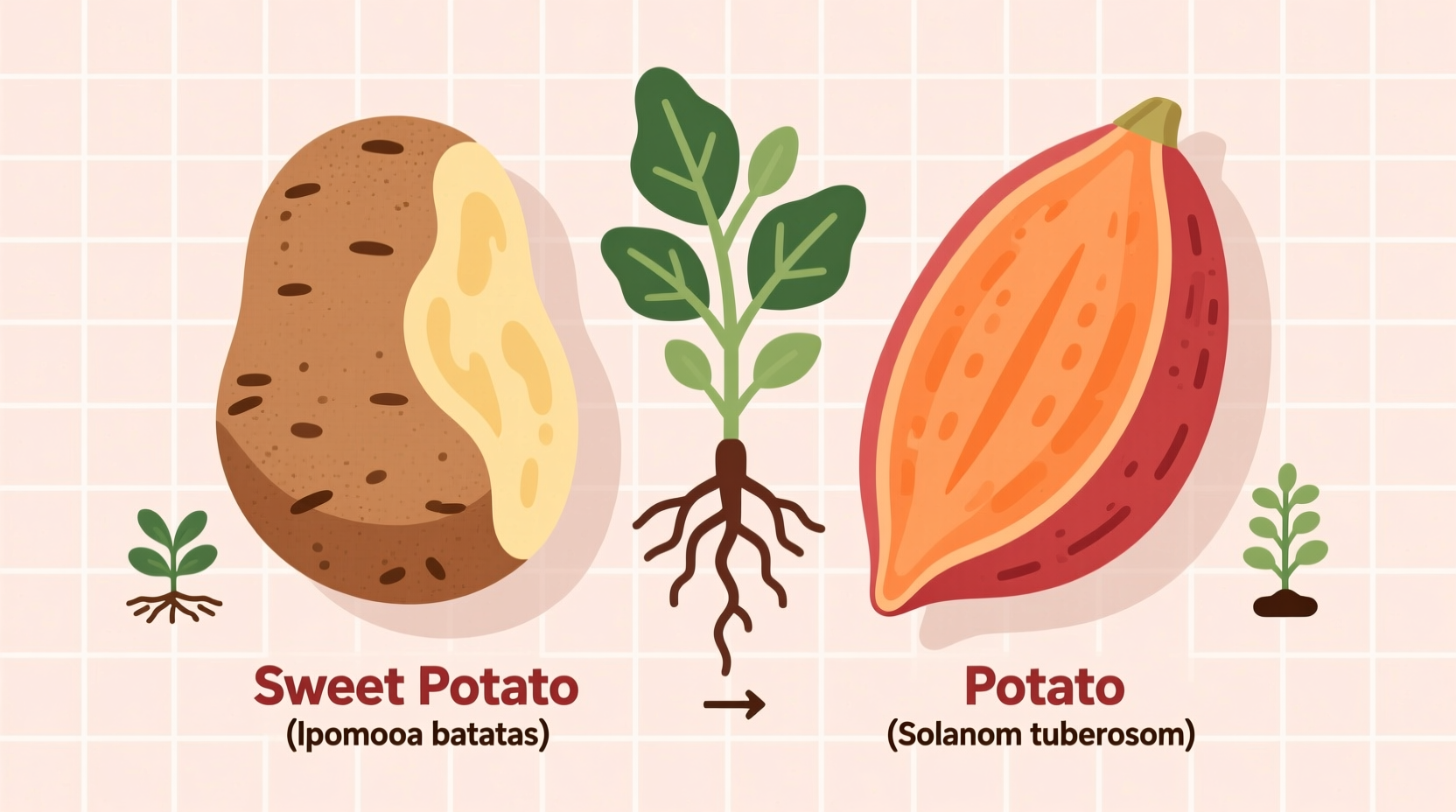
Despite their similar names and culinary uses, sweet potatoes (Ipomoea batatas) and potatoes (Solanum tuberosum) are completely unrelated botanically. Sweet potatoes belong to the Convolvulaceae family (morning glory family), while potatoes are part of the Solanaceae family (nightshade family) alongside tomatoes, eggplants, and peppers.
This fundamental classification difference explains why sweet potatoes grow as trailing vines with heart-shaped leaves, while potatoes grow as upright plants with compound leaves. The edible portions also develop differently: sweet potatoes are storage roots, while potatoes are tubers (swollen underground stems).
| Characteristic | Sweet Potato | Potato |
|---|---|---|
| Botanical Family | Convolvulaceae (morning glory) | Solanaceae (nightshade) |
| Scientific Name | Ipomoea batatas | Solanum tuberosum |
| Edible Part Type | Storage root | Tuber (modified stem) |
| Native Region | Central/South America | Andes Mountains (South America) |
| Chlorogenic Acid | Negligible | High (causes browning) |
Historical Context: How the Naming Confusion Began
The misnaming dates back to Christopher Columbus's arrival in the Americas. When Spanish explorers encountered batatas (the Taino word for sweet potatoes) in the Caribbean, they mistakenly called them "potatoes" because they resembled the papa (potatoes) they'd encountered in South America. This historical error stuck despite the plants having no botanical relationship.
By the time true potatoes were introduced to Europe from South America in the late 16th century, the naming confusion was already established. The USDA continues to classify them separately in their agricultural statistics, with sweet potatoes falling under the "roots and tubers" category while potatoes have their own distinct classification.
Nutritional Differences That Matter
While both provide complex carbohydrates, their nutritional profiles differ significantly. A medium sweet potato (130g) contains approximately 103 calories, 24g carbohydrates, 4g fiber, and delivers 438% of your daily vitamin A needs. In contrast, a similar-sized white potato provides 110 calories, 26g carbohydrates, 2g fiber, and 28% of daily vitamin C.
Sweet potatoes' vibrant orange color comes from beta-carotene, which converts to vitamin A in the body. White potatoes contain more potassium and vitamin B6. Neither contains fat naturally, but their preparation methods dramatically affect their nutritional value. Understanding these differences helps you make informed choices based on your dietary needs.
Culinary Applications: When Substitutions Work (and When They Don't)
While sweet potatoes and potatoes can sometimes substitute for each other, certain culinary contexts reveal their limitations. Sweet potatoes' higher sugar content causes caramelization at lower temperatures, making them ideal for roasting but problematic for dishes requiring neutral starches.
When substitution works: In mashed preparations, soups, or stews where flavor differences are acceptable When substitution fails: In dishes requiring structural integrity (like potato salads), where the starch composition matters, or when a neutral flavor profile is essential
Professional chefs note that sweet potatoes' moisture content varies significantly by variety (Beauregard vs. Garnet), affecting recipe outcomes. Potatoes' starch types (waxy vs. starchy) also determine their best culinary applications. This context boundary matters for recipe success.
Storage and Selection Tips for Home Cooks
Proper storage differs significantly between these vegetables. Store sweet potatoes in a cool, dark, well-ventilated place (55-60°F) where they'll last 3-5 weeks. Never refrigerate them, as cold temperatures cause hard centers and unpleasant flavors. Potatoes store best at slightly cooler temperatures (45-50°F) but should also avoid refrigeration to prevent sugar conversion.
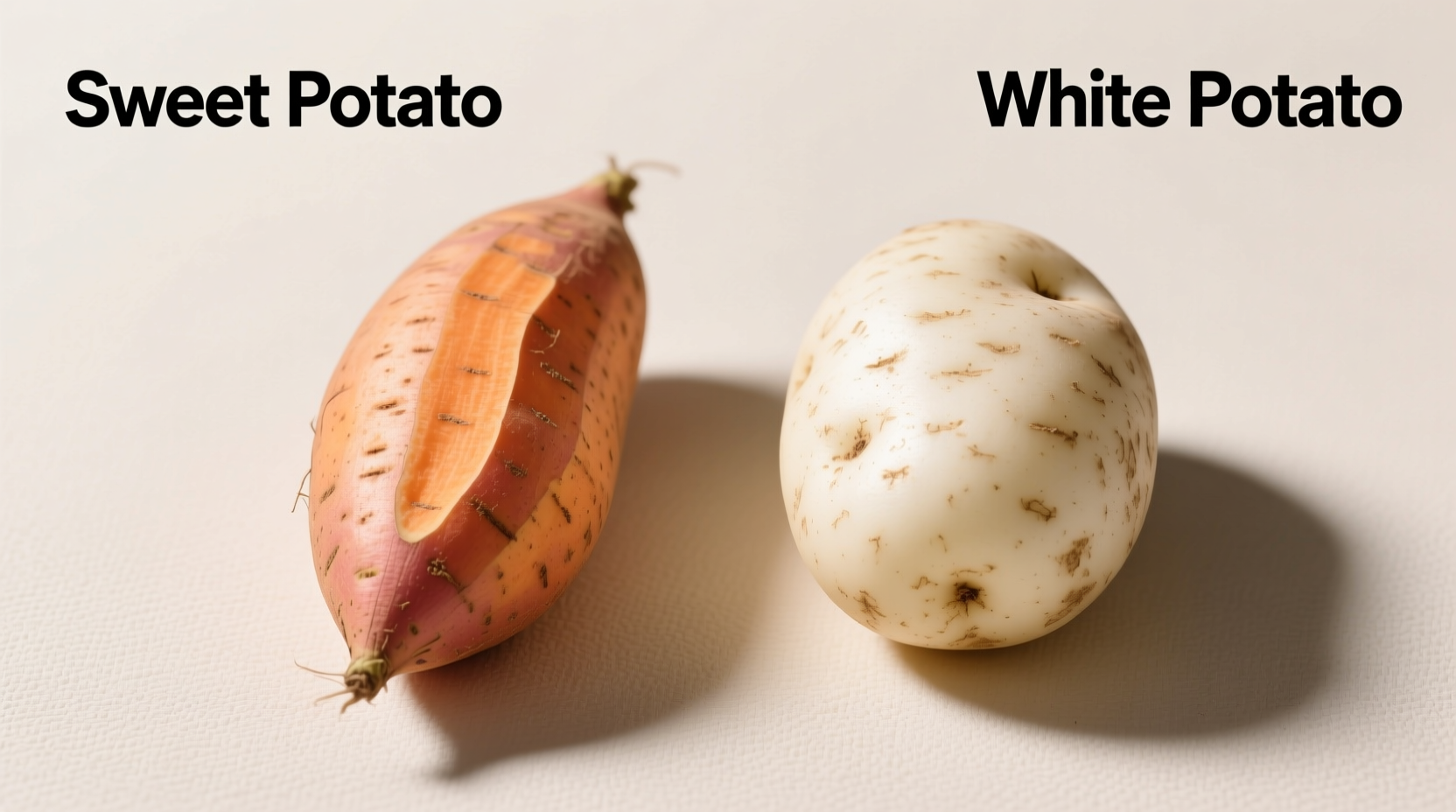
When selecting sweet potatoes, look for firm, smooth skins without soft spots or wrinkles. For white potatoes, choose those with tight, unbroken skins and avoid any with green discoloration (indicating solanine development). Understanding these practical differences prevents wasted food and ensures optimal cooking results.
Common Misconceptions Clarified
Myth: "Yams" are just another name for sweet potatoes Fact: True yams (Dioscorea species) are a completely different plant native to Africa and Asia, with rough, bark-like skin and white or purple flesh. In the US, "yam" often refers to orange-fleshed sweet potatoes due to historical marketing practices.
Myth: Sweet potatoes are just sweeter versions of regular potatoes Fact: Their sweetness comes from different carbohydrate structures (starches vs. sugars) and enzyme activity during cooking, not simply added sugar.
Practical Takeaways for Your Kitchen
Now that you understand sweet potatoes aren't potatoes, use this knowledge to enhance your cooking:
- Choose sweet potatoes for dishes where natural sweetness complements other ingredients (roasted vegetables, pies, smoothies)
- Opt for white potatoes when you need neutral starches (mashed potatoes, gratins, gnocchi)
- Adjust cooking times - sweet potatoes generally cook faster than white potatoes
- Consider nutritional goals - sweet potatoes for vitamin A, white potatoes for potassium
- Store each type properly to maximize shelf life and flavor
Understanding these distinctions transforms how you approach meal planning, grocery shopping, and cooking techniques. Whether you're managing dietary restrictions, seeking optimal nutrition, or simply wanting better culinary results, recognizing that sweet potatoes aren't potatoes provides valuable kitchen intelligence.
Frequently Asked Questions
Are sweet potatoes and yams the same thing?
No, sweet potatoes and yams are completely different plants. True yams (Dioscorea species) originate from Africa and Asia, have rough, bark-like skin, and come in white or purple varieties. In the United States, many "yams" labeled in stores are actually orange-fleshed sweet potatoes due to historical marketing practices.
Why are sweet potatoes called potatoes if they're not related?
Spanish explorers in the Caribbean mistakenly called sweet potatoes "potatoes" because they resembled the papa (potatoes) they'd encountered in South America. This historical error persisted despite the plants having no botanical relationship, creating the naming confusion that continues today.
Can I substitute sweet potatoes for regular potatoes in recipes?
Sometimes, but with limitations. Sweet potatoes work well as substitutes in mashed preparations, soups, and stews where flavor differences are acceptable. They don't work well in dishes requiring structural integrity (like potato salads) or neutral flavor profiles due to their higher sugar content and different starch composition.
Which is healthier, sweet potatoes or regular potatoes?
Both offer nutritional benefits but differ in key areas. Sweet potatoes provide significantly more vitamin A (as beta-carotene) and fiber, while white potatoes contain more potassium and vitamin B6. The healthiest choice depends on your specific nutritional needs and how you prepare them - both can be part of a balanced diet when prepared using healthy cooking methods.
How should I store sweet potatoes properly?
Store sweet potatoes in a cool, dark, well-ventilated place at 55-60°F (13-15°C) where they'll last 3-5 weeks. Never refrigerate them, as cold temperatures cause hard centers and unpleasant flavors. Avoid storing them near onions, which release gases that can shorten sweet potatoes' shelf life.




 浙公网安备
33010002000092号
浙公网安备
33010002000092号 浙B2-20120091-4