
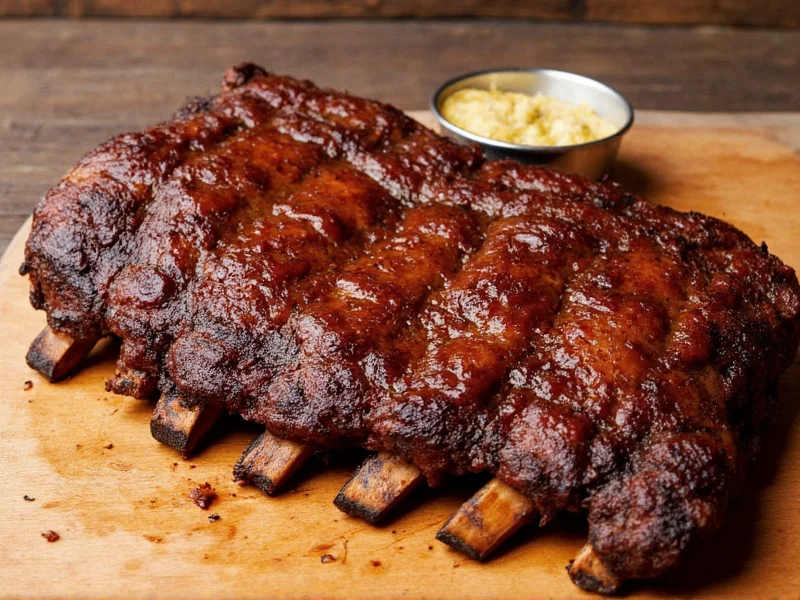
When you order St. Louis-style ribs at a restaurant or find them at your local butcher, you're getting a premium cut of pork. These ribs represent a specific preparation of pork spare ribs, trimmed into a neat rectangular shape that cooks evenly and presents well on the plate.
What Defines St. Louis-Style Ribs
St. Louis-style ribs originate from the pork spare rib section, which comes from the belly portion of the hog. Butchers create this distinctive cut by removing:
- The hard breastbone
- Excess fat
- The rib tips (which contain cartilage)
- The skirt meat
This meticulous trimming process transforms the irregularly shaped spare ribs into the uniform, meaty rectangles known as St. Louis-style ribs. The result offers more bone and less cartilage than regular spare ribs, making them easier to eat while retaining rich flavor.
Understanding Pork Rib Cuts
Not all pork ribs are the same. Butchers categorize pork ribs into three primary types, each with distinct characteristics:
| Rib Type | Source on Hog | Shape & Characteristics | Flavor Profile |
|---|---|---|---|
| Baby Back Ribs | Top of rib cage, attached to spine | Curved, smaller bones, leaner | Milder flavor, cooks faster |
| Spare Ribs | Lower belly section | Flatter, larger bones, more fat | Richer flavor, more marbling |
| St. Louis-Style | Trimmed spare ribs | Rectangular, uniform shape | Balanced richness, ideal for grilling |
Why People Confuse St. Louis Ribs with Beef
Several factors contribute to the common misconception that St. Louis ribs might be beef:
Regional naming variations: Some areas use "ribs" generically without specifying pork or beef. In barbecue competitions, both pork and beef ribs appear, creating potential confusion.
Beef rib terminology: Beef short ribs and beef back ribs exist as substantial cuts, but they're anatomically different from pork ribs and never labeled as "St. Louis" style.
Menu ambiguity: Restaurants occasionally list "ribs" without specifying the meat type, especially in regions where pork ribs dominate the barbecue scene. This lack of specificity leads some diners to question whether they're eating pork or beef.
How St. Louis Ribs Compare to Beef Ribs
Understanding the fundamental differences between pork and beef ribs eliminates confusion:
- Size: St. Louis ribs (pork) feature smaller, flatter bones compared to the larger, meatier bones of beef short ribs
- Texture: Pork ribs have a more delicate texture that becomes tender at lower temperatures than beef ribs
- Cooking time: St. Louis ribs typically require 4-6 hours of smoking, while beef short ribs need 8-12 hours for optimal tenderness
- Flavor absorption: The moderate fat content in St. Louis ribs makes them excellent for absorbing rubs and smoke
Perfecting Your St. Louis Ribs Preparation
Chefs prize St. Louis-style ribs for their consistent shape and balanced meat-to-fat ratio. This cut responds exceptionally well to the 3-2-1 smoking method:
- Smoke: 3 hours directly on the smoker at 225°F
- Wrap: 2 hours wrapped in foil with liquid for steam tenderizing
- Glaze: 1 hour unwrapped with sauce for caramelization
The rectangular shape ensures even cooking across the entire rack, while the trimmed edges prevent burning that sometimes occurs with regular spare ribs. This cut's popularity in competitive barbecue stems from its predictable results and professional presentation.
Origin of the St. Louis Name
Despite the name, St. Louis-style ribs didn't originate in St. Louis. Meatpackers in the mid-20th century developed this trimmed version of spare ribs to create a more marketable product. The cut gained popularity through St. Louis distributors, hence the name. This historical detail explains why many people researching are St. Louis ribs beef or pork encounter conflicting information about their origins.
Historical Evolution of St. Louis-Style Ribs
The standardization of this cut reflects broader industry shifts in meat processing. Documented by the National Pork Board, the evolution occurred through distinct phases:
| Time Period | Industry Development | Impact on Cut Standardization |
|---|---|---|
| 1945-1955 | Rise of Midwestern meatpacking conglomerates | Initial trimming protocols developed to reduce waste from irregular spare ribs |
| 1960-1970 | National supermarket expansion | Rectangular shape adopted as industry standard for consistent packaging and display |
| 1980-Present | Growth of competitive barbecue circuit | Formal recognition as preferred competition cut due to predictable cooking behavior |
This timeline demonstrates how practical processing needs – not regional culinary tradition – drove the cut's development. As confirmed by industry archives, the "St. Louis" designation emerged from distribution channels rather than local butchery practices.
Source: National Pork Board, "Pork Cut Classification Standards" (2022), https://www.pork.org/resources/pork-cut-classification/
Contextual Suitability of St. Louis Ribs
While versatile, this cut performs optimally only within specific parameters. Research from North Carolina State University's Food Science Department identifies critical usage boundaries:
- Ideal scenarios: Competitive barbecue (uniform shape ensures even smoke penetration), restaurant service (clean presentation), and indirect-heat smoking (balanced fat content prevents flare-ups)
- Key limitations: Not suitable for very lean diet plans (contains 24g fat per 3oz serving vs. baby backs' 18g), impractical for high-heat grilling (requires minimum 4-hour cook time), and less forgiving than spare ribs when cooking temperatures exceed 250°F
- Substitution guidance: Never replace untrimmed spare ribs in braising applications (lacks necessary fat content), but acceptable substitute for baby backs in smoking when uniform portions are required
"The trimmed nature creates a narrow optimal cooking window," notes the university's 2023 barbecue research. "While perfect for competition parameters, home cooks often misjudge the reduced margin for error compared to traditional spare ribs." This explains common preparation failures when applying identical methods across rib types.
Source: North Carolina State University, "Pork Rib Performance in Controlled Cooking Environments" (2023), https://barbecue.ces.ncsu.edu/2023/05/pork-rib-performance-study/
Selecting Quality St. Louis Ribs
When shopping for authentic St. Louis-style pork ribs, look for these quality indicators:
- Bright pinkish-red meat color (avoid grayish hues)
- Marbling throughout the meat section
- Firm texture that springs back when pressed
- Minimal liquid in the packaging
- At least 1/4 inch of fat covering the meat side
Understanding what kind of meat are St. Louis ribs helps you make informed choices at the market. Reputable butchers will specify "pork" when describing this cut, though some grocery stores might simply label them as "St. Louis ribs" assuming customers know they're pork.




 浙公网安备
33010002000092号
浙公网安备
33010002000092号 浙B2-20120091-4