
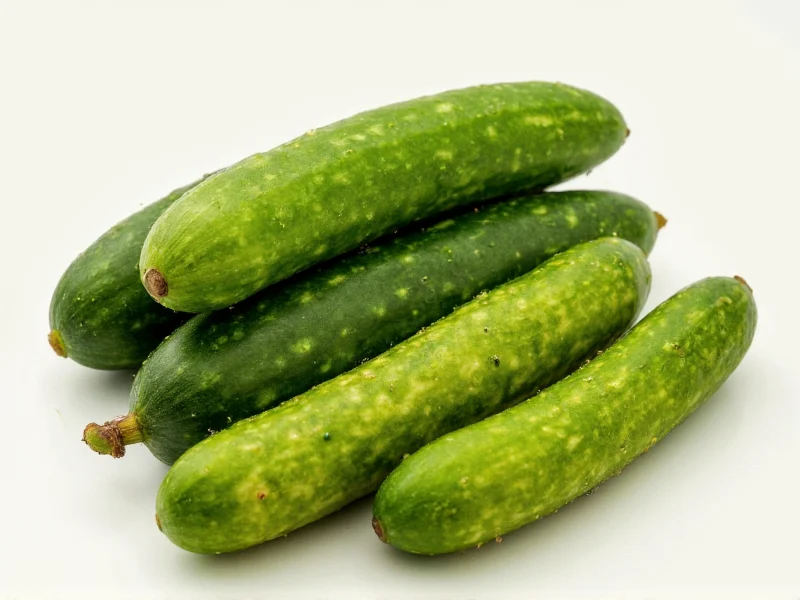
Understanding the relationship between pickled cucumbers and pickles requires examining both culinary terminology and historical context. While the question \"are pickled cucumbers pickles\" might seem confusing at first glance, the answer lies in how food preservation processes define final products.
The Pickling Process Defined
Pickling is a preservation method that involves submerging food in an acidic solution, typically vinegar, often combined with salt, sugar, and various spices. When cucumbers undergo this specific preservation technique, they transform from fresh vegetables into what we universally recognize as pickles.
The confusion around \"are pickled cucumbers pickles\" often stems from regional language differences. In some parts of the world, particularly in the United Kingdom, the term \"pickle\" refers to a broader category of preserved foods, including chutneys and relishes. However, in American English and most culinary contexts worldwide, \"pickle\" specifically means a pickled cucumber.
Historical Context of Pickled Cucumbers
The practice of preserving cucumbers dates back thousands of years. Ancient Mesopotamians first pickled cucumbers in the Tigris Valley around 2000 BCE. The term \"pickle\" entered the English language from the Dutch word \"pekel,\" meaning brine. This linguistic evolution explains why we use a different term for the preserved product than for the original vegetable.
Over time, as cucumbers became the most commonly pickled vegetable in Western cuisine, the term \"pickle\" became synonymous with pickled cucumbers specifically. This linguistic shorthand is why many people wonder are all pickles made from cucumbers—the answer is no, but in everyday usage, \"pickle\" typically refers to cucumbers.
Types of Pickled Cucumbers
Not all pickled cucumbers are identical. The specific preparation method creates different pickle varieties:
| Pickle Type | Preparation Method | Distinct Characteristics |
|---|---|---|
| Dill Pickles | Vinegar-based with dill weed and garlic | Strong herb flavor, crisp texture |
| Sweet Pickles | Higher sugar content in brine | Sweet-tangy flavor profile |
| Bread and Butter | Sliced cucumbers with onions in sweet vinegar | Thin slices, mild sweet flavor |
| Kosher Dill | Traditional preparation with garlic and dill | Authentic deli-style flavor |
| Gherkins | Using smaller, bumpy cucumber varieties | Bite-sized, often used for relish |
Common Misconceptions About Pickles
Several misunderstandings contribute to questions about what makes a pickle a pickle. One prevalent myth suggests that only certain cucumber varieties can become pickles. In reality, while specific cultivars like Kirby cucumbers work best due to their firm texture and lower water content, virtually any cucumber can be pickled.
Another misconception involves the pickling process itself. Some believe that fermentation alone creates pickles, but true pickles require an acidic environment—either through vinegar addition or natural fermentation that produces sufficient lactic acid. This distinction matters when exploring the cucumber pickling process explained in detail.
Global Perspectives on Pickled Cucumbers
Culinary traditions worldwide demonstrate interesting variations in how different cultures approach the history of pickled cucumbers. In Japan, takuan (pickled daikon radish) is more common than cucumber pickles. In India, achar includes various vegetables preserved in oil and spices. These global differences explain why some people encounter confusion about whether all pickled items qualify as \"pickles\" in the American sense.
The key distinction lies in terminology: while \"pickling\" refers to the preservation method applicable to many foods, the word \"pickle\" as a noun typically refers specifically to pickled cucumbers in most English-speaking contexts. This explains why the question are pickled cucumbers pickles has such a definitive answer despite occasional regional variations.
Practical Implications for Home Cooking
Understanding that pickled cucumbers are indeed pickles helps home cooks navigate recipes and grocery shopping. When a recipe calls for pickles, it's specifying pickled cucumbers, not other preserved vegetables. Similarly, when shopping, the \"pickle\" aisle contains various styles of pickled cucumbers, not a mix of different preserved vegetables.
For those interested in the types of pickled cucumbers available, exploring regional varieties can be educational. New York-style deli pickles differ from Southern bread-and-butter pickles, which differ from Polish-style ogórek kiszony (fermented cucumbers). Each variation maintains the fundamental truth that these are all forms of pickled cucumbers—therefore, all are pickles.




 浙公网安备
33010002000092号
浙公网安备
33010002000092号 浙B2-20120091-4