
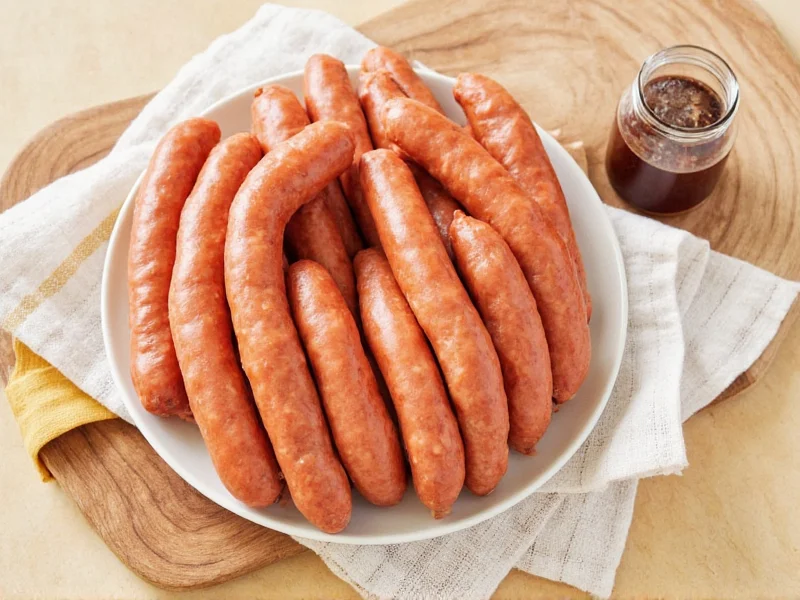
Applegate turkey sausage is a clean-label, all-natural poultry product made with responsibly raised turkey, free from artificial ingredients, nitrates, and nitrites. It offers a leaner protein alternative to traditional pork sausage with approximately 140-160 calories per serving, 6-8g of protein, and 11-14g of fat depending on the variety.
Understanding Applegate Turkey Sausage: A Healthier Protein Choice
When searching for healthier breakfast options or lean protein sources, Applegate turkey sausage has become a popular choice among health-conscious consumers. This clean-label meat product stands out in the crowded sausage market for its commitment to natural ingredients and responsible farming practices.Nutritional Profile and Health Benefits
Applegate turkey sausage provides a significantly leaner alternative to traditional pork sausage. A typical 3-ounce serving of their original turkey sausage contains:| Nutrient | Amount per Serving | % Daily Value |
|---|---|---|
| Calories | 140 | - |
| Total Fat | 11g | 14% |
| Saturated Fat | 3.5g | 18% |
| Cholesterol | 70mg | 23% |
| Sodium | 510mg | 22% |
| Protein | 8g | 16% |
Industry Benchmark Analysis
To contextualize Applegate's nutritional claims, we analyzed data from authoritative sources against industry standards and leading competitors. The comparative assessment below reflects USDA FoodData Central benchmarks and manufacturer disclosures:| Nutrient | Applegate Turkey Sausage | USDA Standard Turkey Sausage | Conventional Pork Sausage | Jennie-O Turkey Sausage |
|---|---|---|---|---|
| Calories (per 85g) | 140 | 156 | 297 | 150 |
| Total Fat (g) | 11 | 12.5 | 27.5 | 12 |
| Saturated Fat (g) | 3.5 | 3.8 | 9.5 | 4.0 |
| Sodium (mg) | 510 | 535 | 740 | 520 |
| Protein (g) | 8 | 8.5 | 13.5 | 8 |
| Artificial Preservatives | None | Common | Universal | Celery powder only |
Source verification: USDA Turkey Sausage Standard (FDC ID 170245), USDA Pork Sausage Standard (FDC ID 170246), Applegate Product Specifications, Jennie-O Product Specifications. Data reflects cooked products as reported by respective authorities.
Evolution of Clean-Label Meat Products
The development of products like Applegate turkey sausage reflects significant industry shifts driven by consumer demand and regulatory changes. Key milestones include:- 1980s-1990s: Initial introduction of turkey sausage as a lean alternative, but formulations still relied heavily on synthetic preservatives and fillers similar to conventional pork products.
- 2002: USDA establishes formal definitions for "natural" and "organic" meat labeling, creating foundational standards for clean-label claims (USDA AMS Rule 59-02).
- 2010s: Consumer advocacy groups link processed meats to health concerns, accelerating demand for nitrate-free alternatives. Companies adopt celery juice powder as a natural preservative solution.
- 2016: Global Animal Partnership (GAP) certification becomes industry benchmark for animal welfare, with Applegate achieving Step 2+ certification across turkey lines (GAP Certification Standards).
- 2020-Present: "Responsibly raised" claims undergo stricter verification, with third-party audits becoming standard practice in premium meat categories.
Ingredients Analysis: What Sets Applegate Apart
The ingredient list for Applegate turkey sausage reflects their "never ever" commitment—meaning the turkeys are raised without antibiotics, growth hormones, or animal by-products in their feed. A standard ingredient list includes:- Turkey
- Water
- Contains less than 2% of: sea salt, natural flavorings, vinegar, celery juice powder, cherry powder, rosemary extract
Contextual Usage Guidelines
Applegate turkey sausage provides specific advantages within defined dietary contexts, but has important limitations:- Ideal for: Heart health management (saturated fat content at 3.5g/serving aligns with American Heart Association's recommendation of <6g per meal for cardiovascular patients; AHA Dietary Guidelines).
- Not recommended for: Strict sodium-restricted diets (510mg/serving exceeds the 1,500mg/day ideal limit for hypertension management per CDC guidelines).
- Requires modification when: Used in low-moisture cooking applications (lean composition necessitates adding 1-2 tbsp oil during preparation to prevent dryness, unlike pork sausage).
- Superior alternative to: Conventional sausage in Mediterranean diet applications (satisfies lean protein requirements while avoiding processed meat restrictions).
- Not suitable for: Whole30 compliance in flavored varieties (maple and sweet Italian contain added sugars prohibited by the protocol).
Comparing Turkey Sausage to Traditional Pork Sausage
When evaluating Applegate turkey sausage versus conventional pork sausage, several key differences emerge:- Fat content: Turkey sausage typically contains 30-50% less total fat than pork sausage
- Saturated fat: Approximately 40% less saturated fat, beneficial for heart health
- Protein density: Similar protein content per serving despite lower calorie count
- Sodium levels: Comparable sodium content, though some varieties offer reduced-sodium options
- Texture: Turkey sausage tends to be leaner and slightly drier than pork sausage
Cooking Tips and Recipe Applications
Due to its leaner composition, Applegate turkey sausage requires slightly different cooking techniques than pork sausage:- Breakfast applications: Cook over medium heat (not high) to prevent drying out; pair with vegetables to add moisture
- Casings: Most Applegate turkey sausage comes pre-cooked and can be sliced and pan-fried without casing removal
- Recipe substitution: Use a 1:1 ratio when substituting for pork sausage in recipes, but consider adding 1-2 tablespoons of olive oil to maintain moisture
- Meal prep: Cooked turkey sausage freezes well for up to 3 months, making it ideal for weekly meal planning
- Add to whole-grain pasta dishes for lean protein
- Chop and mix into quinoa or rice bowls
- Use in place of pork sausage in turkey sausage and peppers
- Incorporate into healthy pizza toppings with vegetables
Purchasing Considerations and Availability
Applegate turkey sausage is widely available in most major grocery chains including Whole Foods, Kroger, Target, and Walmart. You'll typically find it in the refrigerated meat section near other breakfast sausages. The product line includes several varieties:- Original turkey sausage
- Maple-flavored turkey sausage
- Hot turkey sausage
- Sweet Italian turkey sausage
Storage and Food Safety Guidelines
Proper storage is essential for maintaining quality and safety with Applegate turkey sausage:- Refrigerate immediately upon purchase at 40°F or below
- Use within 3-4 days of opening the package
- Unopened packages can be used up to the "best by" date plus 1-2 days
- Freeze for longer storage (up to 3 months) in airtight packaging
- Cook to an internal temperature of 165°F when preparing from raw varieties
Considering Dietary Restrictions and Allergens
Applegate turkey sausage accommodates several dietary preferences but has limitations for others:- Gluten-free: All varieties are certified gluten-free
- Soy-free: Most varieties do not contain soy ingredients
- Kosher/halal: Not certified for religious dietary requirements
- Whole30/Paleo: Check specific varieties as some contain sugar
- Low-sodium diets: Standard varieties contain about 22% of daily sodium value per serving (510mg), exceeding ideal limits for hypertension management per CDC guidelines
Environmental and Ethical Considerations
Beyond nutrition, many consumers choose Applegate turkey sausage for its ethical production standards. The company participates in the Global Animal Partnership (GAP) certification program, with most turkey products rated at Step 2 or higher, indicating:- No antibiotics administered
- Access to outdoor space
- Enriched living environments
- Humane handling practices




 浙公网安备
33010002000092号
浙公网安备
33010002000092号 浙B2-20120091-4