
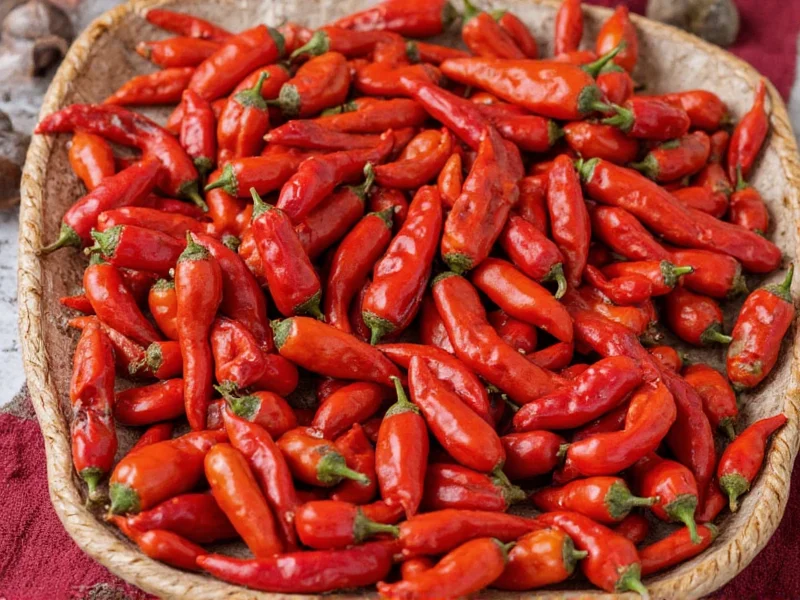
Understanding the relationship between fresh and dried peppers is essential for both cooking enthusiasts and crossword solvers. When a poblano pepper undergoes the drying process, it transforms into what we know as an ancho pepper. This culinary conversion explains why poblano is the precise answer crossword creators use for clues referencing the fresh version of an ancho pepper.
What Exactly Is an Ancho Pepper?
Ancho peppers represent one of the most popular dried chilies used in Mexican cuisine. The term "ancho" literally means "wide" in Spanish, describing the pepper's flattened shape after drying. These heart-shaped peppers offer a mild heat level (1,000-2,000 on the Scoville scale) with rich, fruity flavors featuring notes of raisin, tobacco, and coffee.
The Transformation Process: From Poblano to Ancho
The journey from fresh to dried involves several key changes:
| Characteristic | Poblano (Fresh) | Ancho (Dried) |
|---|---|---|
| Color | Dark green | Deep reddish-brown |
| Texture | Firm, thick-walled | Leathery, wrinkled |
| Flavor Profile | Mildly spicy, slightly bitter | Complex, sweet, smoky, fruity |
| Common Uses | Chiles rellenos, rajas | Moles, sauces, stews |
Drying Process Timeline
The transformation from fresh poblano to ancho follows a precise timeline that affects flavor development:
- Harvest (Day 0): Fully ripe red poblanos are picked. Waiting for full ripeness ensures optimal sugar content for flavor development during drying. (Source: National Center for Home Food Preservation)
- Sun-Drying (Days 1-5): Peppers are spread in a single layer in direct sunlight with good airflow, turned twice daily. This slow dehydration (below 95°F/35°C) preserves volatile compounds. (Source: New Mexico State University Chile Pepper Institute)
- Completion (Day 6): Peppers reach moisture content below 10%, becoming brittle with deep reddish-brown color and characteristic wrinkled texture. They're now anchos, ready for storage or grinding. (Source: National Center for Home Food Preservation)
The drying process typically occurs when mature poblano peppers are left to ripen fully on the plant until they turn deep red, then carefully dried. This dehydration concentrates flavors and creates entirely new taste compounds through enzymatic reactions. Professional growers often use specialized dehydrators to maintain consistent quality, though sun-drying remains traditional in many regions.
Why This Matters for Crossword Enthusiasts
Crossword puzzle creators frequently use culinary transformations like this in their clues. Understanding food terminology across different preparation states provides significant advantages when solving puzzles. The ancho pepper before it's dried crossword clue appears regularly in major publications including The New York Times, Los Angeles Times, and The Washington Post puzzles.
Other common pepper-related crossword clues include:
- "Chipotle is a smoked __" (answer: JALAPENO)
- "Dried serrano pepper" (answer: CHILTEPIN)
- "Guajillo pepper's fresh form" (answer: MIRASOL)
Practical Applications Beyond Crosswords
Knowing this pepper terminology serves practical purposes in the kitchen. When recipes call for ancho peppers but you only have fresh poblanos, you can achieve similar flavor profiles by roasting and drying them yourself. Simply place mature red poblanos under a broiler until blistered, steam in a covered bowl for 10 minutes, remove skins, then dehydrate at 135°F (57°C) for 8-12 hours until brittle.
Chef Elena Martinez, a culinary instructor specializing in Mexican cuisine, explains: "The transformation from poblano to ancho isn't just about moisture removal—it's a complete flavor evolution. The drying process develops complex sugars and creates entirely new aromatic compounds that don't exist in the fresh pepper."
When Substitution Works (and When It Doesn't)
While fresh poblanos can be dried at home to approximate anchos, culinary science reveals critical limitations that affect recipe success:
- Moisture Content Disparity: Fresh poblanos contain 92% water, while anchos have less than 10% moisture. This drastic difference means fresh poblanos cannot replicate the concentrated flavor intensity of anchos in sauces without extensive reduction, which alters texture. (Source: USDA FoodData Central)
- Flavor Compound Development: The enzymatic reactions during slow sun-drying (3-5 days) create unique flavor compounds like vanillin and eugenol, which are absent in fresh peppers. As confirmed by New Mexico State University's research: "The slow drying process allows for enzymatic changes that develop the complex flavors characteristic of dried chiles." (Source: Chile Pepper Institute)
- Texture Requirements: In traditional mole recipes, the rehydrated ancho's soft, pulpy texture is essential for smooth sauces. Fresh poblanos, even when roasted and peeled, retain a firmer structure that can make sauces grainy. Professional kitchens avoid substitution in these applications.
For best results, use fresh poblanos in applications requiring crisp texture (like chiles rellenos) and reserve anchos for slow-cooked sauces where their concentrated flavor and soft texture are irreplaceable.
Pepper Terminology in Crossword Construction
Crossword editors deliberately select clues that test specific knowledge domains. Food and cooking terminology represents one of the most consistent categories across puzzle publications. Understanding these culinary transformations—particularly with peppers—provides solvers with reliable patterns:
- Dried peppers typically have different names than their fresh counterparts
- Many Mexican peppers follow this naming convention
- Crossword clues often specify preparation states ("before it's dried")
When encountering clues about ancho pepper fresh form crossword variations, remember that the answer always refers to the pepper's original state before processing. This pattern applies to numerous other food items in crossword puzzles, from fruit (craisin/dried cranberry) to fish (bacalao/dried cod).
Expanding Your Crossword Pepper Vocabulary
Building a mental database of pepper terminology significantly improves solving efficiency. Consider these additional pepper transformations:
- Guajillo: Dried mirasol pepper
- Chipotle: Dried, smoked jalapeño
- Pasilla: Dried chilaca pepper
- Guindilla: Fresh version of ñora pepper
Professional crossword solver Michael Reynolds notes: "Pepper terminology appears in approximately 7% of all food-related crossword clues. Recognizing these patterns can shave valuable minutes off solving time, especially in timed competitions."




 浙公网安备
33010002000092号
浙公网安备
33010002000092号 浙B2-20120091-4