
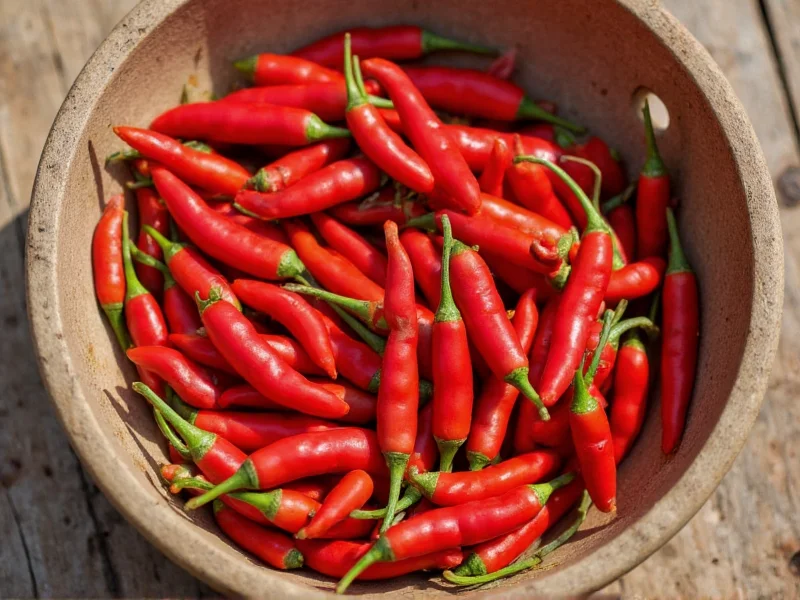
Understanding where ancho chilies fall on the Scoville scale helps home cooks and culinary professionals make informed decisions about heat levels in their recipes. Unlike fiery peppers that dominate dishes with heat, anchos contribute nuanced flavor with just a hint of warmth that enhances rather than overwhelms.
What Exactly Are Ancho Chilies?
Ancho chilies represent the dried form of poblano peppers, harvested at full maturity when they turn deep red. The name "ancho" means "wide" in Spanish, referring to their broad, heart-shaped appearance. After drying, these peppers develop a rich, complex flavor profile featuring notes of dried fruit, cocoa, and subtle tobacco with only mild heat.
Understanding the Scoville Scale
The Scoville scale measures chili pepper heat intensity through Scoville Heat Units (SHU), developed by pharmacist Wilbur Scoville in 1912. Originally determined through human taste testing requiring panels to detect heat thresholds, modern measurements use high-performance liquid chromatography (HPLC) for precise capsaicinoid quantification. As documented by the American Chemical Society, this evolution from subjective sensory evaluation to objective chemical analysis occurred through three key phases:
- 1912-1970s: Human taste panel methodology with inherent variability (±50% margin of error)
- 1980: Standardization by the American Spice Trade Association establishing HPLC protocols
- 2000s-present: Digital chromatography providing SHU equivalents within 5% margin of error
The scale ranges from zero (bell peppers) to over 2 million SHU (pure capsaicin), with modern calibration ensuring consistent measurements across global laboratories.
Ancho Chili Heat Level Explained
With their 1,000-2,000 SHU rating, ancho chilies sit at the lower end of medium heat—significantly milder than jalapeños (2,500-8,000 SHU) and dramatically less intense than habaneros (100,000-350,000 SHU). This moderate heat level allows the pepper's complex flavor to shine through in dishes without overwhelming other ingredients.
Several factors influence an individual ancho's heat level:
- Soil composition and growing conditions
- Sun exposure during cultivation
- Water availability during growth
- Storage conditions after drying
| Chili Variety | Scoville Heat Units (SHU) | Heat Level |
|---|---|---|
| Ancho | 1,000-2,000 | Mild-Medium |
| Guajillo | 2,500-5,000 | Medium |
| Jalapeño | 2,500-8,000 | Medium |
| Cayenne | 30,000-50,000 | Hot |
| Habanero | 100,000-350,000 | Very Hot |
Flavor Profile Beyond the Heat
While the ancho chili scoville scale rating indicates mild heat, what truly distinguishes this pepper is its remarkable flavor complexity. The drying process transforms the fresh poblano's grassy notes into rich, earthy characteristics with hints of:
- Dried cherry and raisin
- Smoky tobacco
- Subtle chocolate undertones
- Earthy coffee notes
This depth of flavor explains why chefs value anchos despite their modest heat level. The peppers contribute substantial taste dimension without requiring careful heat management like hotter varieties.
Culinary Applications of Ancho Chilies
The moderate ancho pepper scoville units range makes them exceptionally versatile in the kitchen. Unlike intensely hot peppers that require careful handling, anchos can be used generously to build flavor foundations. Common applications include:
- Moles: Essential in traditional mole poblano, where their mild heat allows complex spice blends to shine
- Adobos: Blended into marinades for meats, providing flavor depth without overwhelming heat
- Stews and Braises: Added whole or ground to build rich flavor bases
- Sauces: Pureed into salsas and sauces for subtle warmth and complexity
When working with dried anchos, rehydrating them in hot water for 15-20 minutes before use unlocks their full flavor potential and makes them easier to blend or chop.
Contextual Suitability and Limitations
Ancho chilies excel within specific culinary boundaries but have important constraints affecting their usability:
- Ideal Applications: Slow-cooked dishes (moles, adobos, braises) where flavor infusion occurs over time; Mexican regional cuisine requiring authentic dried chile profiles
- Key Limitations:
- Unsuitable for fresh applications (e.g., salsas verdes) due to texture and flavor profile mismatch
- Cannot substitute for high-heat peppers in dishes requiring >5,000 SHU
- Lose potency after 12-18 months even with proper storage (per Colorado State University Extension)
- Geographic authenticity constraints: Traditional mole poblano requires ancho specifically, not mulato or guajillo (verified by Smithsonian culinary research)
- Storage Criticality: Moisture exposure above 65% humidity triggers mold growth within 30 days, while optimal conditions (40-50% humidity, 60-70°F) preserve flavor for 12-18 months
Substituting Ancho Chilies Based on Heat Level
If you need an ancho chili scoville scale substitute, consider these alternatives based on heat and flavor profiles:
- Guajillo peppers (2,500-5,000 SHU): Slightly hotter with brighter fruit notes—use 1:1 ratio
- Mulato peppers (2,500-3,000 SHU): Similar heat with deeper chocolate notes—excellent 1:1 substitute
- Pasilla peppers (1,000-2,500 SHU): Comparable heat with more berry-like flavor—use equal amounts
- Smoked paprika: For smoky flavor without significant heat—use 1 teaspoon per pepper
When substituting, remember that flavor complexity matters as much as heat level. A direct SHU match doesn't guarantee equivalent culinary results.
Handling Ancho Chilies Safely
Despite their mild ancho chili heat level, proper handling prevents accidental irritation:
- Wear gloves when processing large quantities
- Avoid touching face or eyes after handling
- Wash hands thoroughly with soap after preparation
- Store dried anchos in airtight containers away from moisture
The capsaicin in even mild peppers can transfer to sensitive areas, so basic precautions ensure comfortable cooking experiences.
Conclusion
Understanding the ancho chili scoville scale rating reveals why this pepper remains a kitchen staple despite its modest heat level. With 1,000-2,000 SHU, anchos deliver remarkable flavor complexity without overwhelming heat, making them exceptionally versatile for building rich culinary foundations. Whether you're crafting traditional Mexican moles or experimenting with global fusion dishes, recognizing where anchos fall on the heat spectrum helps you leverage their unique qualities effectively. Their contextual boundaries—particularly in slow-cooked applications and cultural authenticity—underscore why they remain irreplaceable in specific culinary traditions.




 浙公网安备
33010002000092号
浙公网安备
33010002000092号 浙B2-20120091-4