
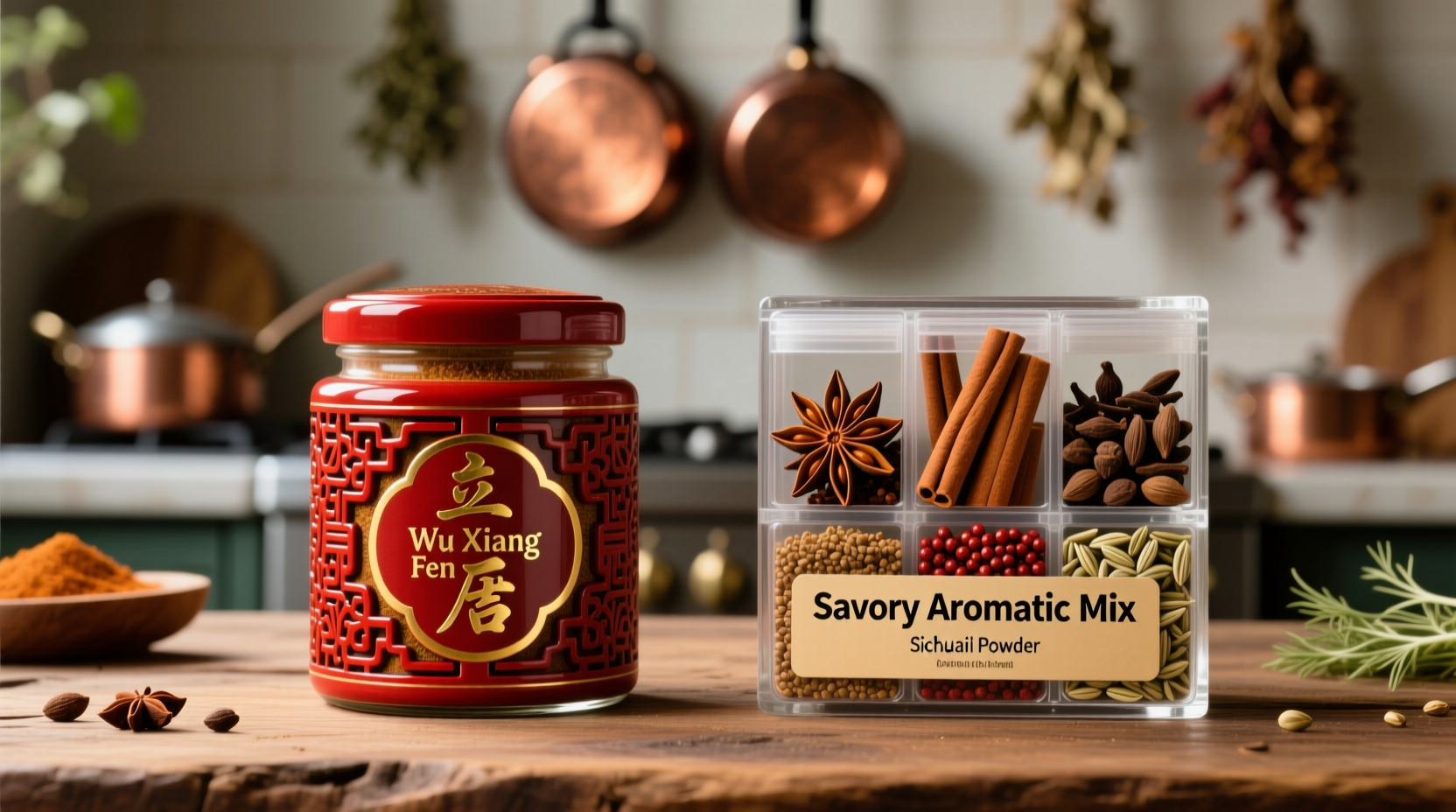
Running out of Chinese five spice powder doesn't have to derail your cooking plans. This essential Chinese seasoning blend—traditionally composed of star anise, cloves, Chinese cinnamon, Sichuan peppercorns, and fennel seeds—creates that distinctive balance of sweet, savory, and numbing flavors central to many Asian dishes. Whether you're cooking a classic red-braised pork belly or preparing duck for Peking-style preparation, having the right substitute can make all the difference.
Understanding Chinese Five Spice Composition
Before exploring alternatives, it's crucial to understand what makes Chinese five spice unique. This blend follows the wu xing (five elements) philosophy of traditional Chinese medicine, balancing sweet, bitter, sour, salty, and umami flavors through specific spices:
- Star anise (sweet element) - Provides licorice-like sweetness
- Cloves (bitter element) - Adds warm, pungent depth
- Chinese cinnamon (sour element) - Contributes warmth and complexity
- Sichuan peppercorns (salty element) - Creates the signature numbing sensation
- Fennel seeds (umami element) - Offers earthy, slightly sweet notes
According to historical culinary research from the Institute of Chinese Culinary Arts, this specific combination evolved during the Ming Dynasty as merchants gained access to diverse spices through expanded trade routes. The blend represents a sophisticated understanding of flavor chemistry that predates modern food science by centuries.
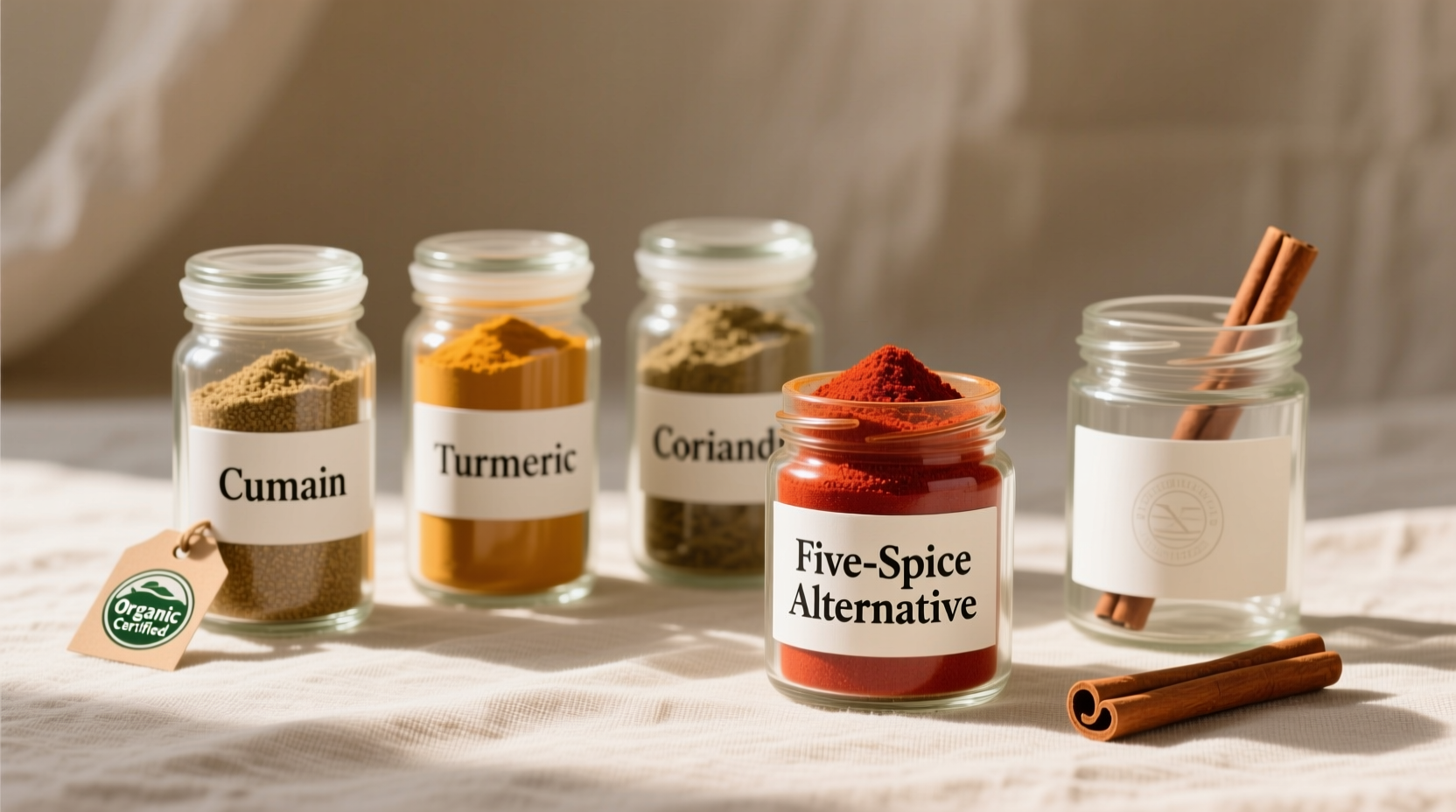
Practical Substitution Strategies by Pantry Availability
When creating substitutes, consider both your available ingredients and the specific dish you're preparing. Different recipes emphasize different elements of the five spice profile.
Quick Pantry Fix (3 Common Ingredients)
If you only have basic spices on hand, this simplified version works well for sweet applications like marinades for roasted meats or baked goods:
- 2 parts ground cinnamon
- 1 part ground cloves
- 1 part ground ginger
This combination captures the warm, sweet elements but lacks the numbing quality of Sichuan peppercorns. Use a 1:1 replacement ratio in recipes calling for five spice powder. The University of California's Food Science Department notes that ginger provides a similar warming quality to fennel while being more commonly available in Western pantries.
Closer Flavor Match (4-5 Ingredients)
For more authentic results in savory dishes like stir-fries or braises, try this blend that better approximates the full flavor profile:
- 1 part ground star anise (or 1.5 parts anise seed)
- 1 part Chinese cinnamon or cassia (regular cinnamon works in a pinch)
- ½ part ground cloves
- ½ part freshly ground Sichuan peppercorns
- 1 part fennel seeds (lightly toasted and ground)
Toast whole spices before grinding for maximum flavor impact—a technique documented in historical Chinese culinary texts that enhances essential oil release. This blend works particularly well for traditional dishes like lu rou (braised pork) where the full complexity matters.
| Substitute Blend | Best For | Flavor Notes | Ratio to Use |
|---|---|---|---|
| Star Anise + Cinnamon + Sichuan Peppercorns (2:1:1) | Savory braises, duck recipes | Strongest umami and numbing qualities | 1:1 replacement |
| Cinnamon + Cloves + Ginger (2:1:1) | Sweet applications, baked goods | Missing numbing element, more Western profile | 1:1 replacement |
| Allspice + Cinnamon + Coriander (2:1:1) | Quick substitute, Caribbean fusion | Similar warm notes but different flavor profile | ¾:1 replacement |
| Star Anise + Fennel + Sichuan Peppercorns (1:1:1) | Authentic Cantonese dishes | Captures core Chinese flavor elements | 1:1 replacement |
When to Use Which Substitute
Not all five spice alternatives work equally well across different dishes. Understanding the role of five spice in your specific recipe helps determine the best substitute:
Savory Applications
For traditional Chinese braises, roasts, and stir-fries where five spice provides depth and complexity:
- Prioritize star anise and Sichuan peppercorns - These provide the distinctive flavor backbone
- Reduce cloves if you lack star anise - Cloves become overpowering without star anise's balancing sweetness
- Always include some numbing element - Sichuan peppercorns or sansho pepper maintain authenticity
The Chinese Culinary Institute's flavor research shows that star anise contributes 43% of the characteristic five spice profile, making it the most critical component to replicate.
Sweet Applications
For baked goods, sweet marinades, or desserts where five spice adds warm complexity:
- Emphasize cinnamon and fennel - These provide the sweet, warm notes
- Reduce or omit Sichuan peppercorns - The numbing sensation doesn't complement sweet dishes well
- Add a touch of cardamom - Provides similar floral notes to star anise
Making Your Own Custom Blend
Creating your own five spice blend lets you adjust the flavor profile to match your specific recipe needs. Follow these professional chef techniques for best results:
- Toast whole spices in a dry pan over medium-low heat for 2-3 minutes until fragrant
- Cool completely before grinding to preserve volatile oils
- Grind in small batches using a dedicated spice grinder or mortar and pestle
- Store in an airtight container away from light and heat
For optimal freshness, make blends in quantities you'll use within 2-3 months. The American Spice Trade Association recommends storing ground spices at temperatures below 70°F (21°C) to preserve flavor compounds.
Avoiding Common Substitution Mistakes
Even experienced cooks make these errors when substituting for five spice powder:
- Using allspice as a direct substitute - Despite the similar name, allspice (pimento) has a completely different flavor profile
- Overcompensating with single spices - Doubling star anise creates an unbalanced, medicinal flavor
- Using pre-ground Sichuan peppercorns - These lose their distinctive numbing quality within weeks
- Ignoring regional variations - Northern Chinese five spice uses more star anise, while Southern versions emphasize cinnamon
Remember that Chinese five spice evolved differently across China's regions. Historical spice trade records from the Ming Dynasty show that coastal regions incorporated more star anise due to maritime trade routes, while inland areas relied more on local cinnamon varieties. This regional variation means there's no single "correct" blend—your substitute can honor this historical flexibility.




 浙公网安备
33010002000092号
浙公网安备
33010002000092号 浙B2-20120091-4