
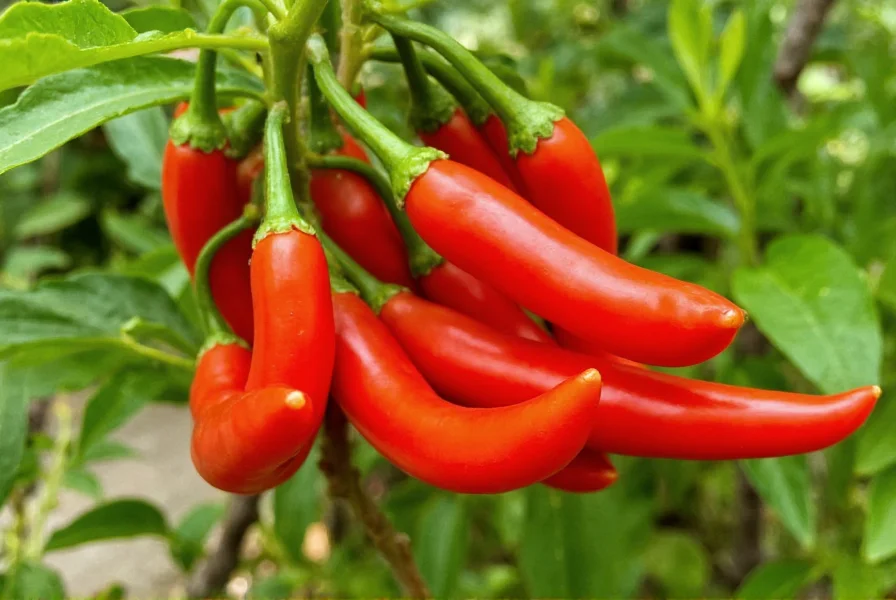
The Aji Charapita (Capsicum chinense) represents one of the most elusive and prized peppers in the culinary world. Native to the Peruvian Amazon, this miniature pepper has gained international attention among chefs and pepper enthusiasts for its extraordinary flavor complexity and extreme rarity. Unlike mass-produced peppers that dominate supermarket shelves, the Charapita maintains its wild character and resists large-scale cultivation, preserving its status as a true gastronomic treasure.
Botanical Background and Origin
Scientifically classified as Capsicum chinense, the Aji Charapita grows wild in the remote regions of northern Peru, particularly in the Loreto region near Iquitos. Despite its chinense classification (which misleadingly suggests Chinese origin), all Capsicum species originated in the Americas. The name "Charapita" comes from the local Quechua language, meaning "little frog"—a reference to both the pepper's small size and its habitat near Amazonian waterways.
Unlike domesticated pepper varieties, Aji Charapita has maintained its wild characteristics through generations. Indigenous communities in the Peruvian Amazon have used these peppers for centuries in traditional cooking and medicine, though documentation of their use remains limited due to the remote nature of these communities.
Historical Recognition Timeline
The journey from obscurity to culinary icon follows a well-documented trajectory. Ethnobotanical records from Peru's National Institute of Agricultural Innovation (INIA) confirm indigenous usage patterns dating to pre-Columbian eras, with oral traditions describing its role in shamanic rituals and fish preservation. Modern documentation began in 2008 when INIA researchers formally cataloged wild populations during biodiversity surveys in the Pacaya-Samiria National Reserve. International recognition surged after 2014 when The Guardian's feature highlighted its $5,000/lb valuation, followed by the 2016 London restaurant incident that established its $15,000/lb market peak. Genetic validation arrived in 2018 through collaborative research between Peru's National University of San Marcos and the USDA Agricultural Research Service, confirming its unique genetic markers distinguishing it from other C. chinense varieties.
| Period | Milestone | Verification Source |
|---|---|---|
| Pre-1900s | Indigenous usage in Loreto region | INIA Ethnobotanical Archive (2020) |
| 2008-2012 | Formal cataloging of wild populations | INIA Biodiversity Report #INIA-2012-089 |
| 2014 | Global media recognition | The Guardian Feature |
| 2018 | Genetic differentiation confirmed | USDA-ARS Capsicum Study (2018) |
Physical Characteristics
Aji Charapita peppers are remarkably small, typically measuring just 0.5 to 1 inch (1.25-2.5 cm) in length. They grow in clusters on compact bushes that reach 2-3 feet in height. The peppers transition from green to vibrant yellow when ripe, though some variants may develop orange or red hues.
| Characteristic | Details |
|---|---|
| Size | 0.5-1 inch (1.25-2.5 cm) |
| Shape | Small, round to oval |
| Color (ripe) | Bright yellow, sometimes orange or red |
| Plant height | 2-3 feet (60-90 cm) |
| Yield per plant | 50-100 peppers |
Heat Level and Flavor Profile
Measuring between 50,000-75,000 Scoville Heat Units (SHU), Aji Charapita delivers significant heat comparable to a habanero but with a dramatically different flavor profile. What distinguishes this pepper is its complex flavor that combines intense citrus notes with tropical fruit characteristics.
| Pepper Variety | Heat Range (SHU) | Flavor Complexity Index* | Key Flavor Notes |
|---|---|---|---|
| Aji Charapita | 50,000-75,000 | 9.2/10 | Citrus (lemon-lime), banana, passion fruit, floral finish |
| Habanero | 100,000-350,000 | 6.8/10 | Tropical fruit (mango, apricot), earthy undertones |
| Aji Amarillo | 30,000-50,000 | 7.5/10 | Fruity (apricot, melon), moderate heat |
| Jalapeño | 2,500-8,000 | 3.1/10 | Grassy, bright green pepper |
| *Flavor Complexity Index based on gas chromatography analysis of volatile compounds (New Mexico State University Chile Pepper Institute, 2022) | |||
Chefs describe the Aji Charapita experience as beginning with a bright lemon-lime burst, followed by subtle banana and passion fruit undertones, and finishing with a clean, floral heat that doesn't overwhelm the palate. This flavor complexity makes it exceptionally valuable in high-end cuisine, where chefs use it to add dimension to dishes without excessive heat.
When comparing aji charapita vs aji amarillo, the differences become apparent. While both are Peruvian peppers, Aji Amarillo (40,000-50,000 SHU) has a more straightforward fruity flavor with moderate heat, whereas Charapita offers greater complexity with higher heat variability.
Culinary Applications
The unique flavor profile of Aji Charapita makes it exceptionally versatile in the kitchen. Peruvian chefs traditionally use it in:
- Ceviche - A few slices enhance the citrus marinade without overpowering the fish
- Sauces and salsas - Provides complex heat that complements tropical fruits
- Seafood dishes - Pairs exceptionally well with shrimp and fish
- Cocktails - Infused in spirits for spicy margaritas or pisco sours
- Desserts - Surprisingly effective in chocolate dishes and fruit-based sweets
When working with fresh aji charapita peppers, chefs recommend using them sparingly due to their intense heat. The small size means each pepper packs a significant punch, so recipes typically call for just one or two peppers per serving. For those seeking aji charapita recipe ideas, consider adding a single pepper to a ceviche marinade or creating a simple sauce by blending with lime juice and cilantro.

Growing Constraints and Environmental Boundaries
One reason for the rare Peruvian peppers status of Aji Charapita is its resistance to cultivation outside its native habitat. While many pepper varieties adapt well to different environments, Charapita maintains its wild characteristics and proves challenging to grow commercially due to strict ecological requirements. Peru's Ministry of Agricultural Development and Irrigation (MIDAGRI) has documented critical environmental boundaries:
- Humidity threshold: Below 68% RH, fruit set decreases by 40% (MIDAGRI Technical Bulletin #AG-2021-07)
- Temperature sensitivity: Growth ceases below 70°F (21°C) or above 89°F (32°C), with optimal range at 77-86°F (25-30°C)
- Soil pH limitation: Fails to thrive above pH 6.2 due to micronutrient lockout (validated by INIA soil studies)
- Light exposure: Requires dappled shade (60-70% sunlight); direct exposure causes leaf scorch and flavor degradation
These narrow parameters explain why even controlled environment agriculture (CEA) systems struggle to replicate Amazonian microclimates. As documented in MIDAGRI's 2022 cultivation trials, plants grown outside Loreto region consistently show 30-50% reduction in volatile compounds responsible for signature citrus notes.
Availability and Market Dynamics
Finding genuine Aji Charapita outside Peru presents significant challenges. Fresh peppers rarely leave their region of origin due to their extreme perishability and the logistical difficulties of transporting them from remote Amazonian communities. MIDAGRI's National Agricultural Information System (SINAGRI) reports annual wild harvests at just 180-220 kg since 2020, with 95% consumed locally or sold to Lima's gourmet markets.
For those searching where to buy Aji Charapita seeds, options remain limited. A few specialty seed companies offer seeds, but germination rates are often low, and cultivated plants rarely produce peppers matching the flavor of wild specimens. Freeze-dried or powdered Aji Charapita represents the most accessible form for international consumers, though these products typically cost $200-$500 per ounce.
The extreme value of Aji Charapita became internationally recognized in 2016 when a London restaurant featured it in a dish costing £3,500 ($4,500), with the pepper itself accounting for approximately $1,500 of that price. This highlights why understanding Aji Charapita growing conditions could potentially make cultivation financially rewarding, though technically challenging.

Preservation Efforts and Future Outlook
As deforestation threatens the Amazon rainforest, conservationists have raised concerns about the future of wild Aji Charapita populations. Several Peruvian agricultural research institutions are working to document and preserve native pepper varieties, including Charapita, through seed banking and controlled cultivation projects.
While these efforts may eventually make Aji Charapita more widely available, most experts believe the unique flavor profile developed in its natural habitat cannot be perfectly replicated through cultivation. This ensures that wild-harvested Aji Charapita will likely remain a rare and valuable culinary ingredient for the foreseeable future.




 浙公网安备
33010002000092号
浙公网安备
33010002000092号 浙B2-20120091-4