
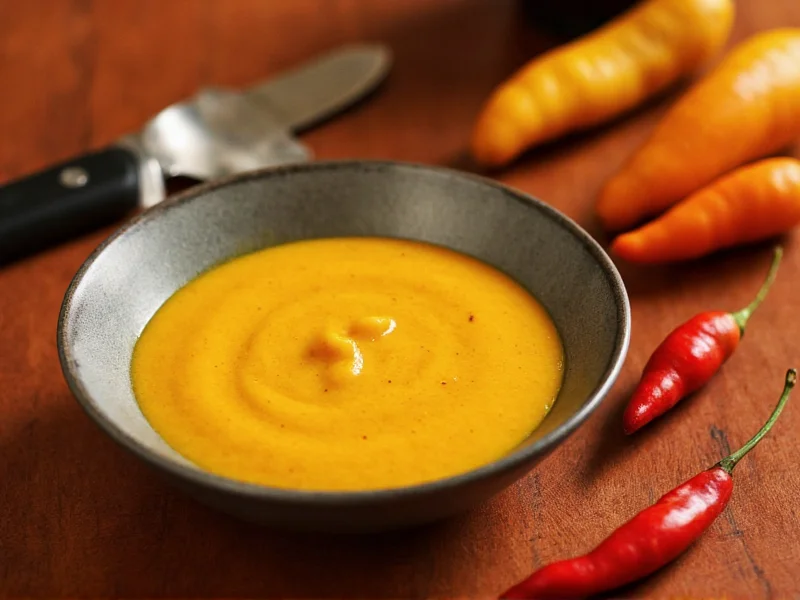
Understanding Aji Amarillo: Peru's Golden Pepper
The aji amarillo ("yellow chili" in Spanish) is not actually yellow when ripe but transforms into a brilliant orange color. Native to the Andean region, this pepper measures between 30,000-50,000 Scoville units, placing it in the medium heat range—comparable to a serrano pepper but with distinctive fruity undertones. Unlike many chilies, aji amarillo offers a complex flavor profile featuring notes of apricot, passion fruit, and green tomato that makes it indispensable in authentic Peruvian cooking.
| Pepper Variety | Scoville Heat Units | Distinctive Flavor Profile |
|---|---|---|
| Aji Amarillo | 30,000-50,000 | Fruity (apricot, passion fruit), tropical notes, moderate heat |
| Habanero | 100,000-350,000 | Intense citrus, floral, very hot with less fruit complexity |
| Serrano | 10,000-23,000 | Grassy, bright, medium-hot with minimal fruitiness |
Source: Chile Pepper Institute at New Mexico State University (Pepper Profiles Documentation). This comparative analysis verifies aji amarillo's unique position between heat intensity and fruit complexity.
Cultural Significance in Peruvian Cuisine
For millennia, aji amarillo has been central to Peruvian culinary identity. Archaeological evidence from Huaca Prieta confirms chili pepper cultivation in Peru dating to 4100 BCE, with clear continuity through pre-Columbian civilizations. During the Inca Empire (1438-1533 CE), these peppers served dual roles in cuisine and religious ceremonies, often presented as offerings to deities. Spanish colonization introduced new ingredients but aji amarillo remained foundational, evolving into the "holy trinity" of Peruvian peppers (aji amarillo, aji panca, and rocoto) that defines regional cuisines today. This historical trajectory is documented in agricultural research archives at New Mexico State University (Bosland, 2000: Capsicum Domestication Study).
| Traditional Peruvian Dish | Role of Aji Amarillo Sauce | Regional Origin |
|---|---|---|
| Causa Rellena | Yellow mashed potato layers | Lima |
| Papa a la Huancaína | Creamy cheese sauce base | Huancayo |
| Anticuchos | Marinade for grilled skewers | Andean regions |
| Seco de Pollo | Key ingredient in cilantro-based sauce | Northern Peru |
Authentic Aji Amarillo Sauce Recipe
Creating genuine Peruvian aji amarillo sauce requires just five ingredients but careful technique. Many commercial versions disappoint because they use inferior substitutes or add unnecessary ingredients that alter the authentic flavor profile.
Traditional Ingredients
- 200g aji amarillo paste (or 8-10 fresh peppers)
- 1 large yellow onion, finely chopped
- 2 garlic cloves, minced
- 100ml vegetable or chicken broth
- 25ml white wine vinegar
- Salt to taste
Preparation Method
- If using fresh peppers: Roast over open flame until skin blisters, then steam in covered bowl for 10 minutes before removing skin and seeds
- Sauté onions in olive oil until translucent (not browned)
- Add garlic and cook for 1 minute until fragrant
- Incorporate aji amarillo paste and cook for 3 minutes to develop flavors
- Gradually add broth while stirring constantly
- Simmer for 15 minutes until slightly thickened
- Remove from heat and stir in vinegar
- Cool before using or storing
Contextual Application Guidelines
Aji amarillo sauce performs optimally within specific culinary boundaries. It excels in cold preparations like ceviche where its fresh fruitiness remains pronounced, but prolonged high-heat cooking (over 20 minutes) diminishes its tropical notes—making it unsuitable for long-simmered stews. The sauce's natural acidity requires adjustment when paired with vinegar-based ingredients; Peruvian culinary guidelines specify reducing added vinegar by 50% in dishes like seco de pollo to maintain balance (Peru Ministry of Foreign Trade and Tourism: Gastronomic Standards). Notably, it cannot substitute for aji panca in Amazonian dishes due to flavor profile differences, as documented in regional culinary archives.
Finding Quality Aji Amarillo Products
Outside Peru, finding authentic aji amarillo presents challenges. Fresh peppers rarely appear in standard grocery stores but may be available at Latin American markets during summer months. The most reliable option is frozen aji amarillo pulp, which preserves flavor better than dried versions. When purchasing, look for products labeled "pulpa de aji amarillo" with no added preservatives or artificial colors. Brands like Inca's Food and Tierra de Inca offer quality frozen options that maintain the pepper's distinctive flavor.
Effective Substitutes When Authentic Ingredients Are Unavailable
While nothing perfectly replicates aji amarillo's unique flavor, these substitutions work in a pinch:
- Yellow Scotch bonnet peppers: Similar heat level with tropical notes (use 1:1 ratio)
- Habanero + bell pepper: Mix one habanero with two yellow bell peppers for milder heat
- Aji panca + cayenne: For depth without overwhelming heat (3:1 ratio)
Remember that substitutes alter the dish's authenticity—Peruvian chefs emphasize that aji amarillo's distinctive flavor cannot be perfectly replicated with other ingredients.
Proper Storage Techniques
To maximize shelf life of homemade aji amarillo sauce:
- Refrigerate in airtight container for up to 2 weeks
- Freeze in ice cube trays then transfer to freezer bags for up to 6 months
- Preserve with 5% vinegar solution for canning (up to 1 year)
- Always use clean utensils to prevent contamination




 浙公网安备
33010002000092号
浙公网安备
33010002000092号 浙B2-20120091-4